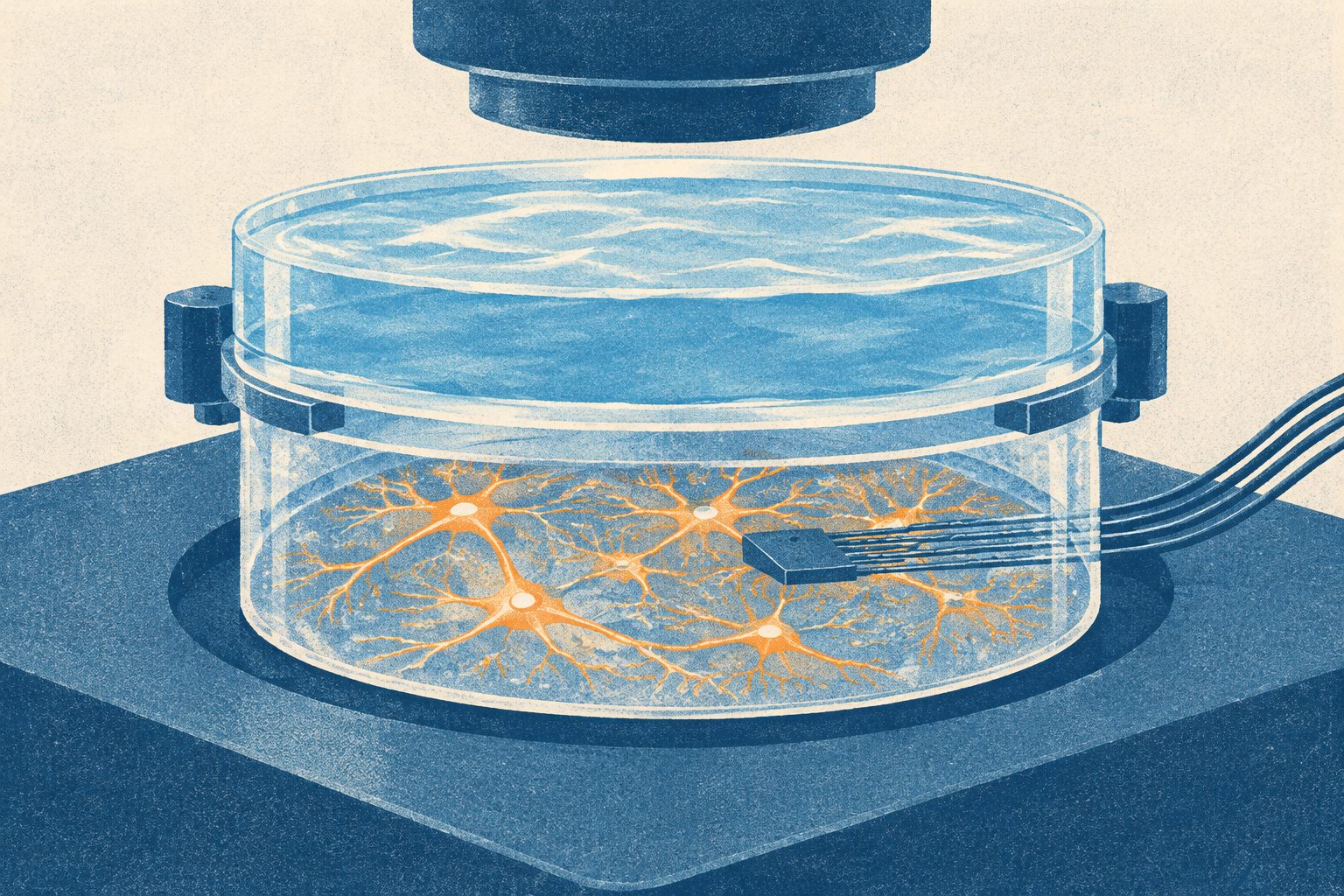
Long-term recordings can be disrupted when evaporation changes the conditions around growing nerve cells. The researchers designed a lid whose water compartment prevents evaporation at the culture interface while allowing gas exchange, and paired it with independent temperature control to prevent condensation on the recording device.
In tests with patterned human induced pluripotent stem cell-derived neuronal networks, the system supported continuous recordings for 35 days. A single half-medium exchange was made during that period, and the networks showed several patterns of activity that occurred at the same time and changed over the course of the recordings.