Powered by DNA signals, the device moved a needle through artificial membranes and helped control reactions inside enclosed compartments.
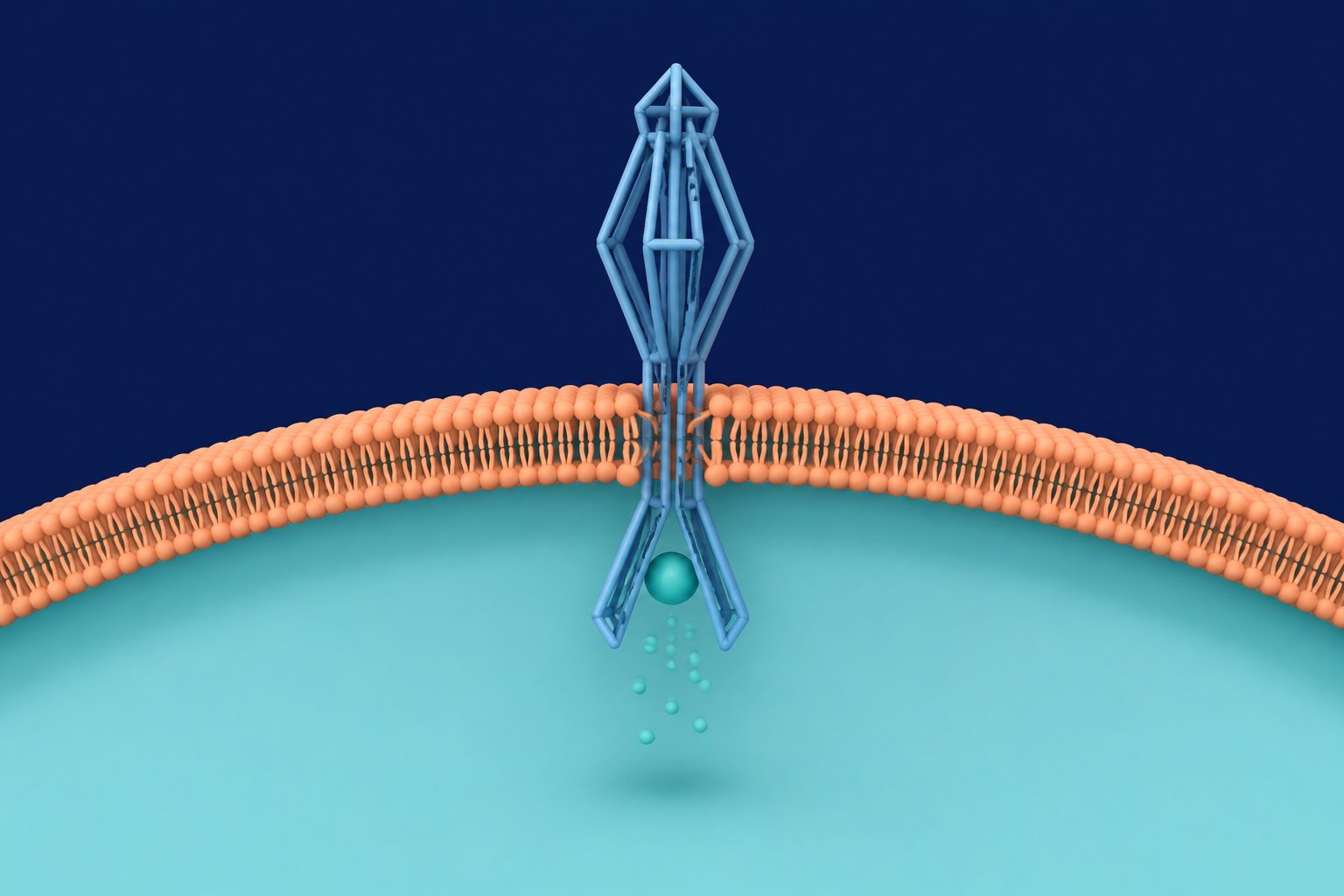
Researchers built a nanoscale device from DNA structures and a gold nanoparticle. One part anchors to a membrane, while a DNA-fueled needle moves forward in steps to pierce the membrane and carry attached molecular cargo into a membrane-enclosed compartment.
The needle can also be pulled back, which promotes membrane resealing. In cell-sized environments, the device was used to regulate several biochemical reactions, including RNA production and catalytic RNA cutting.
How the DNA needle moved
The nanosyringe consists of two DNA structures, each about 70 nanometres long, linked by a gold nanoparticle about 10 nanometres across. One structure was fitted with cholesterol molecules so it could anchor to a membrane; the other acted as a sliding needle.
After the device attached to supported lipid bilayers or vesicle membranes, added DNA fuel drove the needle downward in steps of about 14 nanometres, allowing it to penetrate the membrane. Reverse actuation retracted the needle and promoted membrane resealing. Molecular cargo attached to the needle tip was delivered into lipid-enclosed compartments.
The researchers also used the device to regulate membrane-localized hybridization chain reactions, RNA transcription and catalytic RNA cleavage in cell-sized environments.
// Source
Nature Nanotechnology · 2026 · DOI: 10.1038/s41565-026-02249-3
Authors: L L Ding, Sisi Fan, Xiang Hao, Xinxin Jing, Jiahui Liu, Andreas Peil, Pengfei Zhan, Dechang Li, Stephan Nußberger, Na Liu
Institutions: Chinese Academy of Sciences, Zhejiang University, University of Stuttgart, Max Planck Institute for Solid State Research