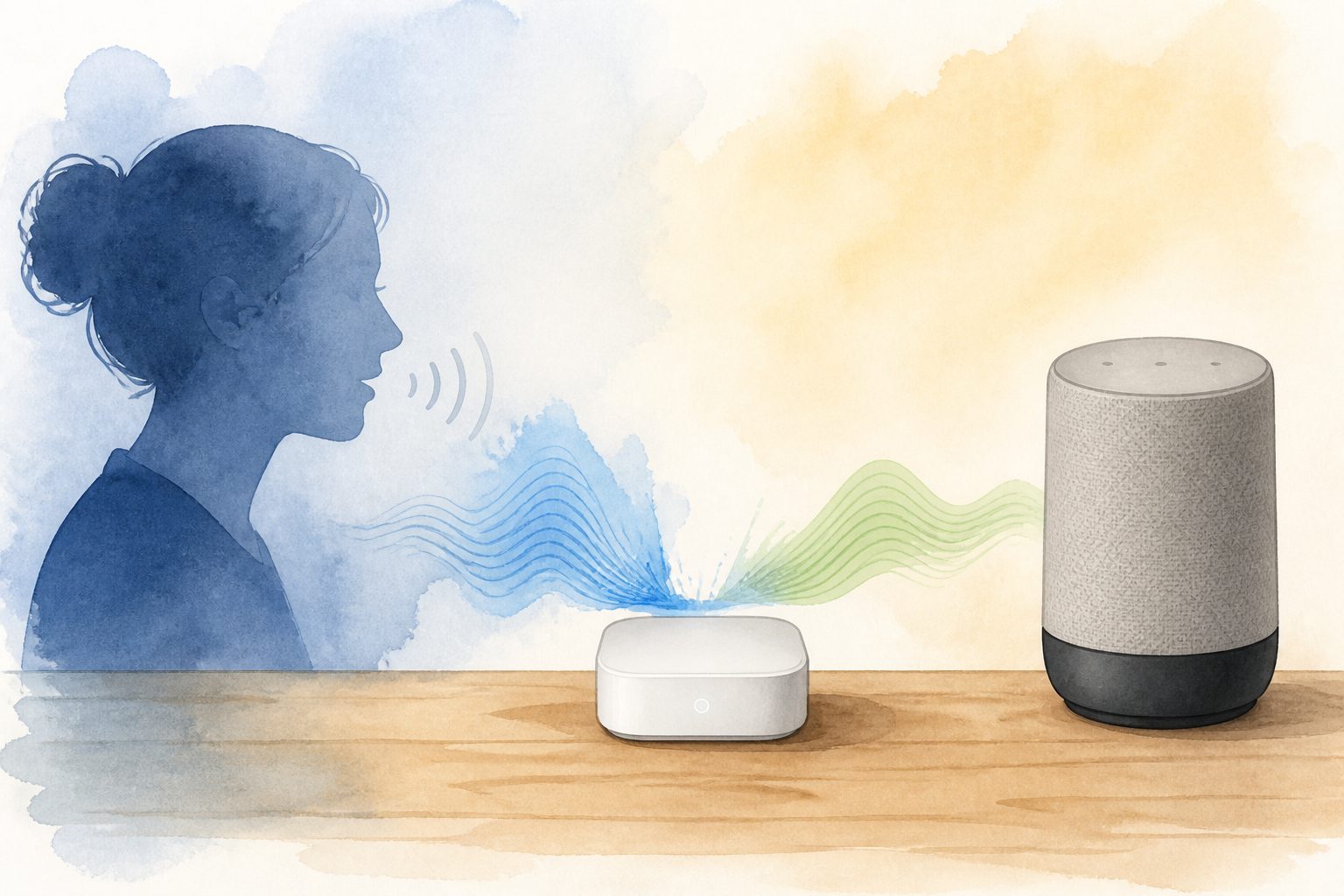
SafeSpeaker changes voice recordings on a low-cost microcontroller so they reveal less about a speaker’s identity while remaining understandable to a smart speaker.
SafeSpeaker processes speech entirely on the device that captures it, rather than sending raw recordings to the cloud. Its time-based transformation approximates changes to speech formants, which help convey a speaker’s vocal characteristics, without using the frequency-based processing found in earlier resource-aware approaches.
In tests described by the researchers, SafeSpeaker processed audio nearly twice as fast as those approaches while matching their performance in obscuring speaker identity. A real-time prototype running on a $3 Arm Cortex-M4 microcontroller also maintained the smart speaker’s ability to understand and respond to voice commands.
Evidence and open questions
The evidence comes from the design and evaluation of the SafeSpeaker framework, comparisons with resource-aware voice-obfuscation methods, and a real-time prototype demonstration on an Arm Cortex-M4 microcontroller. The abstract does not give details about the test data, number or diversity of speakers, command-recognition accuracy, or performance across other hardware and smart-speaker systems. It therefore supports the reported prototype results but does not establish how broadly they generalize.
// Source
Proceedings of the ACM on Interactive Mobile Wearable and Ubiquitous Technologies · 2026 · DOI: 10.1145/3831661
Authors: Cameron Haire, Yasha Iravantchi, Kang Geun Shin, Alanson P. Sample
Institutions: University of Michigan, Stanford University, Stanford Medicine