A perovskite layer helps zinc batteries use tin’s three-electron chemistry
The tin-iodide layers enabled a higher-potential reaction and long cycling in aqueous zinc-ion battery cells.
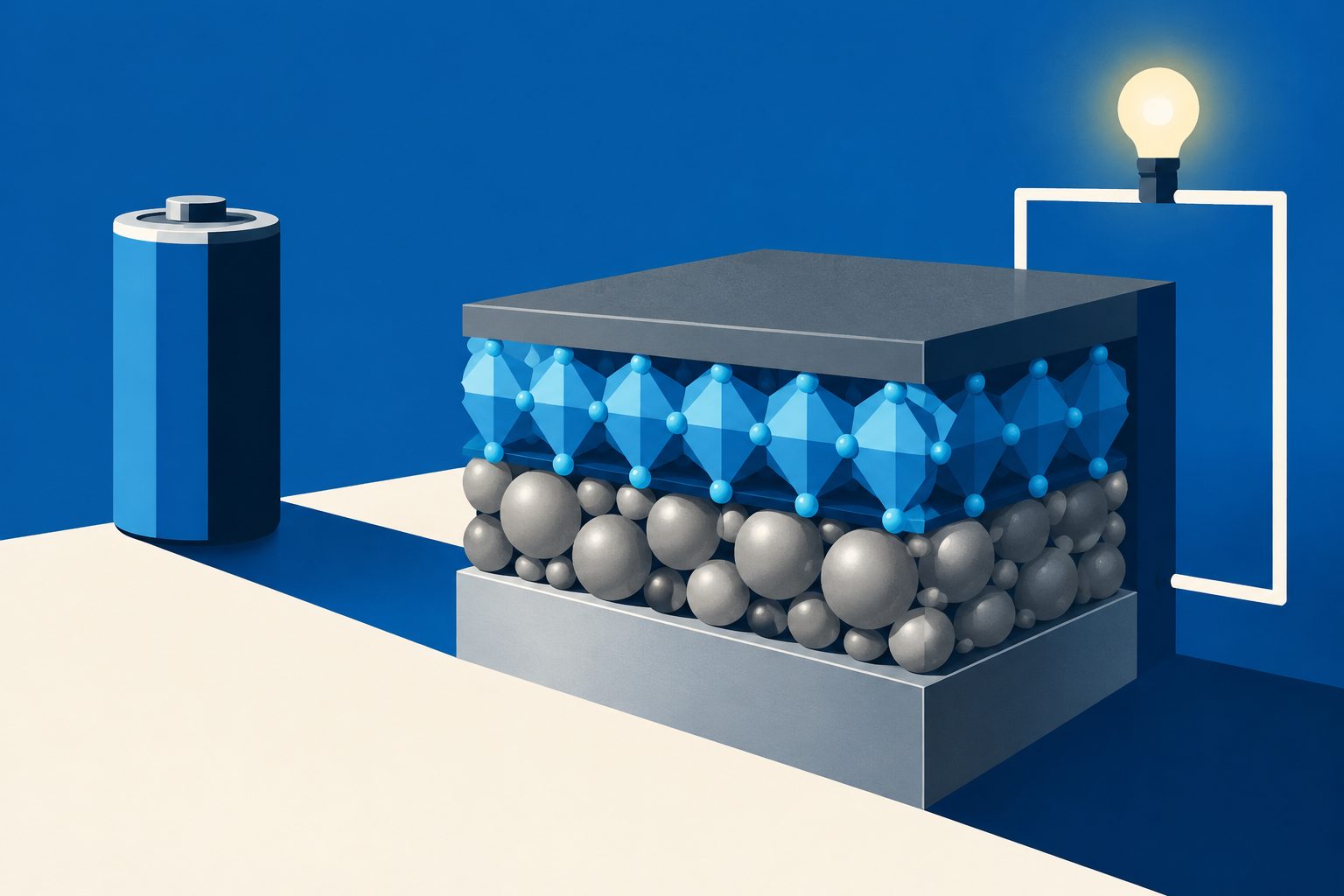
Editorial illustration — not from the study.
The researchers grew CsSnI3 and Cs2SnI6 perovskite layers on a battery cathode during operation. These layers changed tin’s chemical environment and enabled the Sn4+/Sn2+ reaction at 0.39 volts versus the standard hydrogen electrode, according to the study.
In full zinc–tin chloride cells, the design produced discharge plateaus at 1.18 and 1.28 volts. The cells reached an areal capacity of 0.80 mAh cm−2 and an energy density of 0.99 mWh cm−2 under the reported test conditions.
What the layer enables
The perovskite layers enabled what the researchers describe as the first demonstration of the Sn4+/Sn2+ redox reaction in a zinc-ion battery. Enhanced coordination between tin and iodide raised the reaction potential to 0.39 volts versus the standard hydrogen electrode.
Full Zn||SnCl4 cells showed two discharge plateaus, at 1.18 volts for the Sn4+/Sn2+ reaction and 1.28 volts for the I0/I− reaction. They delivered an areal capacity of 0.80 mAh cm−2 at 1 mA cm−2 and an energy density of 0.99 mWh cm−2, equivalent to 660 Wh kg−1 when calculated using the mass of SnCl4·5H2O in the cathode. Swagelok cells retained their capacity for 7,000 cycles at 16 mA cm−2, while pouch cells operated for 200 cycles at 4 mA cm−2 without capacity loss.
Why the tin chemistry matters
Tin can exist in several oxidation states, but its Sn4+/Sn2+ reaction had not been realized in a practical zinc-ion battery, according to the researchers. Enabling this higher-potential reaction gives the aqueous cells an additional discharge process and supports the reported two-plateau output.
The long cycling results suggest that the perovskite interlayer can help stabilize this three-electron battery design in both laboratory Swagelok cells and pouch cells. The approach provides a materials strategy for increasing the energy of aqueous zinc-ion batteries, although the reported energy density is based on the tin salt’s mass in the cathode.
Evidence and caveats
This is a journal research article reporting electrochemical tests in laboratory Swagelok and pouch cells. The abstract provides performance results under specific current densities and cycle counts, including 7,000 cycles for Swagelok cells and 200 cycles for pouch cells.
The abstract does not report the cells’ full composition, operating conditions beyond the stated current densities, comparisons with a battery without the perovskite layers, or performance at larger scale. The quoted 660 Wh kg−1 figure is calculated from the mass of SnCl4·5H2O in the cathode, rather than the mass of the complete battery, so it should not be interpreted as a whole-cell energy density.
Researchers developed a model for predicting how molecules alter the electrical current as they pass through nanopores. The accompanying web app estimates signals for different molecule shapes, pore designs and positions, including molecules near the pore opening.
Researchers developed a model that predicts how branching cables deform while a robot moves them. Tested on six physical cable assemblies, it made predictions at more than 100 updates per second and supported several manipulation tasks.
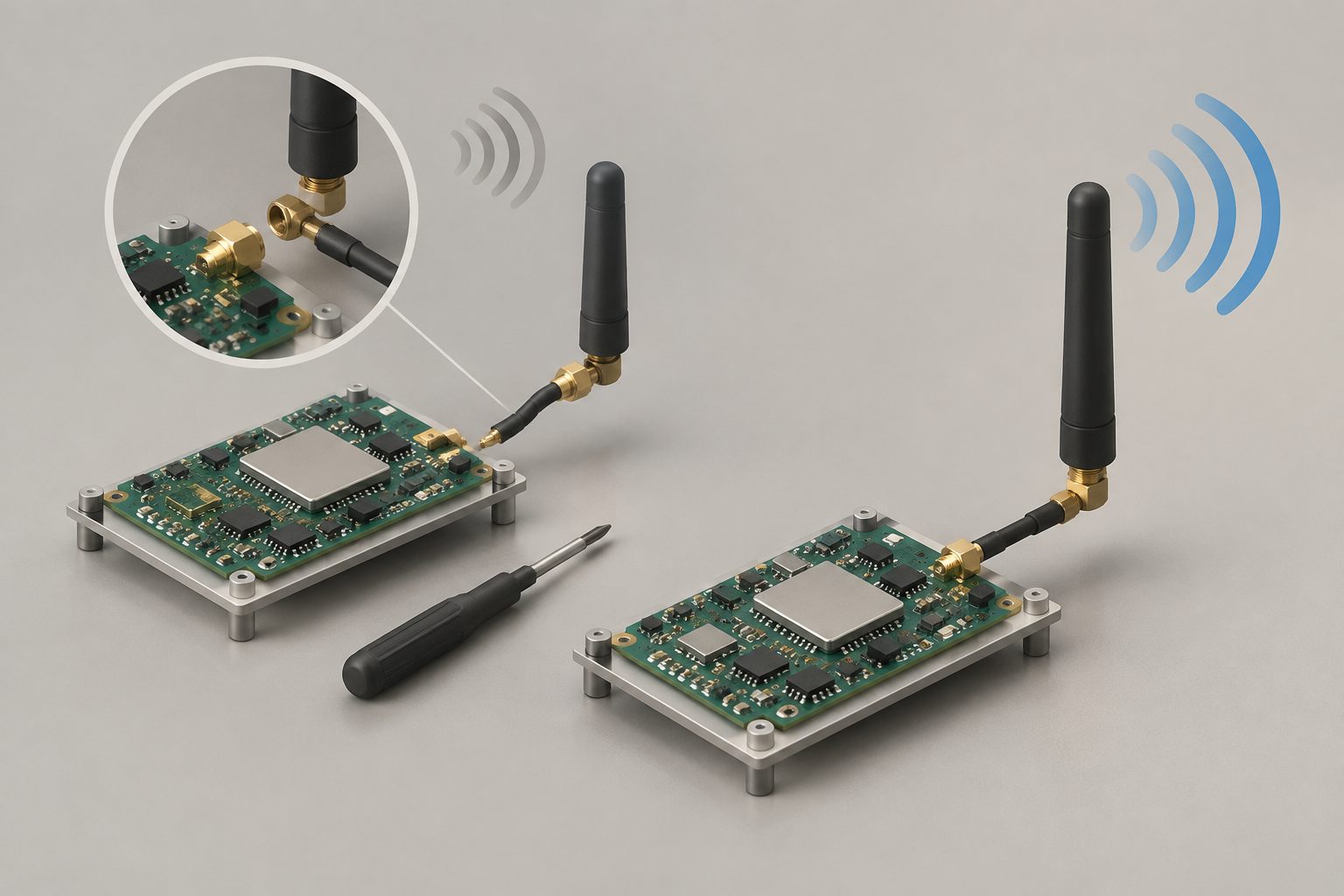
A modeling framework traced a Bluetooth 5.0 prototype’s 3.2-decibel receiver sensitivity shortfall to a mismatch between its antenna and amplifier. After two matching-network adjustments, sensitivity returned to within 0.1 decibels of the design target.