Local measurements in a cuprate found that the pseudogap begins where electron pairs form, pointing to phase coherence as a limit on superconducting temperature.
Researchers used local measurements of electrical noise in bismuth strontium calcium copper oxide, a cuprate superconductor, to identify the energy at which paired electrons emerge. The pairing energy matched the pseudogap energy and varied from place to place, reaching more than 70 milli–electron volts.
The results support a picture in which the pseudogap is tied to electron pairing rather than being produced solely by another form of local order, such as a charge-density wave. They also suggest that phase coherence—the coordinated behavior needed for superconductivity—limits the superconducting temperature in these materials.
Where the gap begins
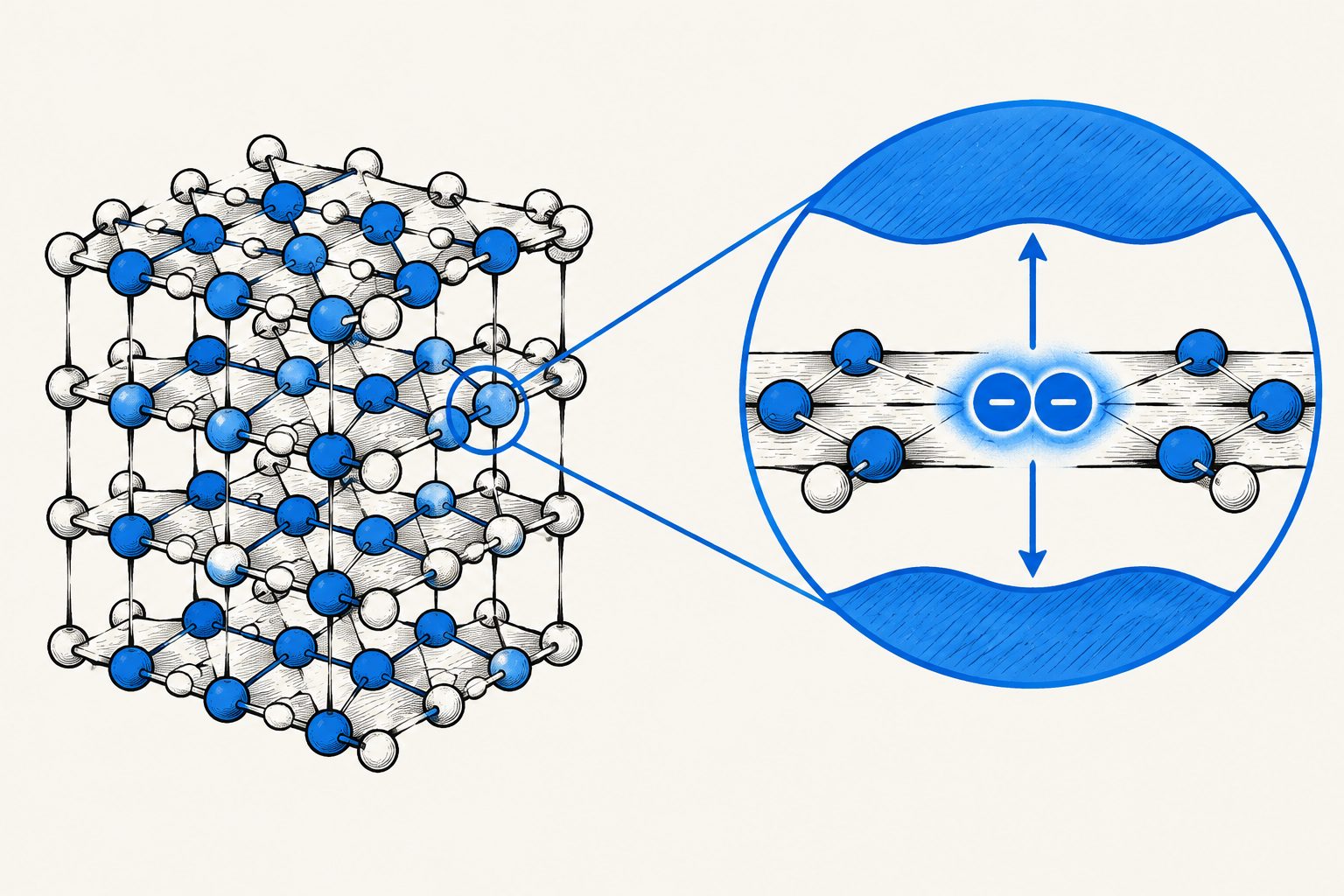
The researchers found a step in the effective charge measured by local shot-noise spectroscopy at the energy of the pseudogap. This is the expected signature of electron pairing, and it indicates that pairing begins at the pseudogap energy rather than at the smaller energy associated with a separate superconducting feature.
The pairing energy was spatially heterogeneous: it differed between locations in the material and reached more than 70 milli–electron volts. Across measurements at different locations and in samples with different doping levels, the pairing energy tracked the pseudogap energy with a slope of 1. The results rule out a pseudogap caused solely by local order, while linking it to Cooper-pair formation.
Why pairing matters
The pseudogap is a central unresolved feature of cuprate superconductors. By tying its energy to electron pairing, the study supports the idea that paired electrons exist before they develop the coordinated phase needed for superconductivity.
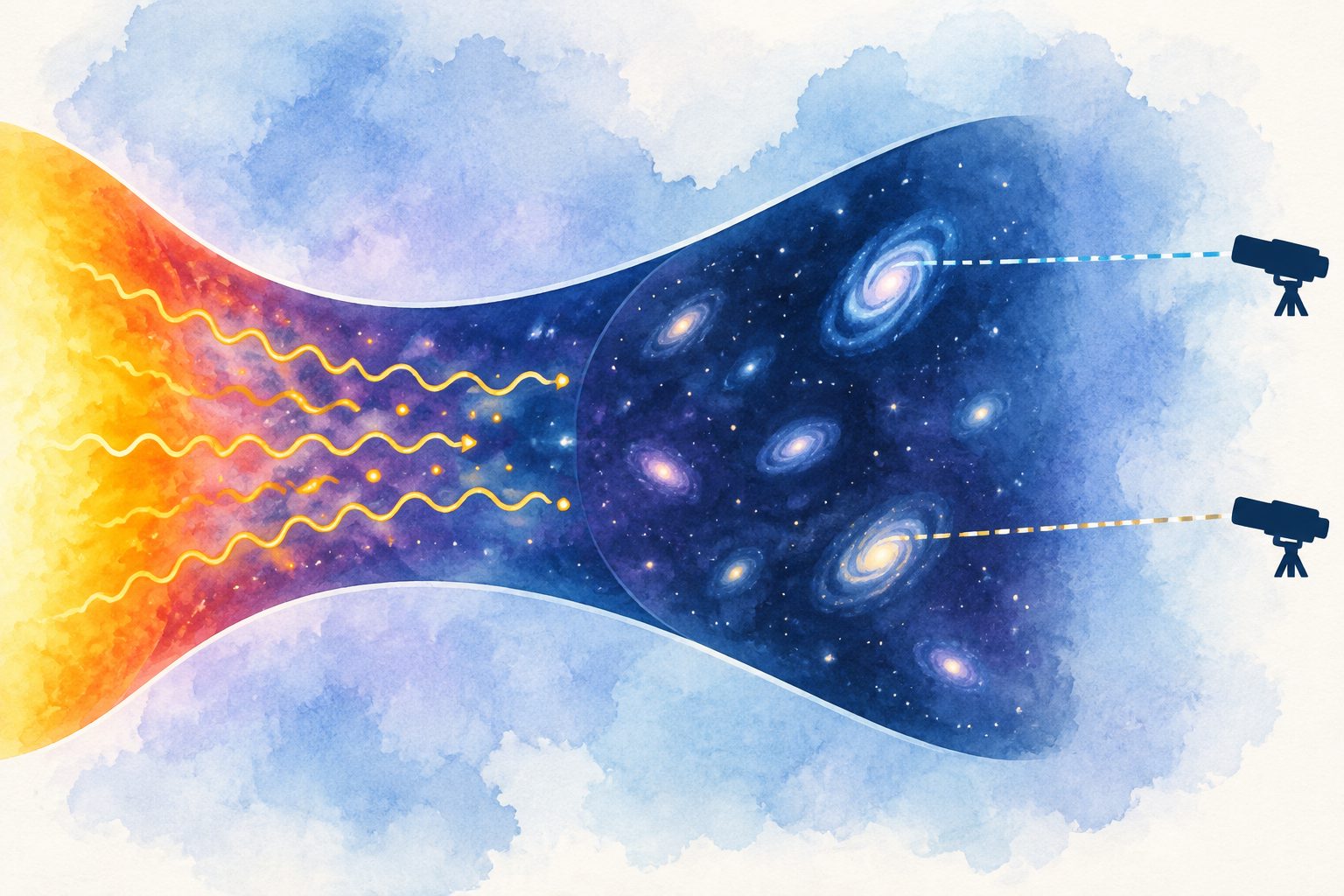
That interpretation suggests that higher superconducting temperatures may be limited less by the energy needed to form pairs than by the ability of those pairs to achieve phase coherence. The work does not remove the possibility that pairing and other local orders contribute together to the pseudogap.
Evidence and limits
The evidence comes from local shot-noise spectroscopy combined with scanning tunneling microscopy on Bi2Sr2CaCu2O8+δ samples. The measurements were made at temperatures of 4.2, 2.3 and 0.3 kelvin, across samples with different doping levels. Changes in the measured noise under magnetic fields provided additional support that the signal came from paired-electron tunneling rather than other noise sources.
The study’s simulations establish qualitative features of the noise but do not provide robust quantitative values, because the result is sensitive to the number of nodal quasiparticles. The experiments exclude a purely local-order explanation, not a mixed explanation involving both pairing and local order. The reported measurements are also from this cuprate material, so the excerpts do not establish that the same relationship applies to every cuprate superconductor.
// Source
Science · 2026 · DOI: 10.1126/science.adt3444
Authors: Jiasen Niu, Maialen Ortego Larrazabal, Thomas Gozlinski, Yudai Sato, Koen M. Bastiaans, Tjerk Benschop, Jian-Feng Ge, Yaroslav M. Blanter, Genda Gu, Ingmar Swart, Milan P. Allan
Institutions: Ludwig-Maximilians-Universität München, Delft University of Technology, Utrecht University, Brookhaven National Laboratory, Leiden University, Max Planck Institute for Chemical Physics of Solids, Munich Center for Quantum Science and Technology