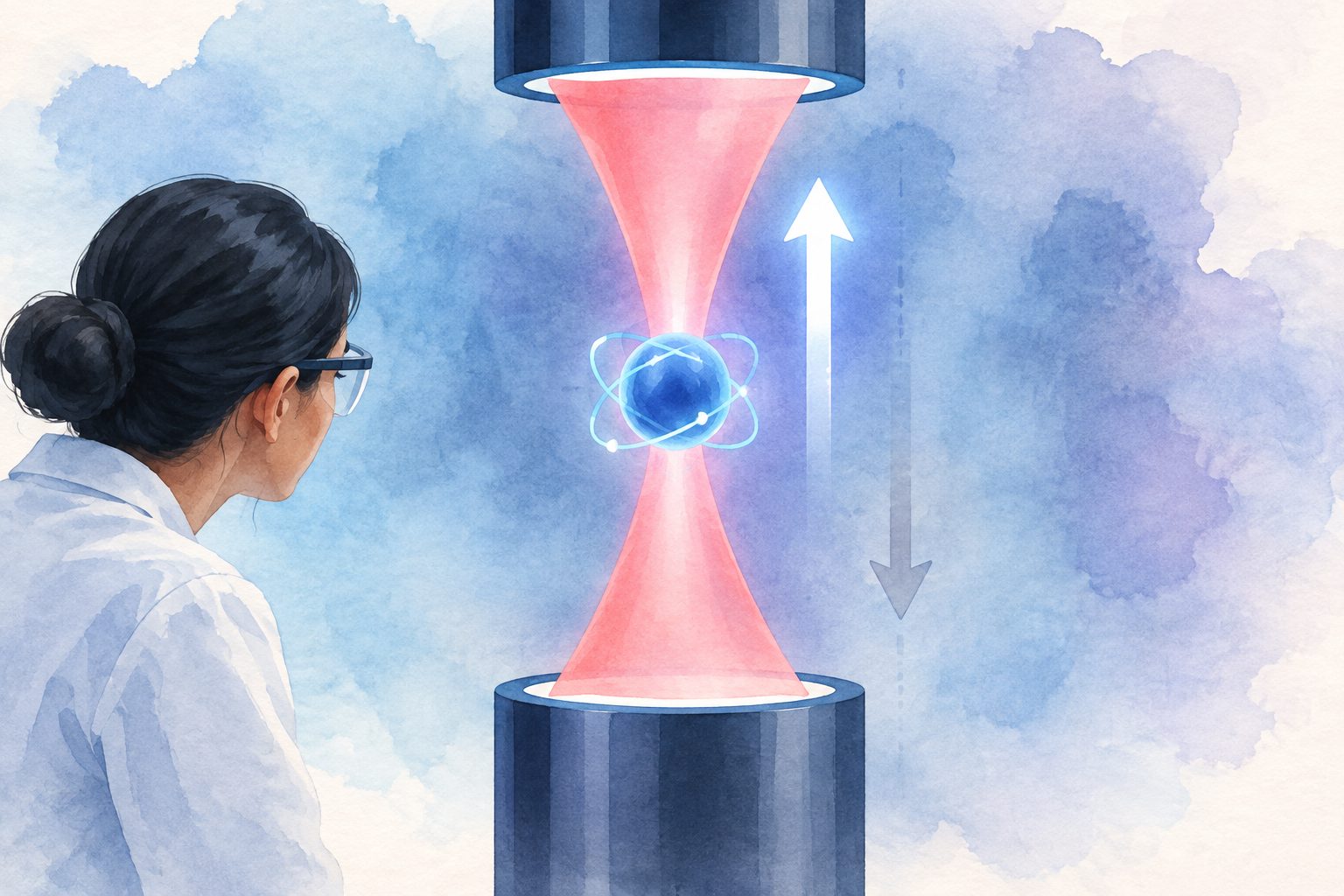
The team trapped a 100-nanometre silica sphere in an optical tweezer inside an optical cavity. Light scattered from the sphere coupled its motion to two cavity fields: one cooled the motion, while another generated correlations between the sphere and light leaving the cavity.
Using heterodyne detection, the researchers reconstructed the optical and mechanical correlations and found that they exceeded a limit expected for separable, non-entangled systems. The correlations extended into the outgoing light, showing that the nonclassical relationship could be distributed beyond the interaction region.