Adding water-repelling chains helped the layered material resist degradation during repeated filtration.
Researchers developed membranes made from layered titanium disulfide, a material with narrow channels that can separate molecules as water passes through. They added hydrophobic alkyl-chain barriers to protect the membranes from water-triggered degradation.
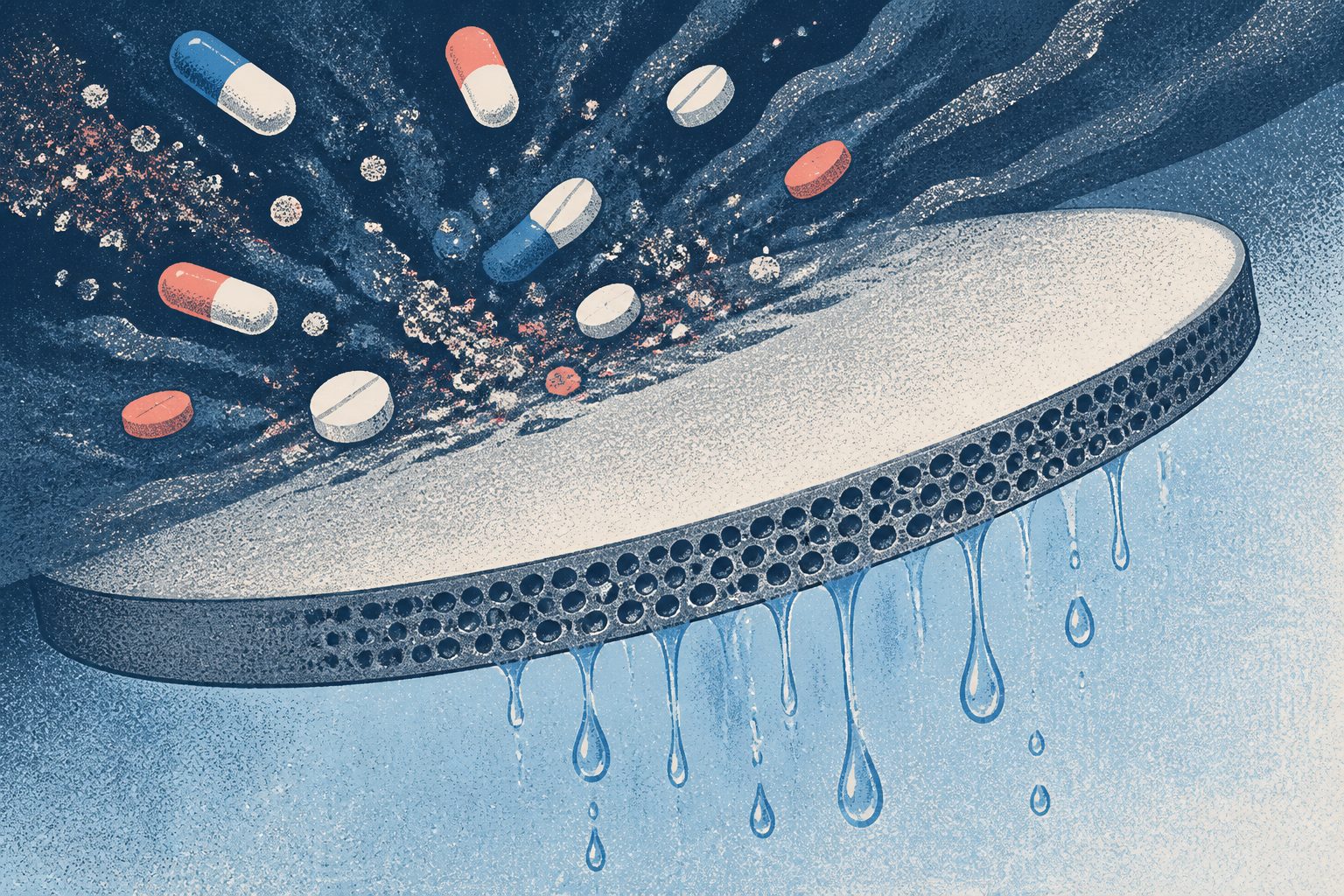
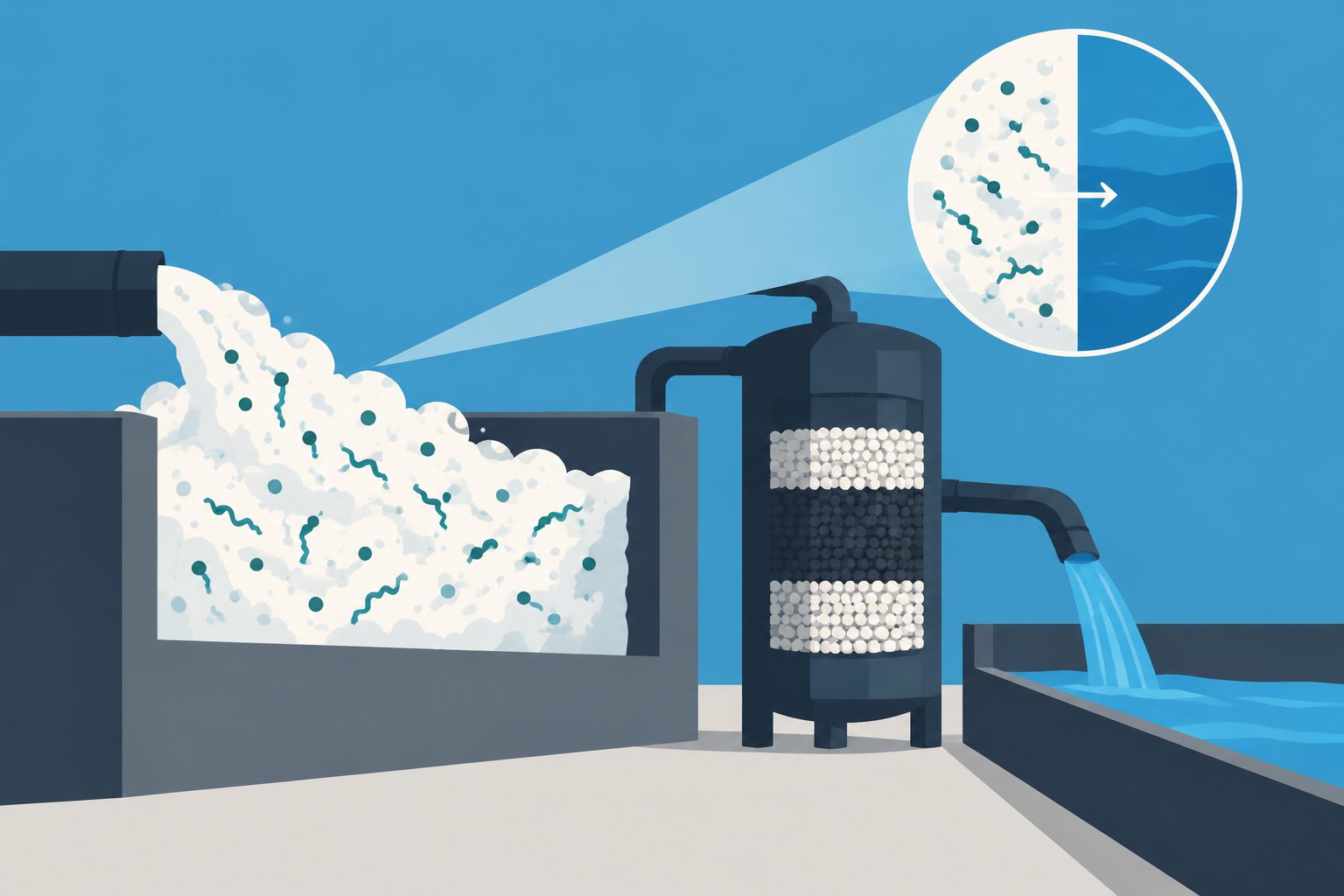
The functionalized membranes rejected up to 96.9% of several antibiotics, including sulfamethoxazole, ciprofloxacin, tetracycline and rifampicin. They maintained their performance for 30 filtration cycles and during 15 days of continuous operation, while reaching a water permeance of up to 46.8 liters per square meter per hour per bar.
What the membrane removed
The researchers constructed nanolaminate membranes from the stable 1T phase of titanium disulfide. Their experiments indicated that water-initiated hydrolysis, rather than direct oxidation by molecular oxygen, was the main cause of the material's degradation. Adding hydrophobic alkyl-chain barriers reduced this water-triggered degradation and improved the membrane's resistance to oxidation.
The functionalized membranes rejected up to 96.9% of diverse antibiotics, including sulfamethoxazole, ciprofloxacin, tetracycline and rifampicin. They sustained their performance over 30 filtration cycles and 15 days of continuous operation. The membranes reached a water permeance of up to 46.8 liters per square meter per hour per bar.
// Source
Nano-Micro Letters · 2026 · DOI: 10.1007/s40820-026-02315-4
Authors: Ruixin Yan, Mingzi Sun, Honglu Hu, Ruijie Yang, Zhen Zhang, Weikang Zheng, Liang Mei, Ting Ying, Yue Zhang, Alicia Kyoungjin An, Chuyang Y. Tang, Jingyun Fang, Bolong Huang, Zhiyuan Zeng
Institutions: University of Hong Kong, Sun Yat-sen University, Chinese University of Hong Kong, City University of Hong Kong, Hong Kong University of Science and Technology, City University of Hong Kong, Shenzhen Research Institute