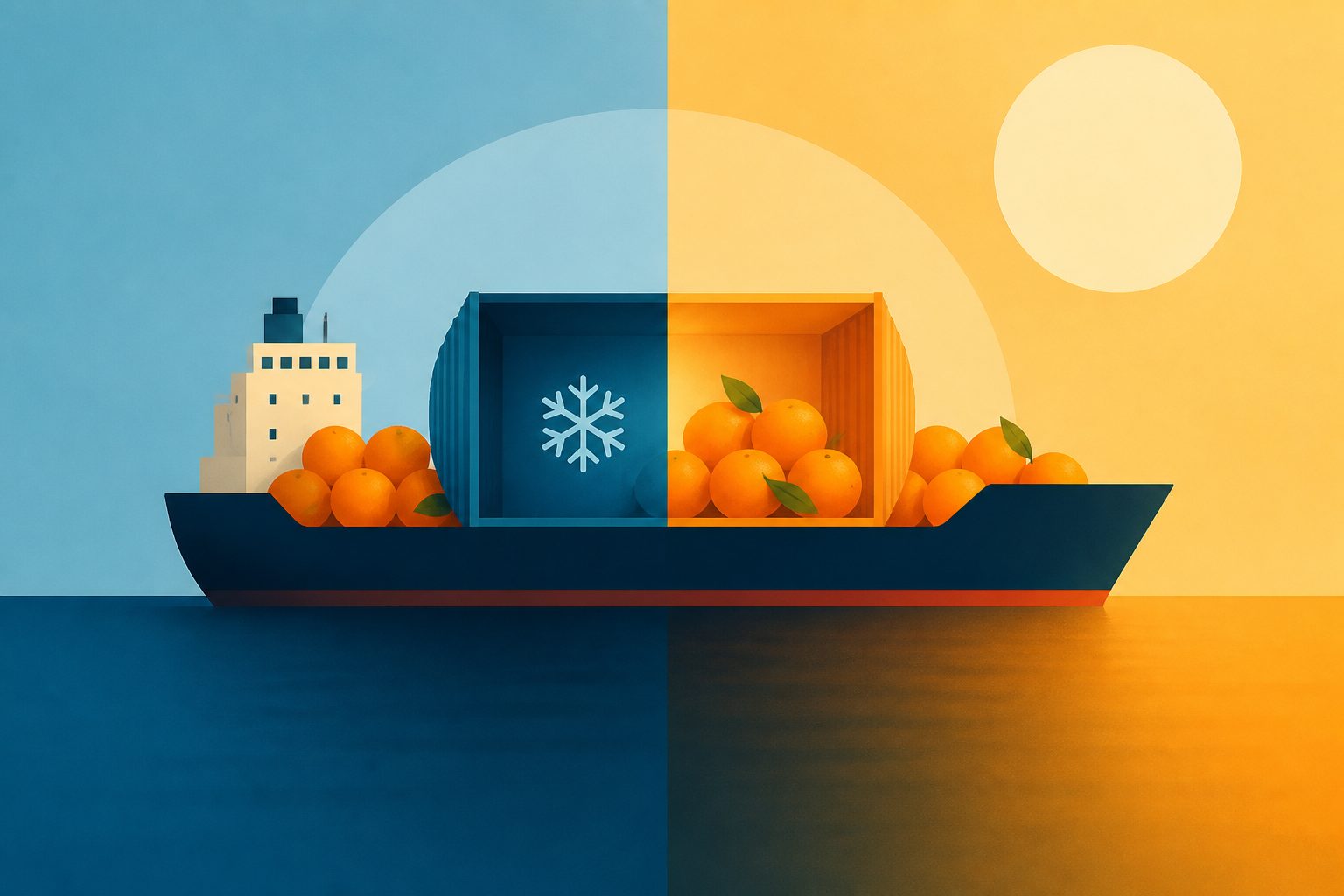
A physics-based study of citrus moving from South Africa to the Netherlands identifies cold-chain practices that could reduce emissions when safety conditions are met.
Researchers developed a model that follows the changing conditions of individual citrus fruits and shipments across a maritime supply chain. They applied it to fruit moving from South Africa to the Netherlands and assessed climate impact and fossil resource use.
The results show that impacts vary substantially between fruits and shipments. Farm-to-packhouse operations and overseas shipping can each make large contributions, depending on local conditions and how the cold chain is managed. The model points to stage-specific changes that could reduce these impacts, including removing field heat before forced-air cooling and using slightly warmer shipping temperatures under validated safety conditions.
How citrus impacts varied
The model found substantial variation in climate and fossil-resource impacts among individual fruits and between shipments, showing why a single static estimate may miss important differences. Energy use, maritime transport and food loss were the main impact sources in the case study.
Depending on local conditions and cold-chain management, the farm-to-packhouse and overseas-shipping stages contributed up to 0.5 kilograms of carbon-dioxide equivalent per kilogram of fruit consumed and 2 megajoules per kilogram, respectively. The model identified reducing field heat before forced-air cooling as one possible intervention. It also found that increasing shipping temperatures from −1 °C to 1–3 °C could lower impacts when phytosanitary conditions have been validated.
Why cold-chain choices matter
More than half of the greenhouse-gas emissions associated with fruit are produced after harvest, according to the study’s background. By representing changes across time and location, as well as differences in fruit condition, the model is intended to help identify practical actions at specific stages of a global supply chain.
For citrus shipments, the findings suggest that cold-chain decisions can affect both climate impact and resource use. Any temperature increase would need to be compatible with validated requirements for controlling plant pests and diseases.
Model evidence and limits
This is a physics-based, spatio-temporal life cycle model demonstrated through a case study of one citrus route, from South Africa to the Netherlands. It estimates climate and fossil-resource impacts for individual fruits and shipments rather than reporting results from a trial of changed shipping practices.
The abstract does not provide the model’s full inputs, uncertainty ranges or results for other routes, citrus varieties or supply chains. The proposed temperature change is conditional on validated phytosanitary conditions, and the findings may not apply unchanged in settings with different local conditions or cold-chain systems.
// Source
Resources Conservation and Recycling · 2026 · DOI: 10.1016/j.resconrec.2026.109139
Authors: Daniel Onwude, Eleonora Crenna, Paul Cronje, Tarl Berry, Roland Hischier, Thijs Defraeye
Institutions: Wageningen University & Research, University of Guelph, Swiss Federal Laboratories for Materials Science and Technology, Stellenbosch University, HES-SO Valais-Wallis, Citrus Research International