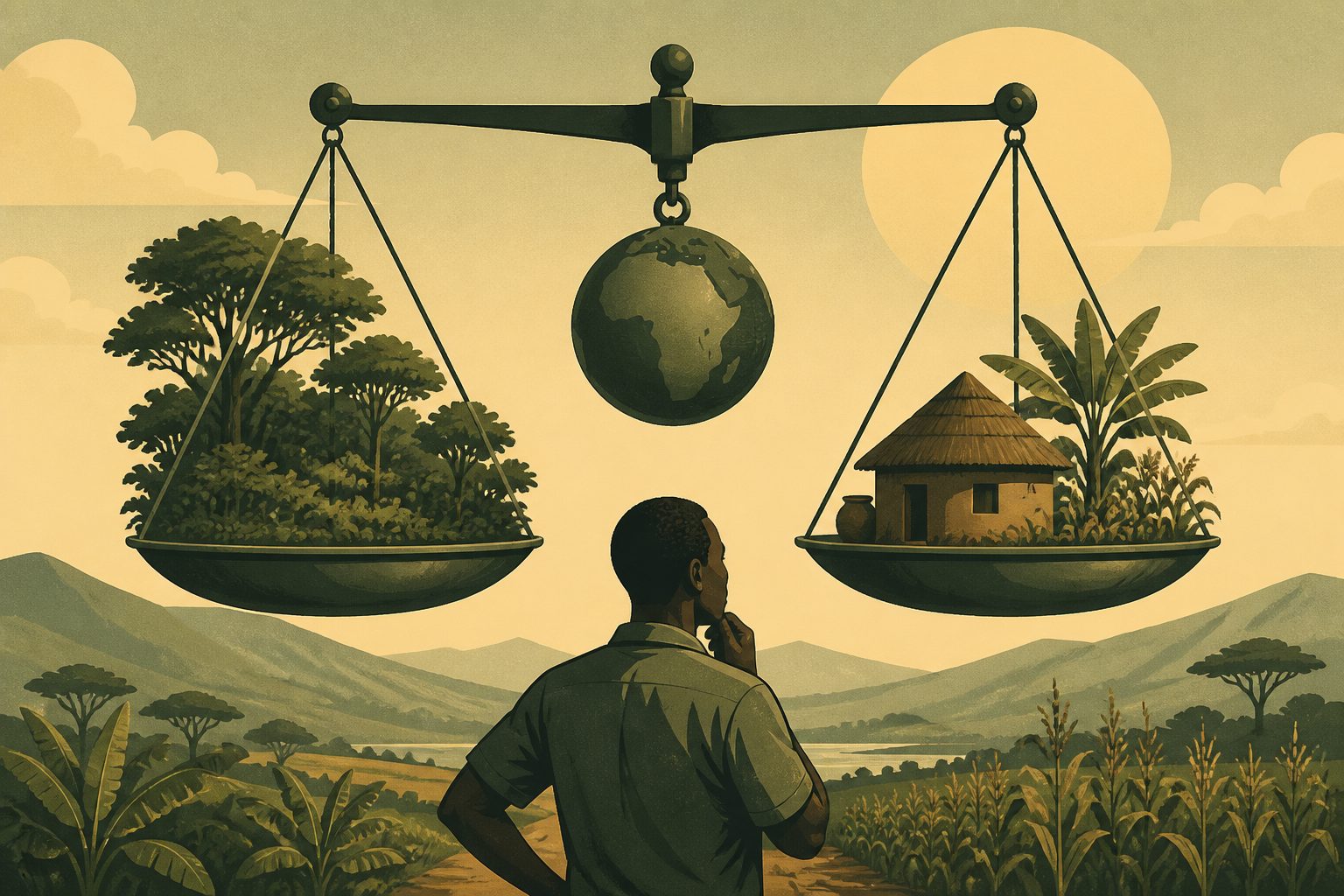
A study found that predictable compensation and adaptation benefits could shape smallholders’ willingness to join agroforestry carbon projects.
Researchers examined how smallholders in Uganda make decisions about joining agroforestry-based carbon projects, which can generate climate benefits while potentially supporting adaptation. Interviews showed that compensation levels were not judged in isolation: farmers’ available resources, exposure to climate disasters and other livelihood conditions shaped how attractive an offer seemed.
A quantitative analysis identified a context-specific compensation benchmark of $54 per hectare per year. Participation likelihood rose with higher compensation, previous agroforestry experience, exposure to climate disasters and trust in climate policy, while uncertainty about prices reduced it.
What shaped farmers’ choices
The study found that participation decisions depended on financial, social, institutional and livelihood conditions. Identical compensation levels were perceived differently by farmers facing different resources and risks, suggesting that the costs of adapting are not uniform across households.
The quantitative analysis identified a compensation benchmark of $54 per hectare per year in this setting. Participation likelihood increased by 1% for each additional dollar of compensation, by 22% among farmers with prior agroforestry experience, by 14% among those exposed to climate disasters and by 6% among those with greater trust in climate policy. Price uncertainty reduced participation likelihood by 4%.