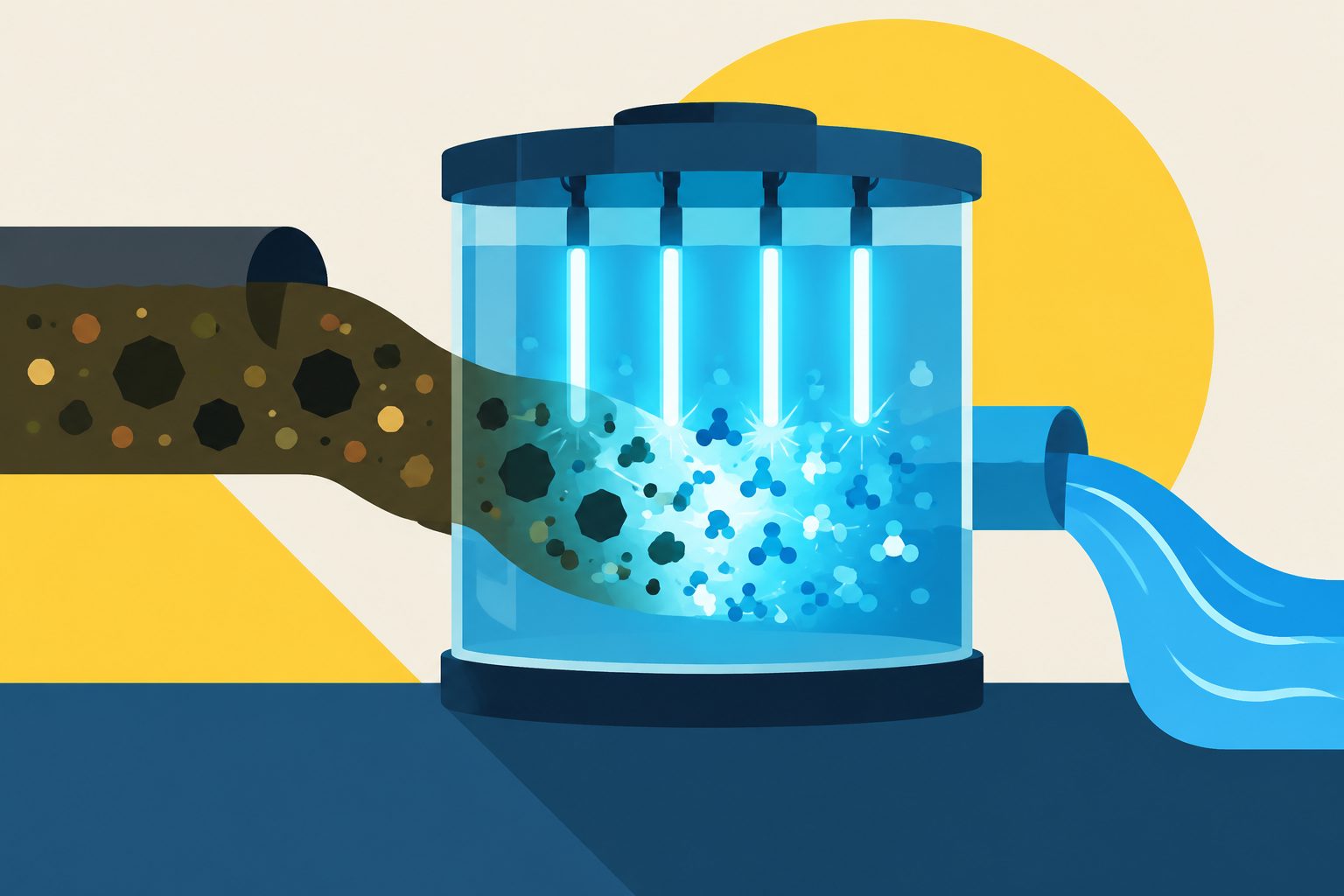
Adding iron ions reshaped water at the electrode surface, producing more hydroxyl radicals that attack a wider range of contaminants.
The study focused on anodic oxidation, a process that uses an electrode to generate reactive chemicals that break down pollutants. The researchers used Fe3+ ions to strengthen and reorganize hydrogen bonding among water molecules at the electrode surface. A particular water-bond arrangement increased from 21% to 37%, and the altered structure made it easier for water to split.
This produced a sevenfold increase in hydroxyl radicals, highly reactive species that can degrade organic contaminants. The system was reported to break down diverse emerging contaminants, including isothiazolinone antimicrobials, while maintaining about 95% removal for 500 hours in continuous-flow operation.
Evidence and open questions
The findings come from a research article that used chemical analysis, high-performance liquid chromatography, measurements of total organic carbon, ultraviolet-visible spectroscopy, electron paramagnetic resonance and nuclear magnetic resonance to characterize the treatment process and water structure. The abstract reports results from contaminant-degradation tests and 500 hours of flow operation. The supplied excerpts do not specify the full list of contaminants, their starting concentrations, reactor scale, operating conditions, energy use or the details behind the cost comparison. They also do not indicate how the system performs with different real-world wastewater compositions.