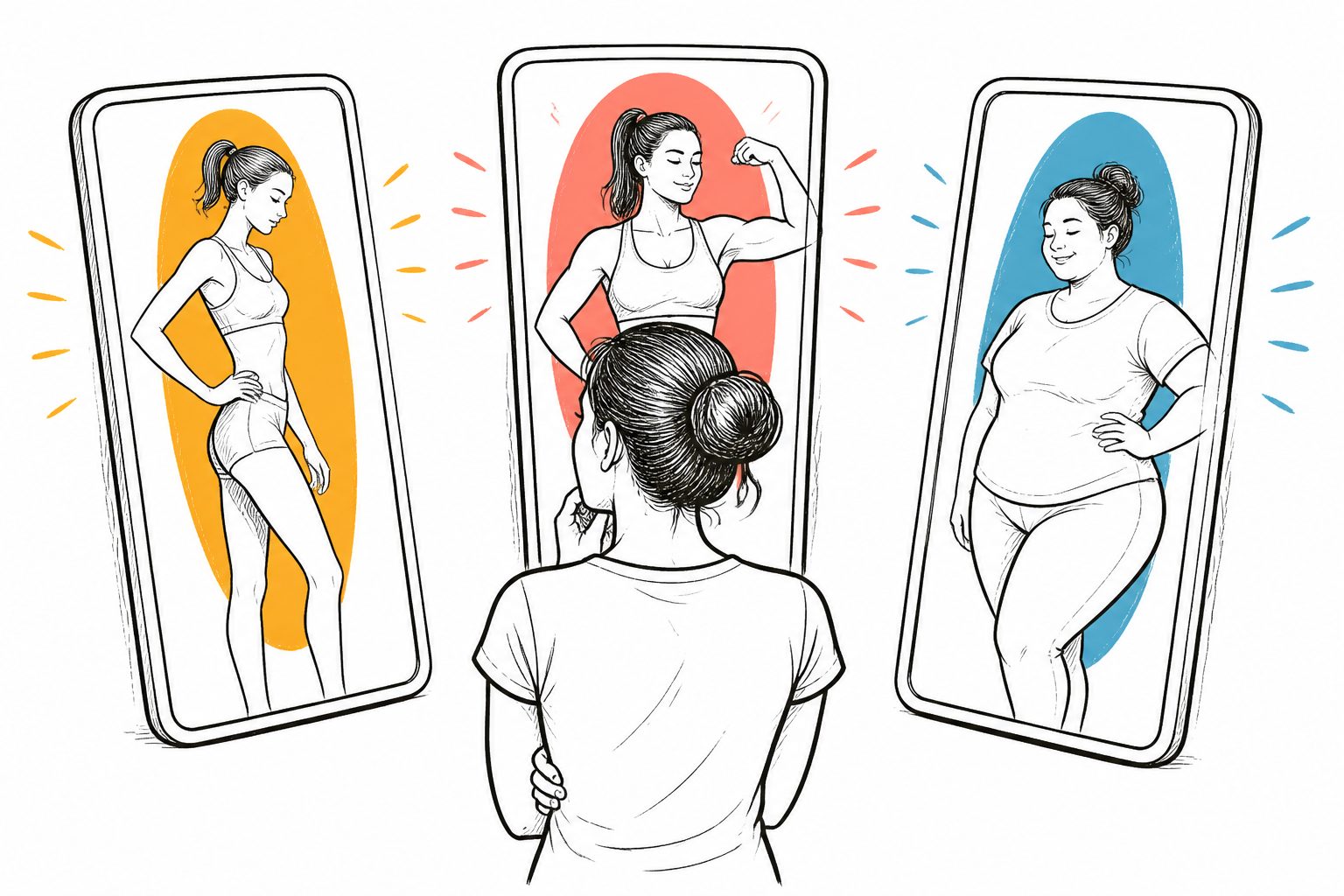
Tracking what undergraduates saw on social media several times a day, researchers found different types of body-focused posts related to different kinds of body dissatisfaction and urge changes.
In this study, undergraduate participants reported moment-by-moment exposure to thinspiration (very thin), fitspiration (fitness/lean bodies), and fatspiration (larger bodies), along with measures of body dissatisfaction and urges related to restricting food or exercising. The researchers analyzed whether what participants viewed at one moment predicted outcomes at later moments over a week.
Results were not the same for each type of content. Viewing thinspiration was linked to greater body dissatisfaction, fitspiration to lower body appreciation, and fatspiration to stronger urges to exercise. In the other direction, the main significant link was that people who reported higher body objectification were more likely to view less thinspiration content, while gender did not change these moment-to-moment relationships.
Links differ by content type
Using ecological momentary assessment over seven days (reports six times a day; n = 858, with 78.3% women), the study found:
- Viewing thinspiration predicted greater body dissatisfaction.
- Viewing fitspiration predicted lower body appreciation.
- Viewing fatspiration predicted greater urges to exercise.
In the reverse direction, the only significant relationship found was that higher body objectification predicted less thinspiration content viewing. Gender did not moderate the moment-to-moment relationships.
// Source
Body Image · 2026 · DOI: 10.1016/j.bodyim.2026.102157
Authors: Wenn Lynn Ooi, Julian Simmons, Isabel Krug
Institutions: The University of Melbourne, Royal Children's Hospital