Researchers used a sensor-based glucose monitor for 14 days in 136 adults with type 2 diabetes receiving insulin glargine 100 U/mL alongside oral diabetes medicines in Spanish primary care. The monitor was blinded, meaning participants and clinicians could not use its readings during the monitoring period.
Health & Medicine2 months ago
Study finds unrecognized low blood sugar in adults with type 2 diabetes
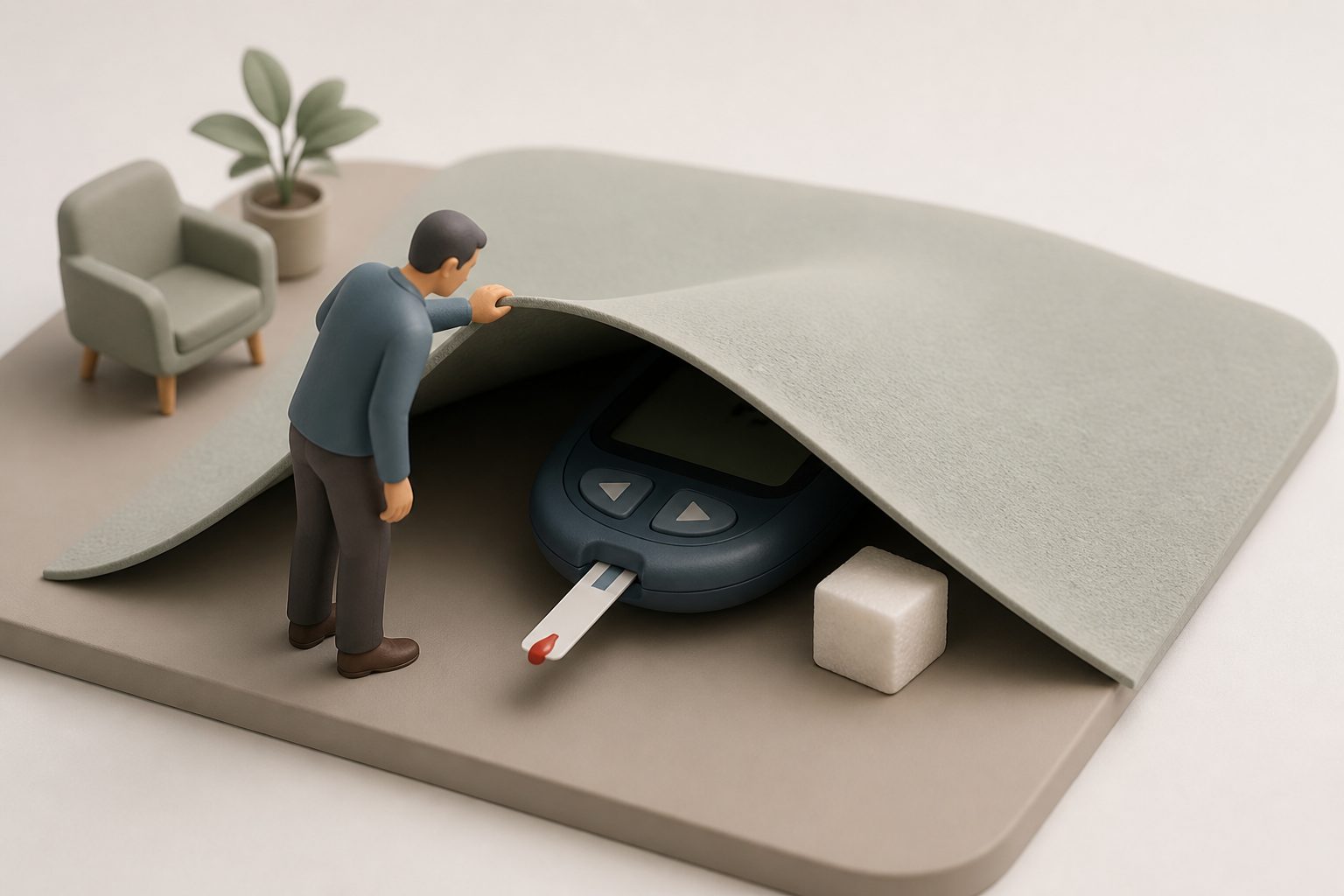
Fourteen days of blinded glucose monitoring found both nighttime low readings and substantial periods of high readings.
Low evidenceHuman studyInterpret with caution
Medical disclaimer: This article summarizes research findings and is for informational purposes only. It is not medical advice.
What the study looked at
The GPDetect Study examined how often low and high glucose occurred in adults with type 2 diabetes treated in primary care with insulin glargine 100 U/mL for at least six months, together with oral diabetes medicines. It was a prospective, multicenter, observational study in Spain involving 136 adults with an average age of 69 years. Participants wore a blinded continuous glucose monitor for 14 days. Researchers assessed time below, within, and above glucose ranges, episodes of more severe low glucose, cognitive screening scores, and fear of hypoglycemia.
What the analysis found
Among the 136 participants, 16.9% spent more than 4% of monitored time below 70 mg/dL, a commonly used target threshold. This was reported more often at night than during the day: 23.5% versus 12.5%. A total of 8.8% had more than 1% of monitored time below 54 mg/dL, the study's measure of clinically significant hypoglycemia.
High glucose was also frequent. In total, 46.3% of participants spent more than 25% of the day between 181 and 250 mg/dL, and 28.7% spent time above 250 mg/dL. Only 55.9% met the study's target of at least 70% of time between 70 and 180 mg/dL. Participants taking SGLT2 inhibitors had lower average glucose and lower fear-of-hypoglycemia scores, but this was an association and does not show that these medicines caused those differences. Cognitive impairment, defined by a Mini-Mental State Examination score below 23, was associated with longer periods of hypoglycemia.
Where this may apply
These findings may be relevant to adults in Spain with type 2 diabetes who have used insulin glargine 100 U/mL for at least six months in primary care. They may not apply to people using other insulin regimens, people outside similar primary-care settings, or people with different health characteristics.
The significance
The study indicates that short-term sensor monitoring can reveal glucose readings that may not be recognized through usual monitoring, including nighttime low readings, while also showing that high glucose remained common in this group. It provides information about glucose patterns in a specific primary-care population, but it does not establish whether monitoring or any particular treatment improves outcomes. The reported links with other medicines and cognitive scores require cautious interpretation because of the observational design.
Limitations & evidence assessment
The study was observational and had no randomized comparison group, so it cannot show that any treatment caused the glucose patterns or that continuous monitoring improved health outcomes. The sample included 136 people in Spain, and glucose was monitored for only 14 days, which may not represent longer-term patterns. The abstract does not provide enough information about how participants were recruited, whether the results apply to other populations, or how factors such as other medicines and health conditions affected the findings. Associations involving SGLT2 inhibitor use and cognitive scores should not be interpreted as causal.
Why this evidence level: This was a relatively small observational study of 136 adults, so it can describe glucose patterns and associations but cannot establish that insulin treatment or any other factor caused the findings. Monitoring covered only 14 days, and the abstract provides limited information about participant selection and other possible sources of bias.
Evidence levels are editorial estimates derived from study metadata — they are not clinical appraisals.
// Source
Diabetes Therapy · 2026 · DOI: 10.1007/s13300-026-01903-2
Authors: Virginia Bellido, Ana María Cebrián Cuenca, Cristóbal Morales, Alberto S. de las Hazas, Alfonso Soto-González, Carla Morer-Liñan, José M. Borrachero, Gabriel Cuatrecases, Elena L Garcia, Judith López-Fernández, Silvia Lozano-García, Álvaro M. Bayón, Cristina M. Niño-Azcarate, Oscar Laclaustra, Paulina Fuentealba
Institutions: Universidad de Salamanca, Complexo Hospitalario Universitario A Coruña, Hospital Universitario Virgen del Rocío, Instituto Murciano de Investigación Biosanitaria, Departamento de Salud, Servicio Murciano de Salud, Instituto de Biomedicina de Sevilla, Universidad de Murcia, Consorci d’Atenció Primària de Salut Barcelona Esquerra, Universidad Politécnica de Cartagena, Institut Químic de Sarrià, Hospital Universitario de Canarias, Newbiotechnic (Spain), Servicio Canario de la Salud, Sanofi (Spain)