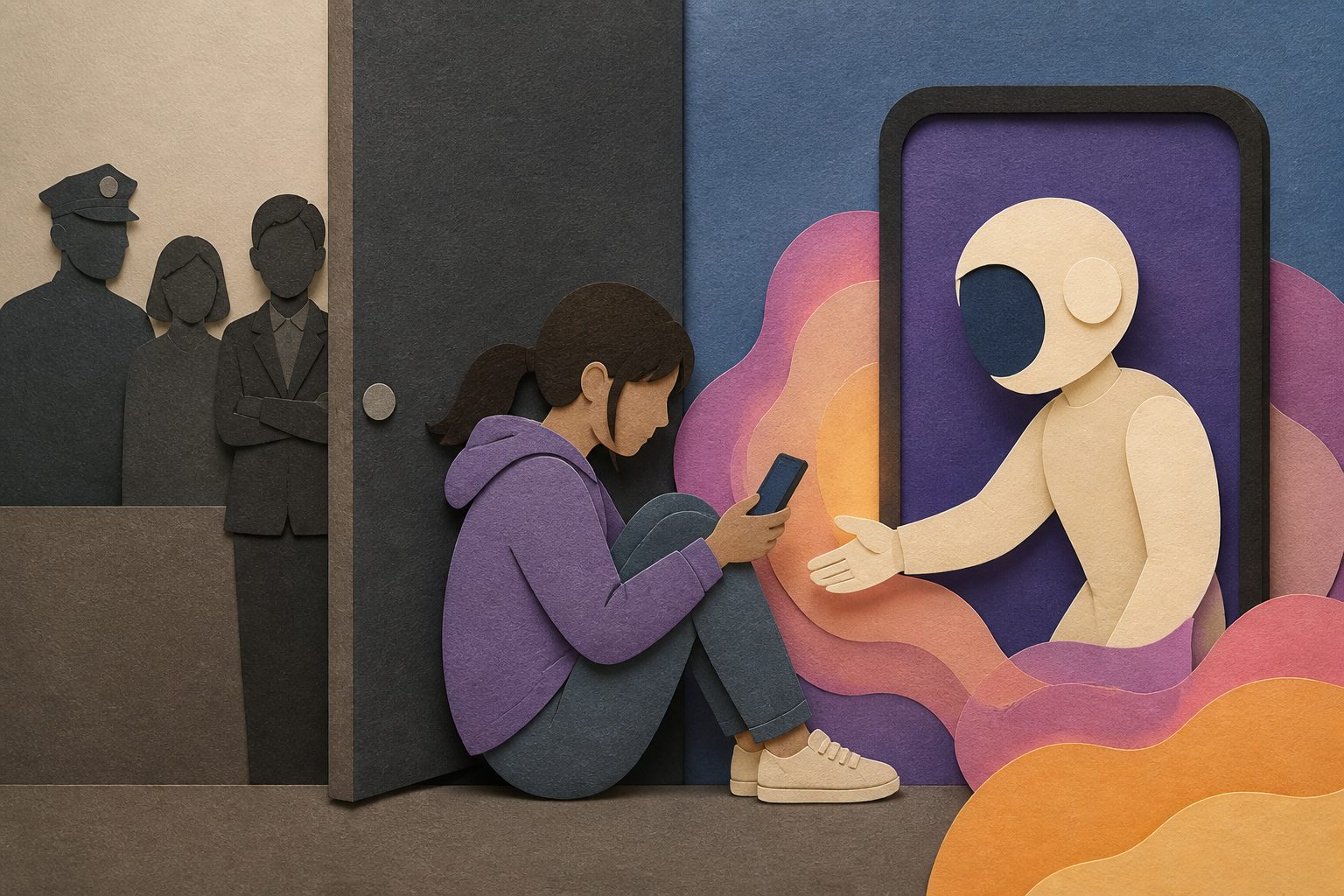
In a national survey, 18.7% of those reporting victimisation disclosed it to an AI system, compared with 13.2% who told authorities.
Researchers surveyed Australian adolescents aged 16–18 using questions from the Australian Child Maltreatment Study. The survey covered nonconsensual sharing of sexual images and online sexual solicitation by an adult, and asked whether AI was involved and where young people disclosed what happened.
Overall, 14.9% reported at least one form of online sexual victimisation. One in 25 adolescents said they had experienced AI-facilitated victimisation or had a friend who experienced it. AI was involved in 26.0% of reported cases involving nonconsensual sharing of sexual images.
What the survey found
The national prevalence of any reported online child sexual victimisation was 14.9%. This included nonconsensual sharing of sexual images, reported by 6.4%, and sexual solicitation by an adult, reported by 11.3%.
Girls were more likely than boys to report any online sexual victimisation: 18.9% compared with 10.6%. Boys, however, were more likely to report AI-facilitated victimisation: 26.6% compared with 9.0% among girls. One in 25 adolescents reported experiencing AI-facilitated online child sexual victimisation or having a friend who experienced it.
Among those who disclosed their victimisation, disclosure to an AI system was reported by 18.7%, compared with 13.2% who disclosed to authorities. Authorities included police, teachers and online reporting platforms. The difference was especially marked among boys. Victimisation also appeared to cluster within peer groups.
Evidence and limits
The study used self-reported survey data from a nationally representative sample of 1,894 Australian adolescents aged 16–18. Researchers used validated items from the Australian Child Maltreatment Study and follow-up questions about AI involvement and disclosure.
The findings describe adolescents’ reported experiences and cannot establish why AI was involved or why disclosure patterns differed between groups. The results are specific to Australian adolescents, and the abstract does not provide further detail on the timing or circumstances of the reported AI-facilitated incidents.