
Researchers found transcripts for Cyp17, a gene involved in producing cortisol-related steroid intermediates, in the interrenal tissue of North Pacific spiny dogfish. They also detected circulating cortisol after the sharks recovered from a dilute-water challenge or received antibiotics by gavage for five days.
Climate & Environment2 days ago
Sharks can produce cortisol, a hormone long thought absent in them
Experiments in North Pacific spiny dogfish found evidence that cortisol can help regulate blood glucose in some conditions.
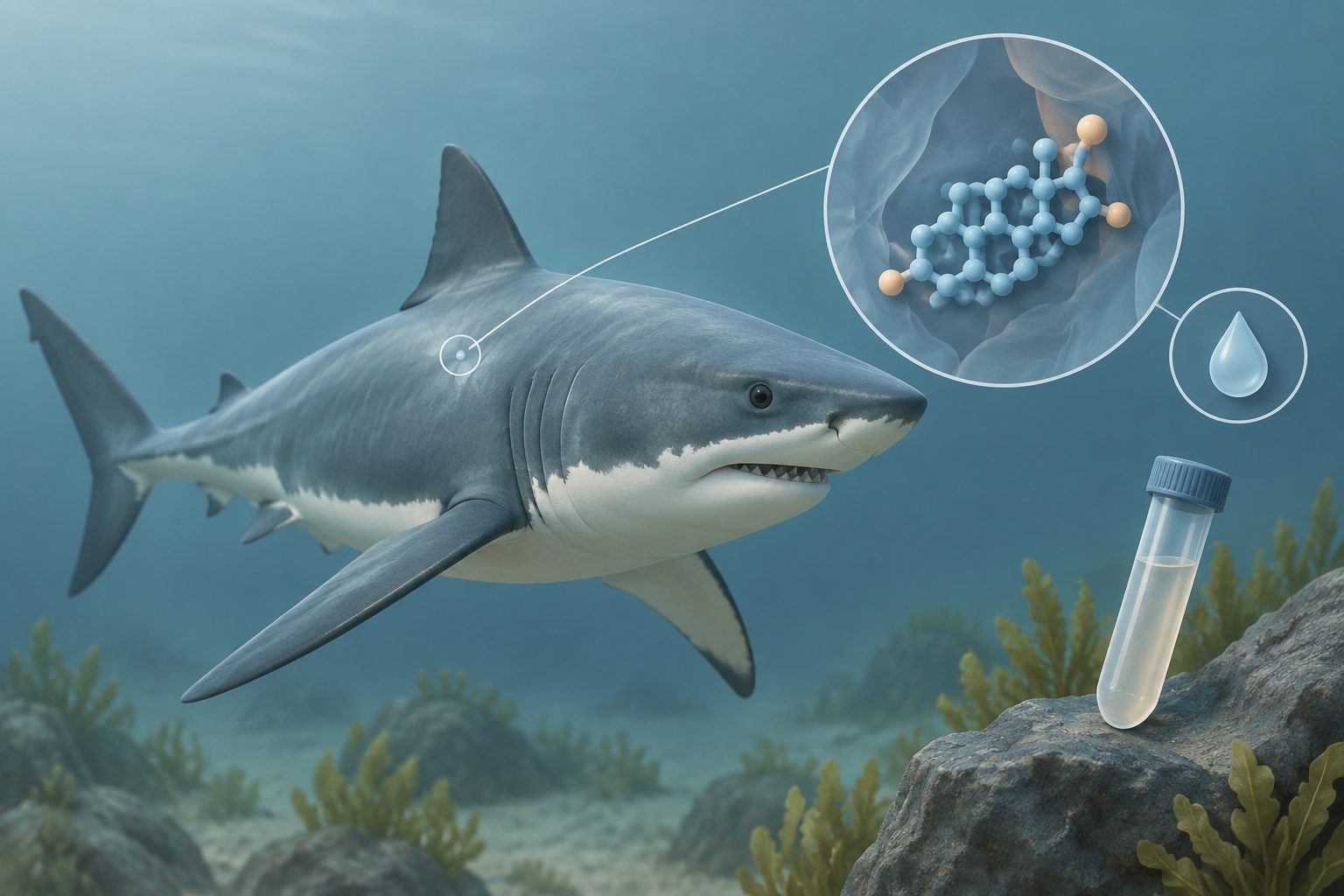
What the dogfish produced
The experiments provide evidence that North Pacific spiny dogfish produce cortisol. Circulating cortisol was detected after two treatments: 48 hours at 21 parts per thousand during recovery from a hypoosmotic, or dilute-water, challenge, and a five-day course of antibiotics given by gavage. When researchers implanted cortisol at physiologically relevant levels, the sharks showed a persistent decrease in plasma glucose. The implants had little effect on plasma osmolytes, the dissolved substances that help regulate water and salt balance. The researchers also propose that microbes may contribute to steroid production in elasmobranchs, the group that includes sharks, rays and skates.
Why cortisol matters here
Elasmobranchs have long been understood to rely on a different dominant circulating steroid, 1α-hydroxycorticosterone, and were presumed not to produce cortisol. Evidence of context-dependent cortisol production broadens the picture of how these animals regulate their physiology. The glucose response suggests that cortisol has a role in energy regulation in dogfish, although its wider functions remain uncertain.
Evidence and open questions
The findings come from experiments measuring a cortisol-related gene transcript, circulating cortisol under two conditions and the effects of cortisol implants. The study involved North Pacific spiny dogfish, so the results do not establish that all sharks or other elasmobranchs produce cortisol in the same way. The researchers describe the hormone's roles as putative, found little change in plasma osmolytes and state that its definitive glucocorticoid or mineralocorticoid functions remain unresolved.
// Source
Proceedings of the Royal Society B Biological Sciences · 2026 · DOI: 10.1098/rspb.2026.1440
Authors: Alyssa M. Weinrauch, Ian A. Bouyoucos, W. Gary Anderson
Institutions: University of Manitoba, Bamfield Marine Sciences Centre


