Review reports regional differences in children who inhale foreign objects in sub-Saharan Africa
A review of 14 studies found differences in the ages, objects, complications and outcomes reported across eight countries.
Moderate evidenceReviewInterpret with caution
Medical disclaimer: This article summarizes research findings and is for informational purposes only. It is not medical advice.
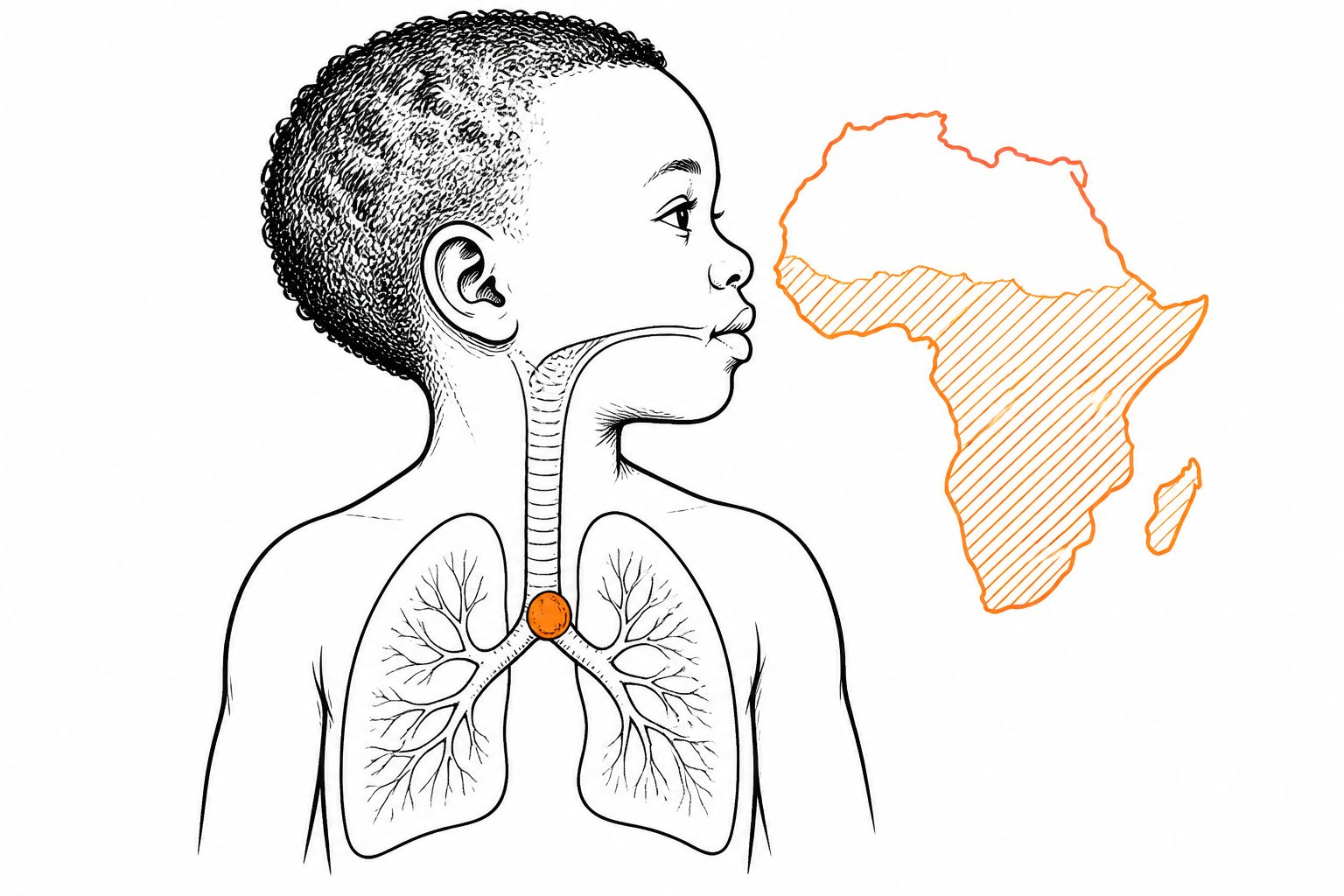
Editorial illustration — not from the study.
The systematic review and meta-analysis included 14 studies from eight countries: Ethiopia, Nigeria, Ghana, Mali, Mozambique, South Africa, Tanzania and Togo. Across the studies, 61% of the children were boys, and the typical age at presentation varied from about 2 to 4.5 years in studies that reported median ages.
Organic materials, such as seeds, made up 54% of cases overall, but this result varied greatly by region. Seeds were common in East African studies, while plastics and metals were more common in the southern African studies included. Pneumonia was reported in about 31% to 33% of children in adequately reported series, and pooled mortality was 2%.
What the review examined
The researchers searched five databases, without language restrictions, for original studies published up to January 2026. They included studies of children aged 0 to 18 years in sub-Saharan African countries who had confirmed tracheobronchial foreign body aspiration. Fourteen studies, covering 748 children from eight countries, met the inclusion criteria. The researchers combined results for outcomes reported by at least five studies and examined differences between East, West and southern Africa.
What the evidence shows
Across the included studies, boys accounted for 61% of cases, with little variation in this proportion between studies. The ages of the children varied by location: reported median ages ranged from 2 years in Ethiopia to 4.5 years in Tanzania, while reported mean ages ranged from 2.8 years in Nigeria to 5.7 years in South Africa.
Organic foreign bodies accounted for 54% of cases overall, but this estimate had very high variation between studies. Seeds were especially common in the East African studies, including 87% of cases in one Ethiopian study and 54% in one Tanzanian study. Inorganic objects, including plastics and metals, accounted for 62% of cases in the Mozambique and South African studies cited in the review. West African studies showed a mixture of organic and inorganic objects.
The review reported that 15% of foreign bodies were located in the trachea, with little variation in that measure between studies. Data about objects in the bronchi varied substantially, which the authors linked to differences in how locations were documented. Pooled mortality was 2%, and pneumonia affected about 31% to 33% of children in the adequately reported study series. These are descriptive findings from the included studies and do not show that any particular object, region or circumstance caused a specific outcome.
Who this may apply to
These findings may be most relevant to children with confirmed airway foreign body aspiration in the eight represented countries and to settings with similar clinical and reporting practices. They do not necessarily apply to all children in sub-Saharan Africa, countries not represented in the review, or children in other regions. The review describes patterns in reported cases; it does not provide individual risk estimates or treatment guidance.
Why it matters
The review helps describe a child-health problem for which the available information in sub-Saharan Africa is limited. The reported regional differences may be useful for planning further surveillance and research, but they do not by themselves establish which prevention or emergency approaches work. The findings should not be assumed to represent every country in the region or children in other settings.
Limitations & evidence assessment
Only 14 studies from eight countries were included, so much of sub-Saharan Africa was not represented. The total sample was relatively small, and the abstract does not provide a full assessment of the quality or risk of bias of each underlying study. Results for the types of foreign bodies varied greatly between studies, and bronchus-location data were affected by differences in documentation. The analysis could pool only outcomes reported by at least five studies, meaning other potentially important outcomes were not combined. Because this was a review of mostly descriptive clinical studies, it can summarize patterns but cannot establish causes or determine whether any intervention improves outcomes. The abstract also does not state whether publication bias was assessed.
Why this evidence level: This systematic review and meta-analysis combined data from 14 studies involving 748 children, but the underlying evidence was limited and likely observational. The findings also showed substantial differences between regions and very high variation in the types of objects reported, which reduces confidence in broad conclusions.
Evidence levels are editorial estimates derived from study metadata — they are not clinical appraisals.
// Source
Tropical Medicine and Health · 2026 · DOI: 10.1186/s41182-026-01049-8
This review examined human clinical evidence about GLP-1 receptor agonists and neovascular age-related macular degeneration, sometimes called wet age-related macular degeneration, in people with type 2 diabetes. The reviewed studies had conflicting results: one reported higher risk, another lower risk, and two large comparisons found no significant increase. The evidence is observational and does not show that these medicines cause or prevent the eye condition.
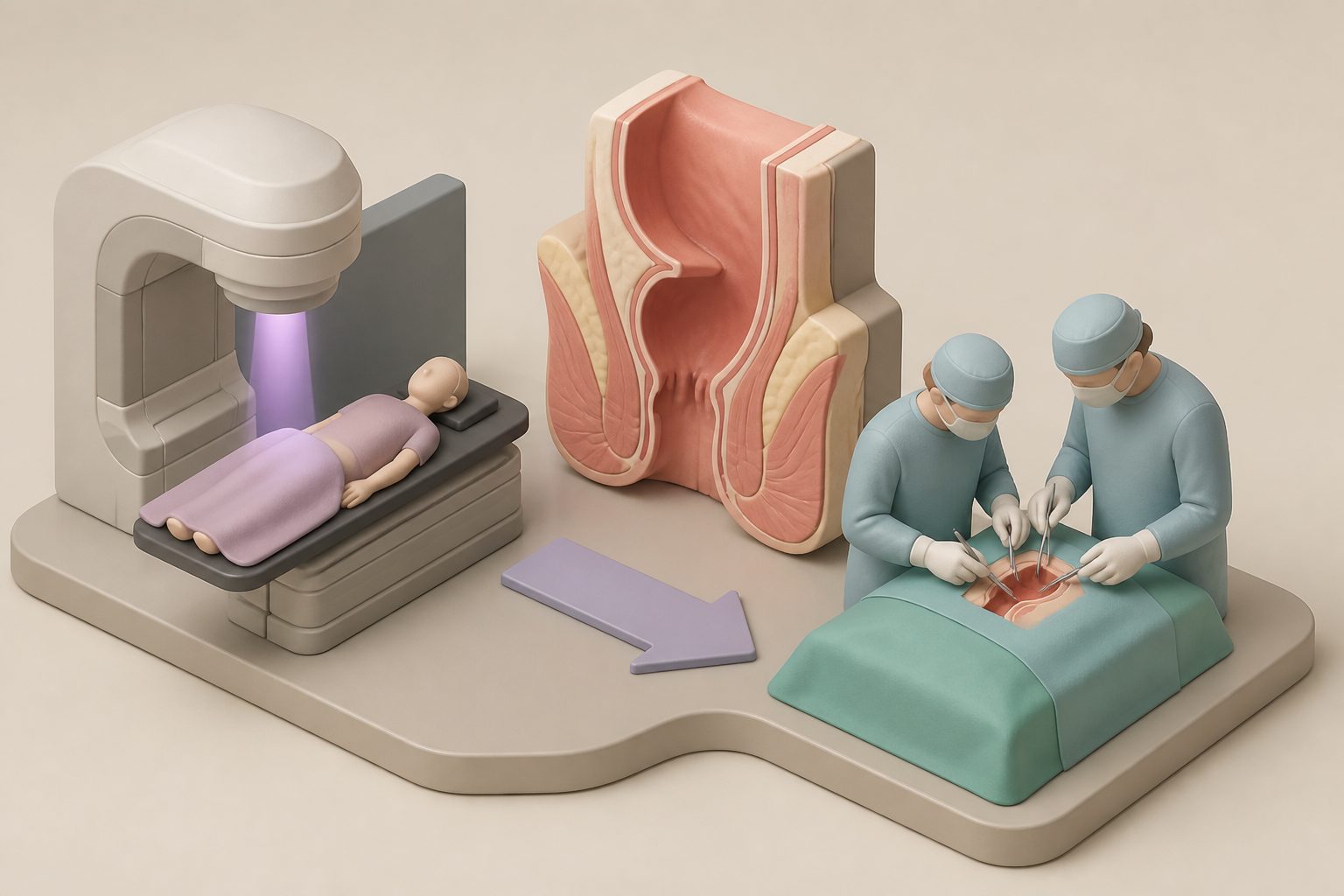
A prospective, multicenter phase II trial examined whether removing only the treated tumor area through the anus could preserve the rectum in people with locally advanced rectal cancer who responded well to chemoradiotherapy. Among 80 participants, three-year disease-free survival was 84.8%, and local recurrence occurred in 5.0% during the reported follow-up. Because everyone received local excision and there was no comparison group, the findings do not establish that this approach is as effective as more extensive surgery.
This retrospective human study compared a visual CT scoring method with an automated computer analysis for tracking fibrosing interstitial lung disease. Among 92 people followed with CT scans and lung-function tests, both approaches were associated with changes in lung function and signs of disease progression. The study does not show that either method improves treatment or patient outcomes.