Review examines targeted immune-cell treatments in stomach and junction cancers
Early human studies reported responses and mostly low-grade immune reactions, but the evidence is varied and preliminary.
High evidenceReviewSome caution advised
Medical disclaimer: This article summarizes research findings and is for informational purposes only. It is not medical advice.
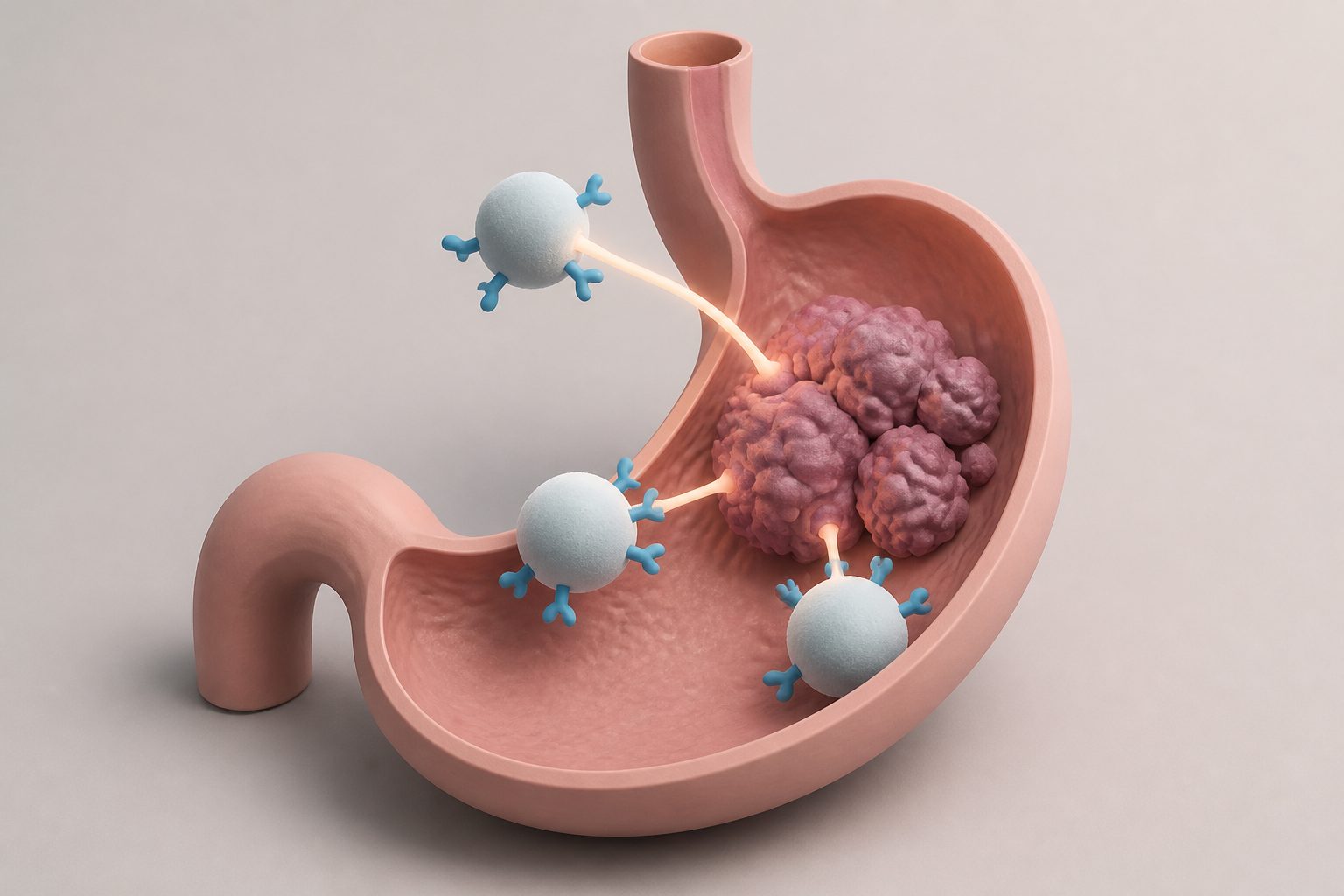
Editorial illustration — not from the study.
Researchers reviewed published reports and clinical-trial records through 2025 for studies of two approaches: CAR T-cell therapies and T-cell engagers designed to target CLDN18.2. The review included seven studies involving 396 patients with gastric or gastroesophageal-junction adenocarcinoma, most of whom had received at least two previous lines of treatment.
The studies reported different response rates and safety findings. Cytokine release syndrome was common but usually mild, and no neurotoxicity was reported across the programs. Because the studies varied considerably and used different ways of reporting results, the researchers could not combine their results in a formal meta-analysis.
The question reviewed
The researchers conducted a systematic review using PRISMA 2020 methods. They searched PubMed, Embase, the Cochrane Library, and clinical-trial registries from their beginnings through 2025. They identified seven early-phase human studies of CLDN18.2-directed CAR T-cell therapies and T-cell engagers in gastric and gastroesophageal-junction adenocarcinomas, including 396 treated patients. The review assessed safety events such as cytokine release syndrome, low blood-cell counts, and gastrointestinal side effects, as well as short-term measures including objective response rate, disease control rate, and progression-free survival.
Key conclusions
Across the included studies, patients were mainly heavily pretreated, with at least two previous treatment lines. Reported median ages ranged from 52 to 63 years. In CAR T-cell studies, 76% to 100% of patients had grade 1 or 2 cytokine release syndrome, while severe cases were rare in the reported data. One T-cell engager study reported cytokine release syndrome in 57% of patients, with grade 3 or higher events in 0.9%. No neurotoxicity was reported across the programs, and blood-cell count abnormalities were more pronounced with CAR T-cell therapies.
Reported response results varied. The CT041 phase 2 study reported a progression-free-survival hazard ratio of 0.37, an objective response rate of 22%, and a disease-control rate of 41%. LB1908 reported an objective response rate of 66.6% and a disease-control rate of 93.3%. T-cell engager studies reported objective response rates of 16% to 31%. These figures come from different early-phase studies and should not be treated as directly comparable. The review found that a formal meta-analysis was not feasible because of differences in doses, patient populations, eligibility criteria, and reporting.
Who this is relevant to
The findings may be most relevant to people with advanced gastric or gastroesophageal-junction adenocarcinoma whose tumors meet the CLDN18.2 criteria used in a particular study and who resemble the mostly heavily pretreated participants reviewed here. They do not directly establish effects for esophageal cancers outside these included disease groups, earlier-stage disease, people with different prior treatment histories, or patients treated in routine care. The review does not determine whether these approaches are appropriate for any individual, and the results may not apply where different CLDN18.2 testing thresholds are used.
Why it matters
These findings describe early human experience with two investigational approaches for advanced gastric and gastroesophageal-junction cancers, particularly in patients whose cancers had already received multiple treatments. They suggest that responses and immune-related side effects occurred across several programs, but they do not establish which approach is more effective or safer. The researchers highlighted the need for standardized CLDN18.2 testing and randomized controlled trials, including studies in UK and Western healthcare settings.
Limitations & evidence assessment
The review included only seven early-phase studies, and most participants had already received at least two lines of treatment, which may limit how well the findings apply to other patients. The studies used different doses, eligibility thresholds, patient populations, and reporting methods, so their results could not be combined in a formal meta-analysis or compared reliably. CLDN18.2 positivity thresholds were not consistent or fully established. The abstract provides limited information about follow-up duration, control groups, and the detailed quality of each included study. The reported response and safety results are therefore preliminary and may change with larger, more controlled trials.
Why this evidence level: Meta-analysis pooling multiple studies sits at the top of common evidence hierarchies.
Evidence levels are editorial estimates derived from study metadata — they are not clinical appraisals.
// Source
Diseases of the Esophagus · 2026 · DOI: 10.1093/dote/doag077.235
This systematic review examined randomized human trials of concurrent chemotherapy and radiation for locally advanced head and neck, cervical, esophageal, and non-small-cell lung cancers. Across the included trials, combined treatment was reported to provide better overall survival than radiation alone, but it also caused more severe short-term side effects. The review did not provide enough information in its abstract to show how many trials or patients were included.
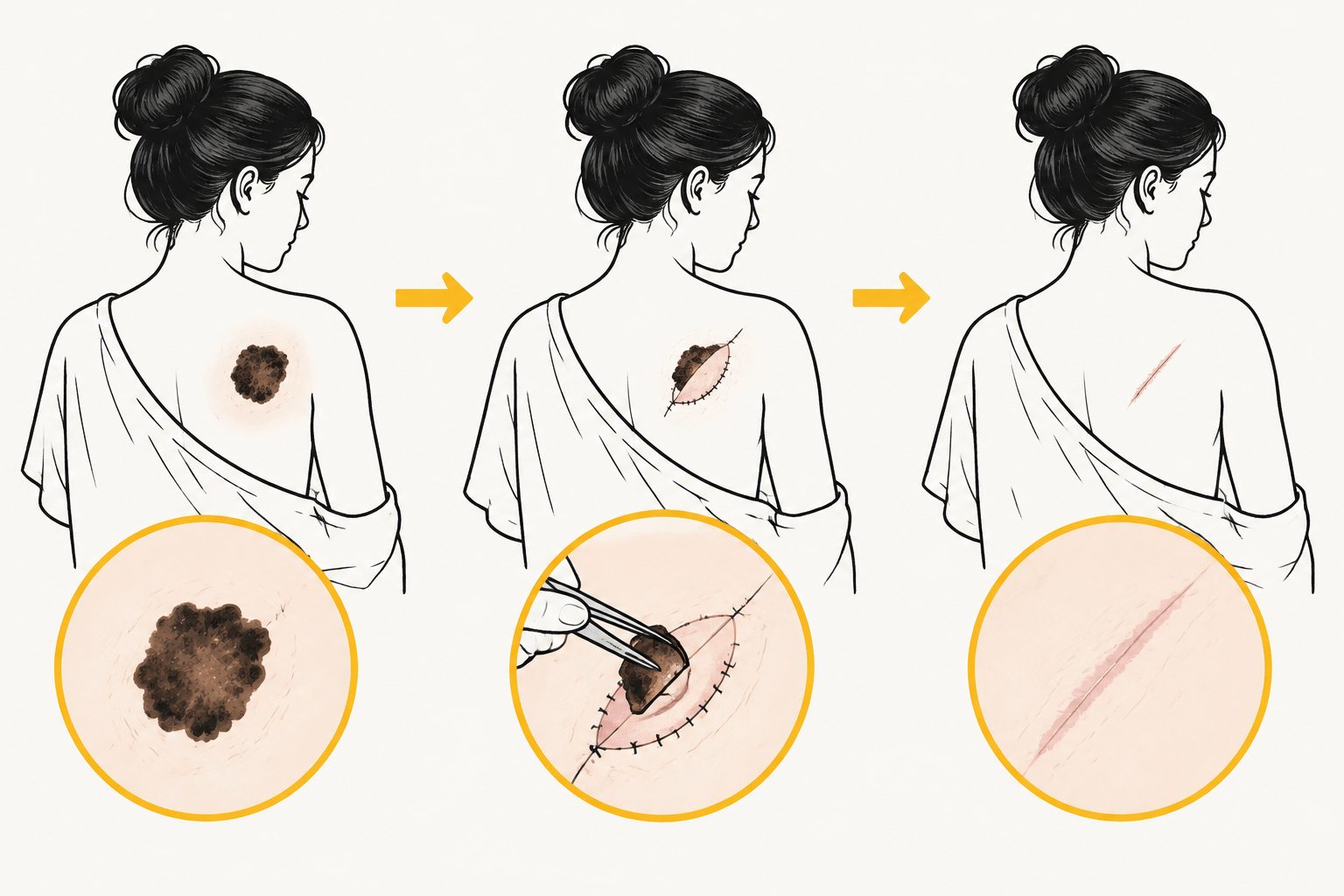
Researchers pooled results from seven human studies comparing multiple-staged with single-stage removal and reconstruction of congenital melanocytic nevi, sometimes called congenital moles. Staged surgery was associated with fewer major wound complications and recurrences, as well as slightly shorter and narrower scars, but the studies did not find a clear difference in cosmetic or overall patient satisfaction.
A cluster-randomized human study in 210 adults with recently detected stage 1 hypertension in Uzbekistan compared salt-sensitivity testing followed by assigned medication choices with conventional management. After 12 weeks, more participants in the testing-guided group reached the study's blood pressure target, although the study was small, short, and conducted in only three primary care centers.