Review examines long-term quality of life after fracture-related infection
Human studies suggest lasting physical and psychological difficulties, but varied methods limit firm conclusions.
Moderate evidenceReviewInterpret with caution
Medical disclaimer: This article summarizes research findings and is for informational purposes only. It is not medical advice.
Editorial illustration — not from the study.
Researchers searched three medical databases for studies published from 2010 through August 2025. They included 15 studies, most of which were retrospective cohorts, and combined results statistically when the data were sufficiently comparable.
Three studies involving 125 people found no statistically significant average changes at 12 months or longer in physical or mental quality-of-life scores. However, pooled results from seven studies suggested lower physical quality of life than United States population norms, and three studies involving 118 people reported depressive-symptom scores above established screening thresholds. These findings show an association with ongoing difficulties, not proof that fracture-related infection caused every reported outcome.
What the review covered
The review asked whether people who had experienced fracture-related infection had long-term changes in quality of life or psychological symptoms. The researchers systematically searched PubMed, Web of Science, and Google Scholar for studies published from 2010 to August 2025. Fifteen human studies met the inclusion criteria. Most were retrospective cohorts, and the researchers assessed study quality and risk of bias using the MINORS and ROBINS-I tools. Random-effects meta-analyses were used when results could reasonably be combined.
Key conclusions
The evidence was mixed and varied substantially between studies. In a meta-analysis of three studies involving 125 people, average changes at 12 months or longer were not statistically significant for the physical component of the SF-36 or SF-12 quality-of-life measures: 5.81 points, with a standard deviation of 6.54 and p=0.124. The corresponding mental component change was 3.86 points, with a standard deviation of 9.12 and p=0.463.
Across seven studies involving 262 people, pooled long-term scores were 38.9 for the physical component and 51.2 for the mental component. Compared with United States population norms, physical quality of life was lower, while differences in mental quality of life were not statistically significant. Three studies involving 118 people that used the ISR reported elevated depressive-symptom scores and total scores above established screening thresholds. These results indicate possible persistent physical and psychological burden, but they do not establish a causal relationship or show how common these outcomes are for all people with fracture-related infection.
Who this is relevant to
These findings may be relevant to people with fracture-related infection who resemble the participants in the included studies, but the abstract does not define a single representative patient population. They should not be assumed to describe everyone with a fracture-related infection, people with other types of infection, or people without a fracture. The results also do not determine whether any individual will experience depression or reduced quality of life, and they are not a substitute for an individual clinical assessment.
The significance
Fracture-related infection can be associated with prolonged treatment and impaired function, so long-term physical and psychological outcomes are important to measure. This review brings together available human evidence suggesting that physical quality of life may remain below population norms and that some groups report substantial depressive symptoms. However, the findings mainly identify an area of concern for further research rather than providing a definitive estimate of risk or demonstrating that the infection itself caused the outcomes.
Limitations & evidence assessment
The review included only 15 studies, and most were retrospective observational cohorts rather than studies designed in advance to track outcomes. The average MINORS attainment was 66.4%, and average loss to follow-up was 19.5%, which may affect the reliability and representativeness of the results. The pooled analyses were small, including 125 and 262 people, and the studies differed substantially in their methods, definitions of fracture-related infection, follow-up, and outcome measures. Many analyses lacked appropriate comparison groups, and the abstract does not provide enough information to determine whether other factors contributed to quality-of-life or depressive-symptom scores. Because of these limitations, the authors called for prospective studies using standardized measures.
Why this evidence level: This systematic review and meta-analysis combined findings from 15 human studies, but most were retrospective observational cohorts with substantial differences in methods and outcomes. The review provides a broad summary, but the limited study quality, small pooled samples, and lack of suitable comparison groups reduce confidence in the conclusions.
Evidence levels are editorial estimates derived from study metadata — they are not clinical appraisals.
// Source
Journal of Bone and Joint Infection · 2026 · DOI: 10.5194/jbji-11-569-2026
This review examined human clinical evidence about GLP-1 receptor agonists and neovascular age-related macular degeneration, sometimes called wet age-related macular degeneration, in people with type 2 diabetes. The reviewed studies had conflicting results: one reported higher risk, another lower risk, and two large comparisons found no significant increase. The evidence is observational and does not show that these medicines cause or prevent the eye condition.
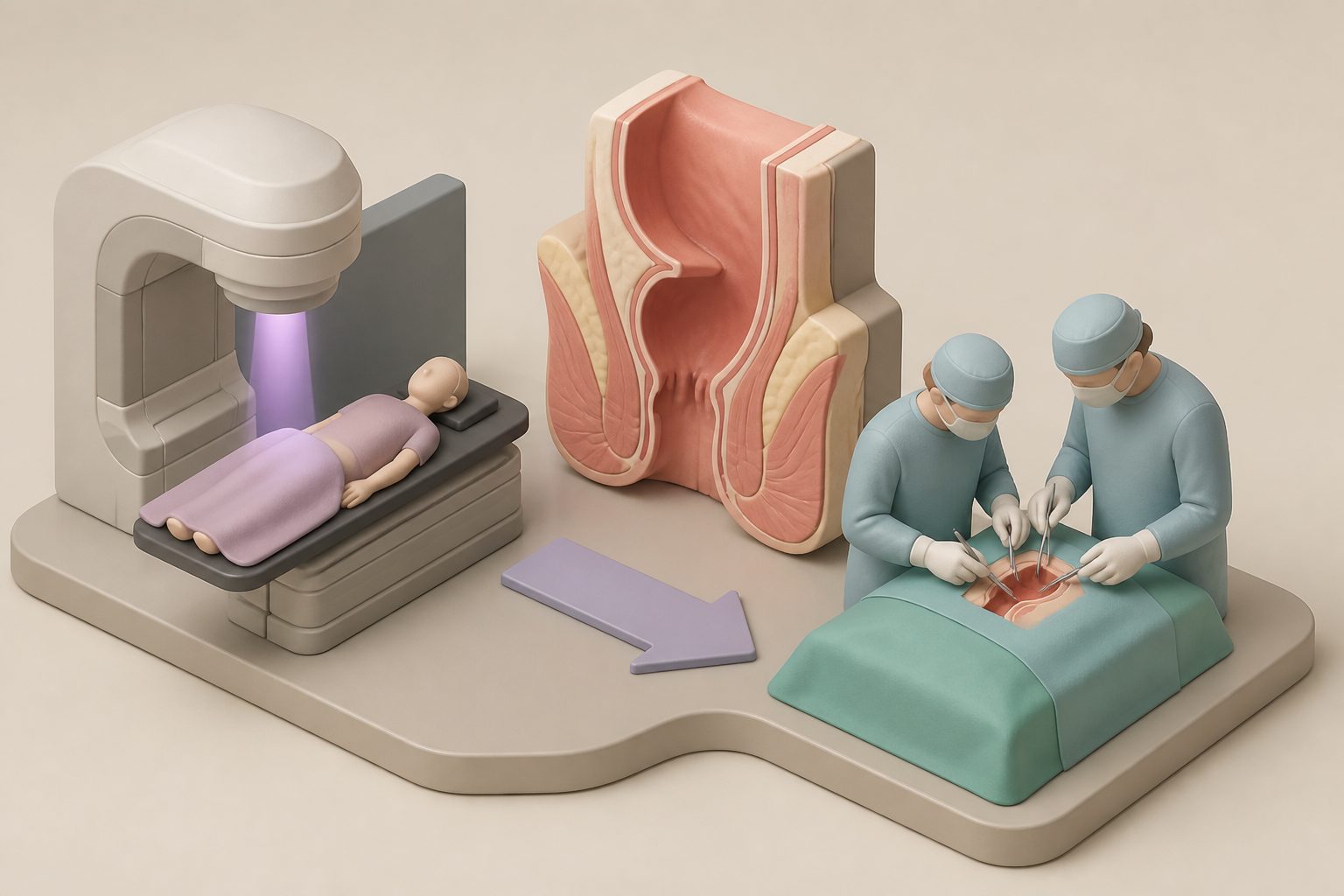
A prospective, multicenter phase II trial examined whether removing only the treated tumor area through the anus could preserve the rectum in people with locally advanced rectal cancer who responded well to chemoradiotherapy. Among 80 participants, three-year disease-free survival was 84.8%, and local recurrence occurred in 5.0% during the reported follow-up. Because everyone received local excision and there was no comparison group, the findings do not establish that this approach is as effective as more extensive surgery.
This retrospective human study compared a visual CT scoring method with an automated computer analysis for tracking fibrosing interstitial lung disease. Among 92 people followed with CT scans and lung-function tests, both approaches were associated with changes in lung function and signs of disease progression. The study does not show that either method improves treatment or patient outcomes.