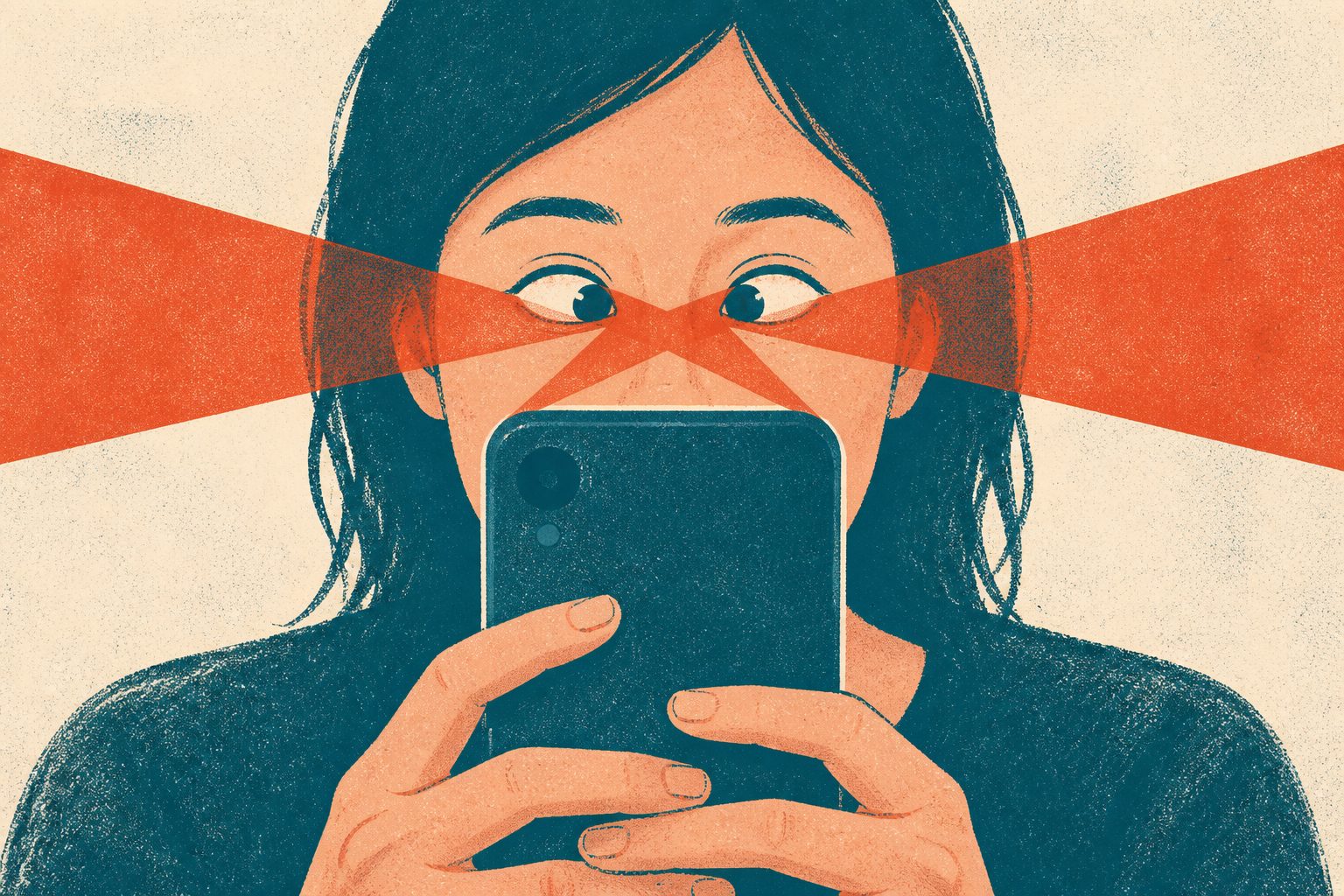
A review finds that short-distance phone viewing could contribute to sudden inward eye turning in some people, while evidence for a wider population-level cause is lacking.
The review examined clinical reports and studies on acute acquired comitant esotropia in relation to smartphones and other handheld digital displays. Reports commonly described symptoms after intensified near viewing, especially at short distances, and some patients improved after reducing device use or increasing viewing distance.
However, most evidence came from retrospective studies, case reports and uncontrolled interventions. The authors say smartphone use may be one contributing factor in susceptible people, alongside viewing habits, refractive status and other influences, but current research cannot establish a population-level causal relationship.
What the review found
The review found a recurring association between prolonged handheld-device use at short viewing distances and acute acquired comitant esotropia, which involves sudden inward eye turning and often double vision. Some reports described improvement after reduced use or greater viewing distances, although other patients still needed surgery.
A case-control study reported that affected children used shorter working distances than age-matched controls. The review also discussed evidence linking near work while lying down with the condition. Myopia appeared frequently in clinical reports, but the authors say it could reflect other factors—such as increasing myopia, intensive near work or healthcare-seeking patterns—rather than being a proven cause.
Evidence and caveats
This was a focused narrative review, based on a targeted search of PubMed, Web of Science and Scopus conducted on November 1, 2025. Eight representative clinical publications were selected for tabulation, alongside additional case reports and small case series.
Most available studies were retrospective or uncontrolled and often relied on self-reported screen use. The authors highlight selection bias, confounding and possible publication bias: cases that mention smartphone use may be more likely to be published. Many studies also lacked consistent information on factors such as age, refractive error, baseline eye alignment and near-work load. The review calls for prospective studies using objective exposure measures and standardized assessments.
// Source
Japanese Journal of Ophthalmology · 2026 · DOI: 10.1007/s10384-026-01417-1
Authors: Eizo Tanaka, Yuki Morizane, Seiko Fujii, Mari Yaida, Weiying Sun, Satoshi Hasebe
Institutions: Kawasaki Medical School, Okayama University