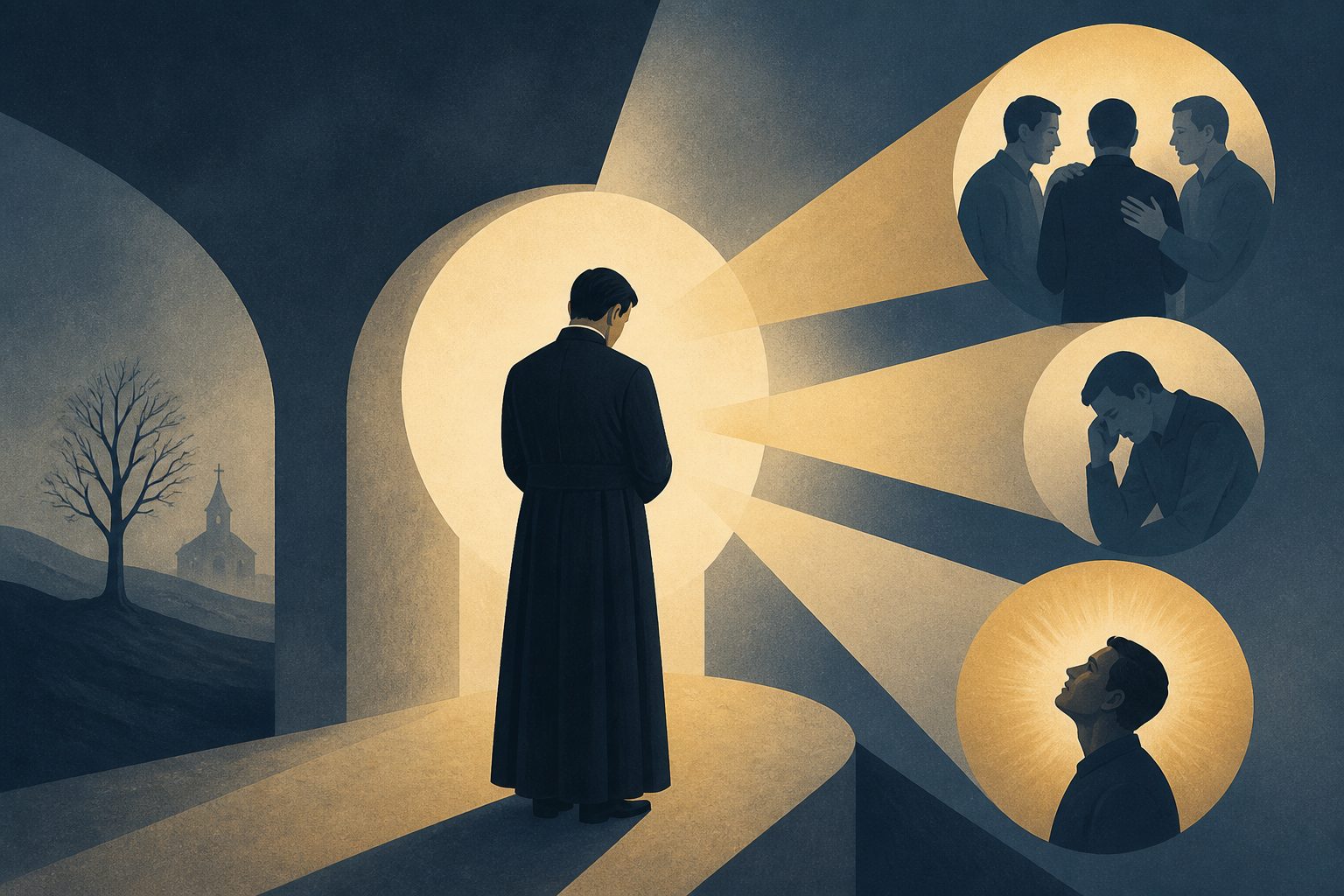
A three-year study found that earlier well-being and relationships were linked to later loneliness, while private prayer was not.
Researchers analyzed data from the 2022–2025 National Study of Catholic Priests, linking priests’ reported well-being, support and religious life in 2022 with loneliness reported in 2025. Priests with higher flourishing tended to report less later loneliness, while those with more psychological distress or burnout tended to report more.
Supportive relationships also mattered: stronger perceived support from fellow priests, bishops and lay networks was associated with lower subsequent loneliness. Priests who placed greater importance on the Eucharist also reported less later loneliness, but the frequency of private prayer did not significantly predict loneliness.
What predicted later loneliness
The analysis included 1,056 priests who provided valid answers in both study waves. Higher flourishing at the 2022 baseline was significantly associated with lower loneliness in 2025. Baseline psychological distress and burnout were associated with greater later loneliness.
Perceived support from fellow priests, bishops and lay networks was associated with reduced subsequent loneliness. Greater affirmation of the Eucharist’s centrality was also associated with lower loneliness. By contrast, the amount of time priests spent in private prayer did not significantly predict future loneliness. At Wave 2, average loneliness was 1.58 on a 1-to-3 scale, indicating relatively low to moderate loneliness overall, though responses varied among priests.
Evidence and caveats
This was a two-wave longitudinal survey study, using baseline measures from 2022 to examine associations with loneliness in 2025. The sample came from a nationally representative survey design and was weighted to account for selection, nonresponse and eligibility. Its longitudinal structure shows that earlier characteristics were associated with later loneliness, but it does not by itself establish that those characteristics caused loneliness or that strengthening them would reduce it.
Of 3,063 priests eligible for recontact, 1,164 completed the follow-up survey, and 1,056 were included in the analysis; the final response rate was 38%. The researchers used statistical methods to address missing data. The analytic sample was predominantly older, White, U.S.-born and diocesan, so the findings should not automatically be generalized to all religious leaders or other populations.
// Source
Pastoral Psychology · 2026 · DOI: 10.1007/s11089-026-01373-0
Authors: Laura Upenieks
Institutions: Baylor University