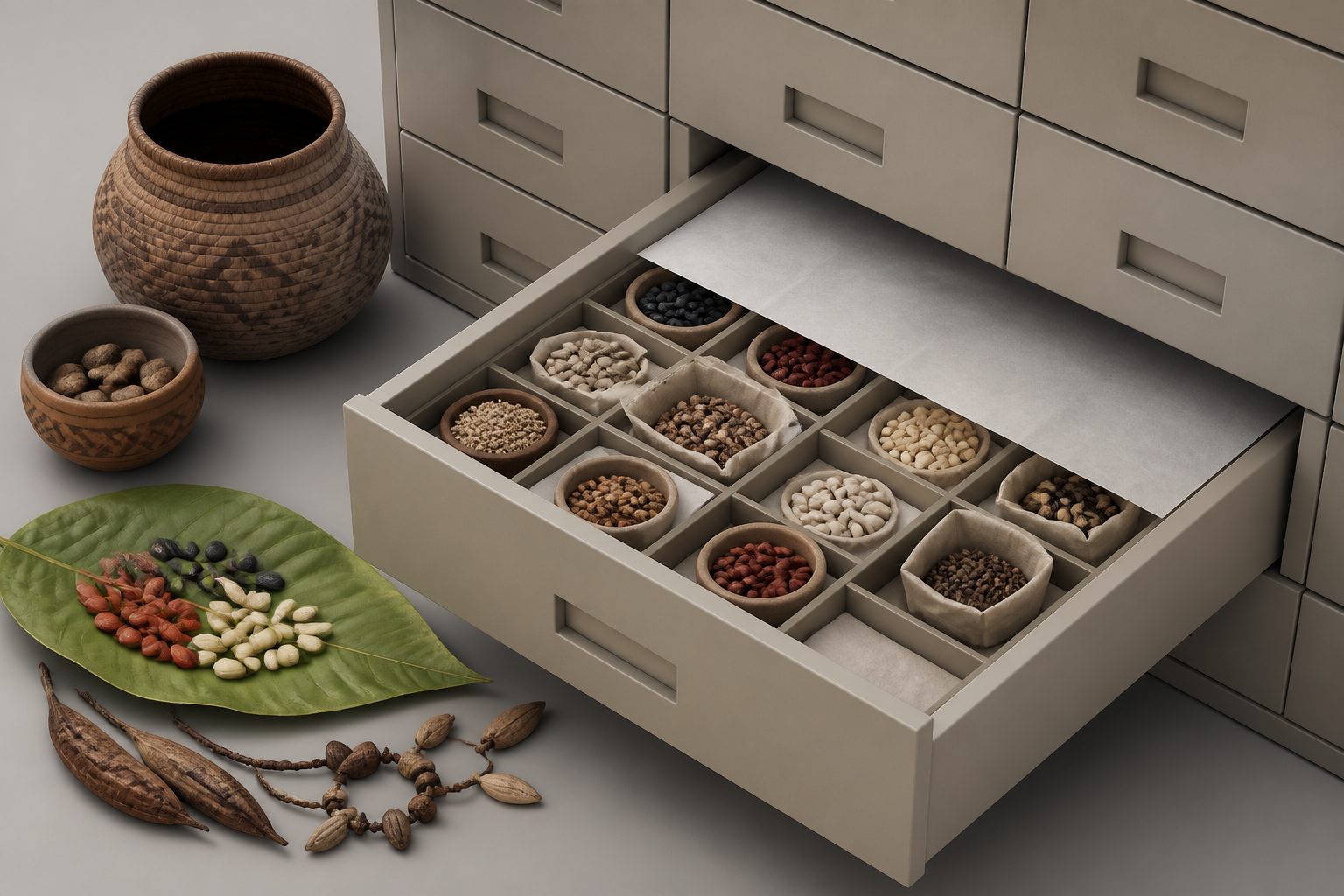
A survey found substantial Indigenous seed holdings in museums and universities, but few plant-specific policies and unclear records may make community access and protection harder.
Researchers surveyed collections managers at 85 institutional repositories, primarily in the US Southwest, about Indigenous seed and plant holdings, their care and storage, and access for researchers and descendant communities. They received responses from 53 institutions; 31 reported holding Indigenous seeds or plant parts, while two did not know whether they did.
The researchers say these collections include large amounts of domesticated agricultural remains gathered through historic ethnobotanical collecting and archaeological activities. They identified vulnerabilities including unclear or disorganized provenance records, warm storage conditions and a lack of museum protocols specifically addressing plant specimens, genetic data and community consultation.
What the survey found
The survey found that 31 responding institutions housed Indigenous seeds and plant parts, while two institutions were unsure whether they held them. Of the 53 institutions that responded in some form, 36 answered every question, five gave partial responses and 12 said their responses were pending.
The holdings often resulted from ethnobotanical collecting in the late 19th and early 20th centuries and from archaeological work in the 20th century and more recently. The researchers reported that many of the materials are domesticated agricultural plant remains and that some seeds remain viable. They found vulnerabilities in recordkeeping and storage, including unclear Indigenous provenance information and warm conditions. They also reported that very few museums had written protocols specifically for managing plant specimens.
The researchers recommend clearer records, procedures for cultural care, consultation with descendant communities, and explicit attention to seed viability, genetic research, data ownership and access. They also discuss rematriation—the return of seeds to their Indigenous caretakers—as an important part of responsible stewardship.
Why seed care matters
Indigenous seeds can carry cultural and religious significance as well as genetic diversity that may support the revitalization of Indigenous agricultural systems. If institutions do not clearly document, protect and govern access to these materials with descendant communities, the researchers argue that they may deepen Indigenous communities’ loss of control over cultural heritage.
The authors also warn that viable seeds and their genetic information may be vulnerable to appropriation or patenting by industrial agriculture companies seeking climate-resilient varieties. Better records and community involvement could help institutions address these risks while supporting possible returns of seeds and stronger Indigenous governance.
Evidence and limits
This study is based on a 2024 survey of collections managers at a target sample of 85 repositories, primarily in the US Southwest. It provides a preliminary picture of institutional holdings and stewardship practices rather than a complete inventory of Indigenous seeds in the United States.
Only 53 institutions responded, and just 36 answered all questions; 12 responses were still pending. The researchers say their recommendations draw on a small sample of responses and would be strengthened by examining institutions’ written collections-management policies in more detail. The survey also reports institutions’ accounts of their holdings and practices; it does not establish the condition or viability of every seed collection.