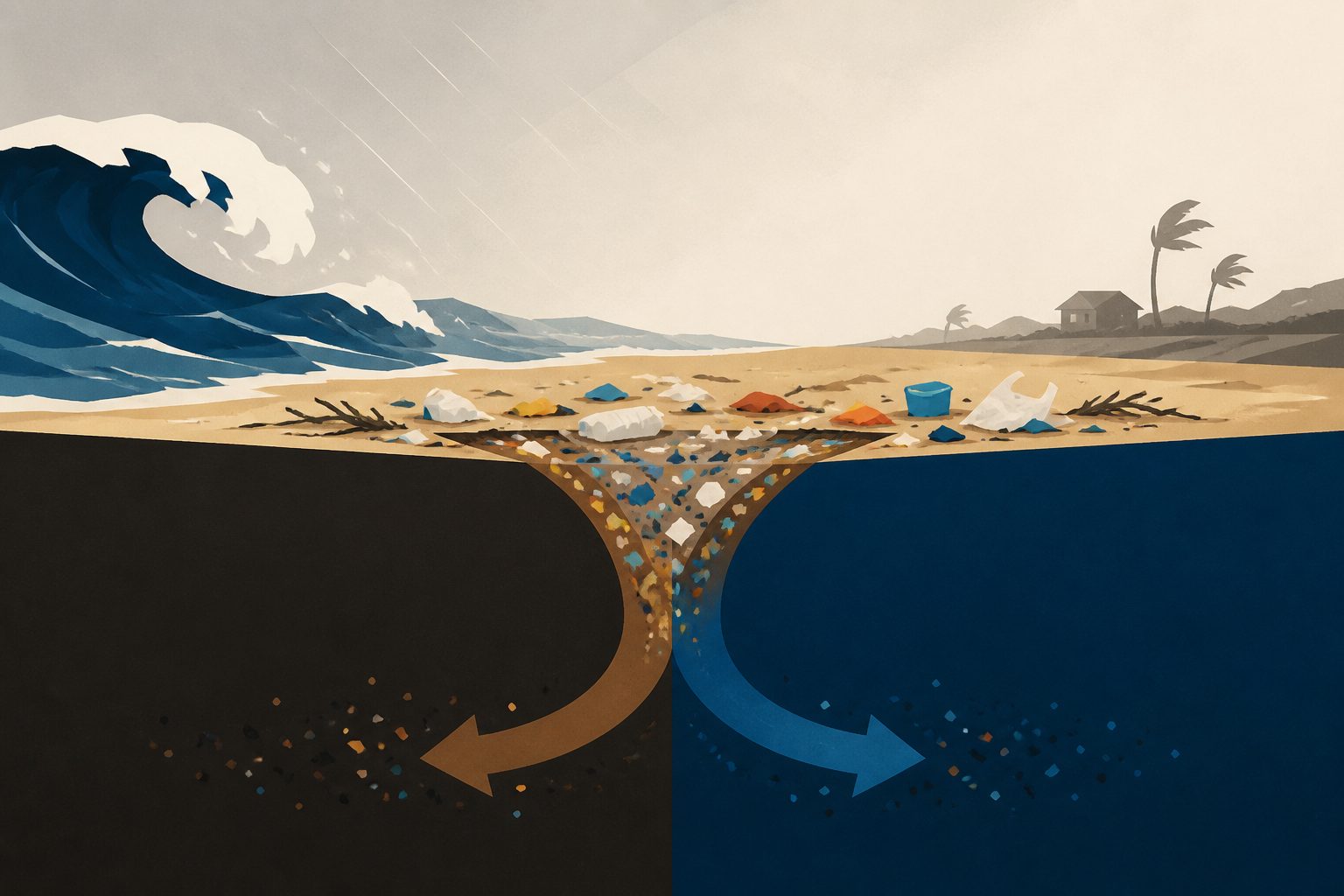
An experiment in a New Zealand tidal sandflat found that plastic-polluted sediments responded differently from untreated sediments when a storm passed.
Researchers ran a two-month field experiment on an intertidal sandflat in Mahurangi Harbour, New Zealand. They compared untreated plots with plots containing vertically inserted polyester netting designed to represent microplastic pollution, measuring oxygen use, nitrogen movements, pore-water nutrients and organic matter before and after a storm.
The storm produced different responses in the two treatments. In untreated plots, oxygen consumption and pore-water ammonium fell, while ammonium release and oxidized nitrogen pools increased. Plastic-polluted plots showed a different pattern, including higher oxygen consumption and ammonium release relative to the storm response in untreated plots, along with lower oxidized nitrogen pools.
How plastic changed storm responses
The statistical analysis found that treatment and sampling time interacted, meaning the plastic-polluted sediments responded differently across the storm period. In untreated plots, the storm reduced sediment oxygen consumption by 24% and pore-water ammonium by 53%, while increasing ammonium release by 186% and oxidized nitrogen pools by 166%.
Compared with the storm response in untreated plots, plastic-polluted plots had 43% higher sediment oxygen consumption and 53% higher ammonium release, as well as 63% lower pore-water oxidized nitrogen pools. The researchers conclude that plastic pollution can alter how sediments exchange carbon- and nitrogen-related compounds during storms.
// Source
Scientific Reports · 2026 · DOI: 10.1038/s41598-026-67504-y
Authors: Ines Bartl, Samantha Ladewig, Simon Thrush
Institutions: University of Auckland