Atomic-scale measurements found two gap energies in carefully cooled ultrathin films, while oxygen loss changed the signal.
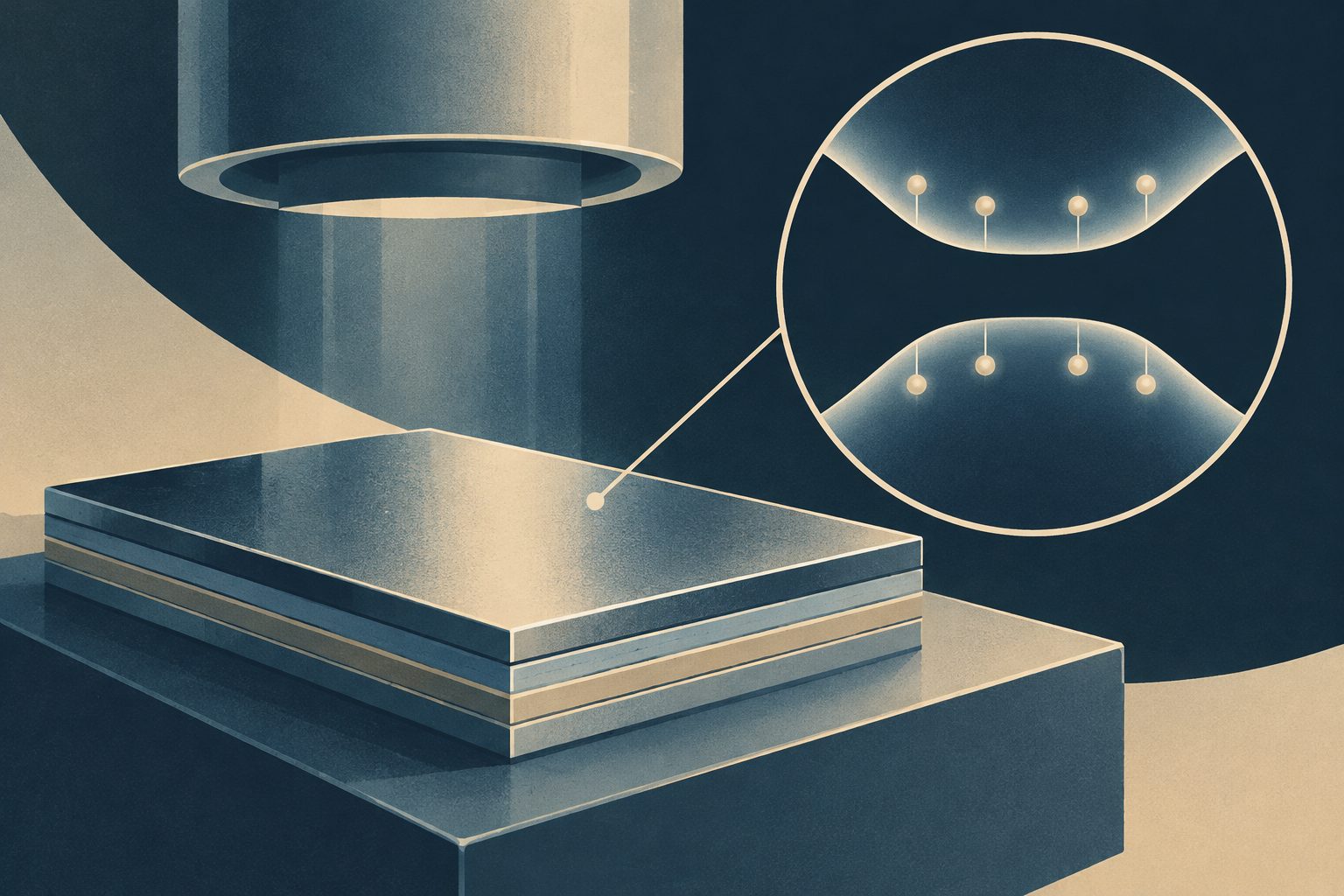
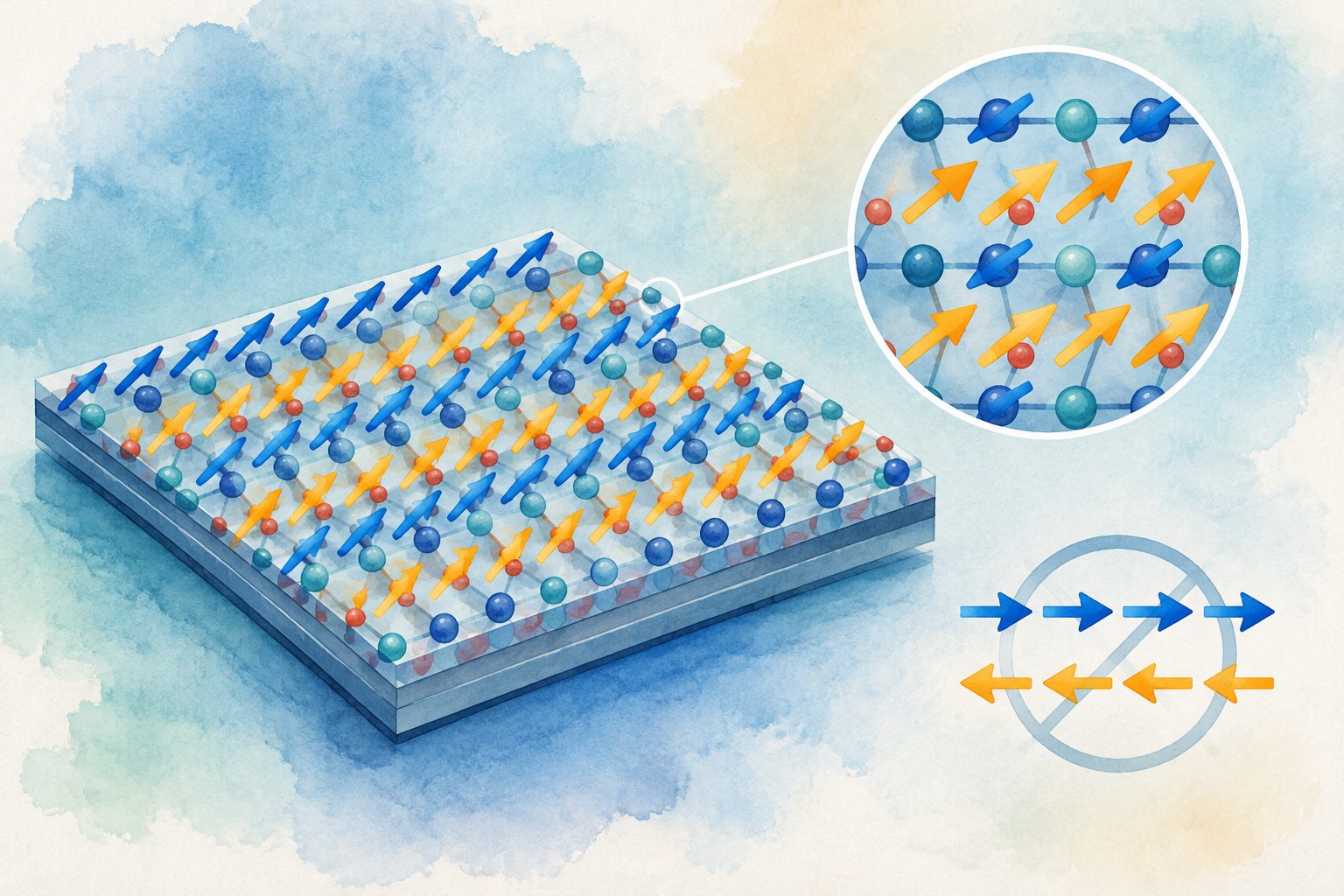
Researchers grew 1.5-unit-cell (La,Pr)₃Ni₂O₇ films on SrLaAlO₄ and examined them at 4.2 K using atomic-resolution scanning tunnelling microscopy and spectroscopy. Rapid cooling and cryogenic vacuum transfer produced reproducible U-shaped spectra with strongly suppressed conductance near zero energy and two gap scales of about 14 and 20 meV.
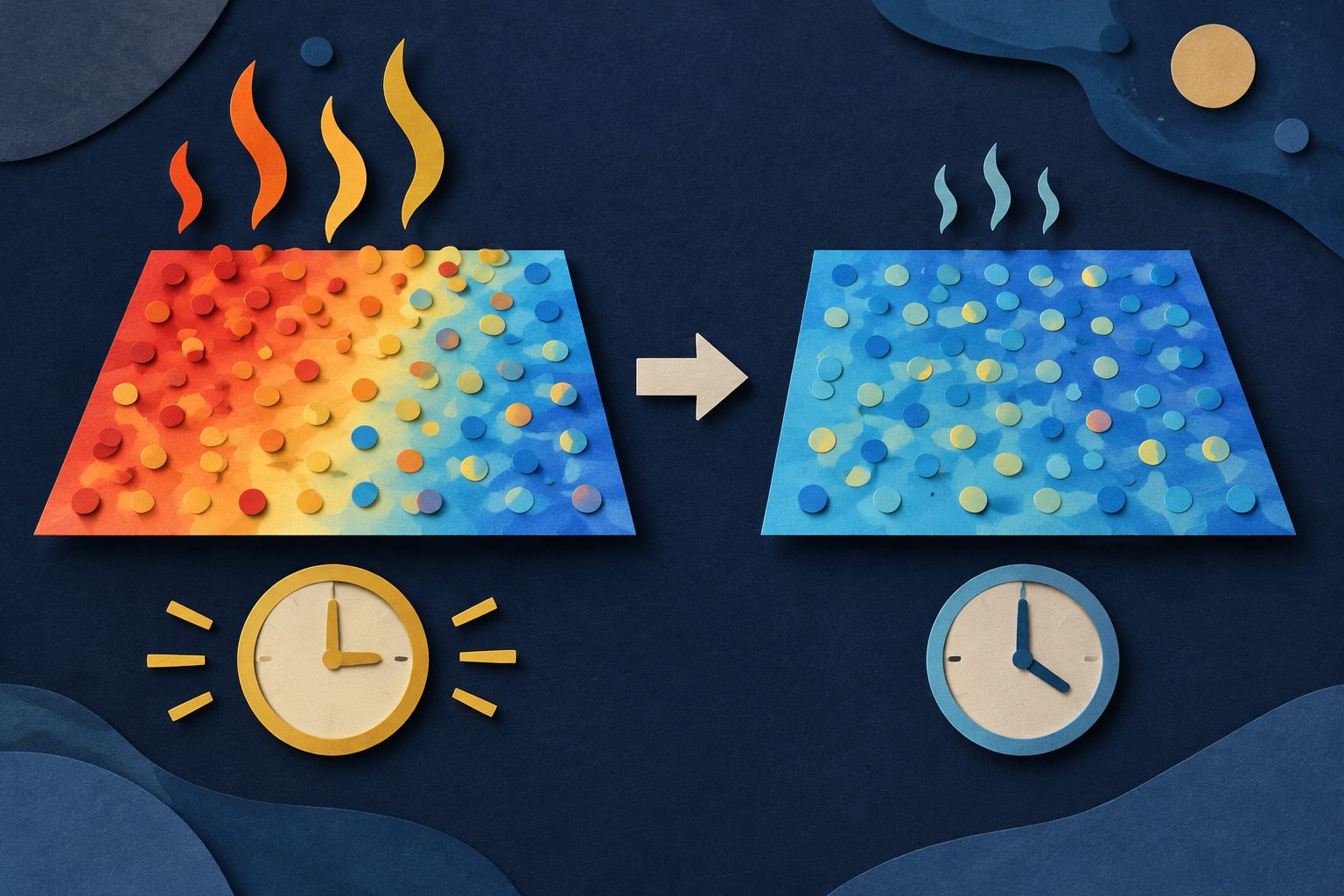
Samples that spent more than 10 minutes in vacuum without cooling showed V-shaped spectra instead, even though they retained the same surface reconstruction and a transport superconducting transition beginning above 40 K. The comparison indicates that oxygen loss can alter local spectra enough to obscure the intrinsic superconducting gap.
A gap changed by oxygen
The rapidly transferred films had an ordered √2 × √2 surface reconstruction and a homogeneous, U-shaped double-gap spectrum with extended flat regions of nearly zero conductance. The two gap scales were about 14 and 20 meV, and the spectra were consistent with a nodeless superconducting state.
Transfer conditions strongly affected the result. Samples transferred in less than five minutes showed the U-shaped gaps, while samples kept in the room-temperature stages for more than 10 minutes showed V-shaped spectra. Those samples could still retain the surface reconstruction and a transport superconducting transition beginning at 40–50 K. Wide-energy spectra indicated that oxygen loss can mix density-wave-related spectral weight into the signal.
Why the gap shape matters
Whether bilayer nickelates have a nodeless or nodal superconducting gap is an important unresolved question about their superconductivity. These measurements provide atomic-scale evidence for a nodeless gap when the films remain oxygen-sufficient, while showing that oxygen loss can produce V-shaped spectra that might otherwise be misread as evidence of a nodal gap.
The results also show that the sample-transfer procedure is part of the measurement problem: the local gap shape was more sensitive to oxygen loss than the surface reconstruction or the macroscopic transport transition.
Evidence and caveats
The evidence comes from spatially resolved scanning tunnelling microscopy and spectroscopy of 1.5-unit-cell (La,Pr)₃Ni₂O₇ films, combined with a comparison of samples transferred under different temperature and timing conditions. The films were grown by atomic-layer-controlled epitaxy, and the measurements were made at 4.2 K. The researchers interpret transfer time as an operational measure of oxygen loss; the excerpt does not describe a direct measurement of the oxygen content during each transfer.
The study concerns ultrathin films under specific growth, substrate and transfer conditions, so the findings do not by themselves establish the superconducting pairing mechanism across all nickelates. The comparison does show that a V-shaped local spectrum alone is not sufficient to identify a nodal superconducting gap in these films.