The American Heart Association and American Stroke Association searched medical research published from June through October 2025, along with earlier related documents, to update guidance for adult stroke rehabilitation and recovery. The intended audience includes doctors, other health professionals, and caregivers.
Health & Medicine3 weeks ago
New stroke rehabilitation guideline updates recommendations for recovery
The American Heart Association and American Stroke Association reviewed newer human research and identified both updated guidance and remaining evidence gaps.
High evidenceReviewSome caution advised
Medical disclaimer: This article summarizes research findings and is for informational purposes only. It is not medical advice.
What the review covered
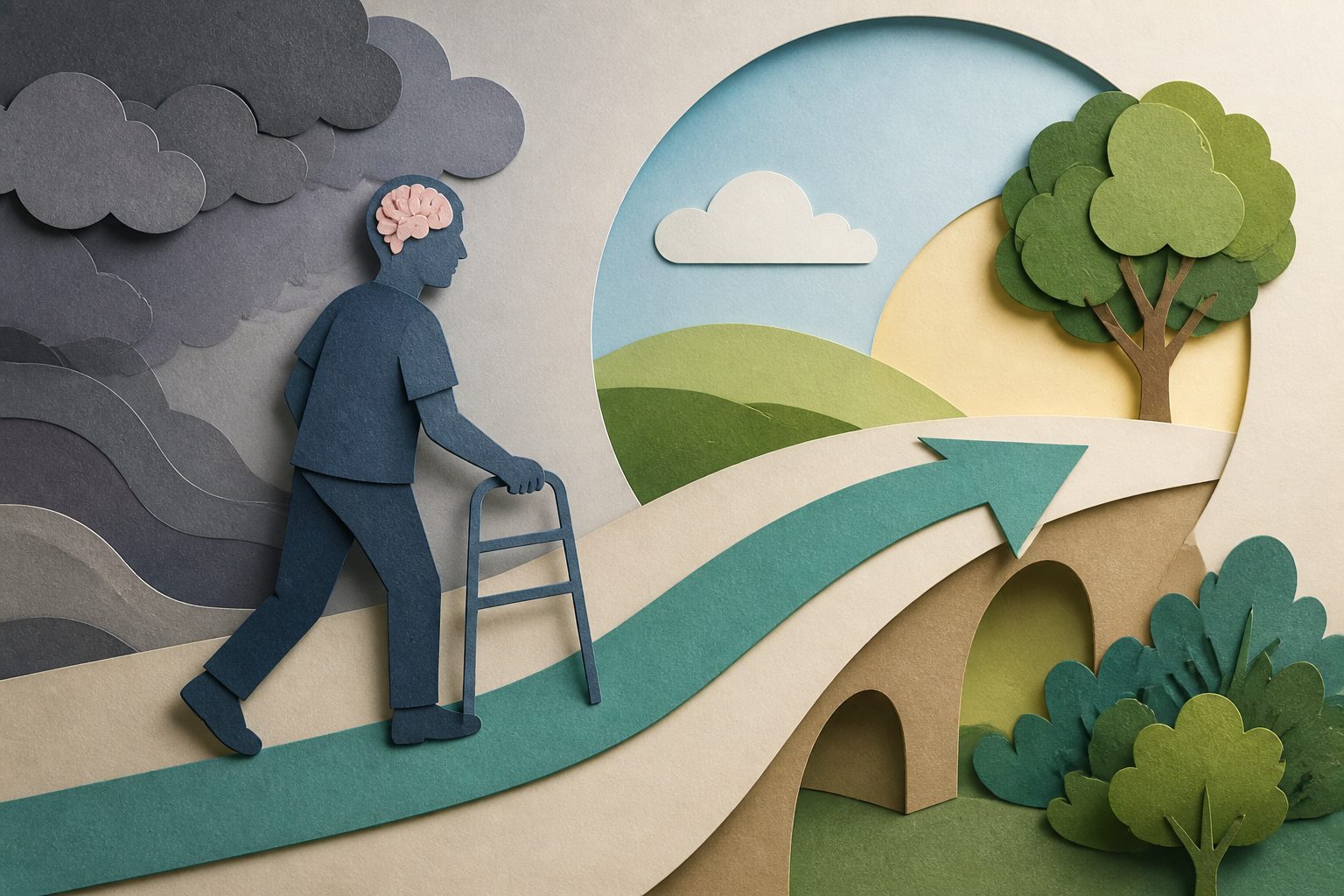
The authors examined evidence relevant to rehabilitation and recovery after adult stroke. They searched research involving human participants, published in English and indexed in MEDLINE, PubMed, the Cochrane Library, and other selected databases. The work is a clinical guideline and evidence review, not a new randomized trial or observational study. The abstract does not state the number of studies or participants included.
What the review concluded
The guideline provides new and revised recommendations across the stroke-recovery process. Areas highlighted in the abstract include assessment and treatment of medical conditions occurring alongside stroke, fracture risk, fall prevention, technology-enabled rehabilitation, caregiver support, participation in daily and community life, and safe return to work and driving. It also identifies gaps in knowledge and calls for further research. The abstract does not provide the specific recommendations, their supporting evidence grades, or measured patient outcomes.
Where this may apply
The information is most directly relevant to adults recovering from stroke and to the professionals and caregivers involved in their rehabilitation. It may not apply equally to children, people without stroke, or patients whose medical circumstances differ substantially from those represented in the underlying human research. Because this is a broad guideline rather than a report on one defined patient group or intervention, the abstract alone cannot determine how any individual recommendation applies to a particular person.
The significance
This guideline may help health professionals and caregivers understand how current evidence has been organized across many parts of adult stroke recovery. Its coverage includes medical, functional, social, and safety-related concerns rather than focusing only on physical therapy. The stated research gaps mean that some recommendations may rest on limited or uneven evidence, but the abstract does not show which areas are most uncertain.
Limitations & evidence assessment
This is a guideline based on existing research, not a new controlled study, so it does not by itself measure the effects of a particular rehabilitation approach. The abstract gives no information about the number, size, quality, or results of the included studies, and it does not show whether findings differed by stroke type, severity, age, or other patient characteristics. The search was limited to English-language research and selected databases. The guideline itself acknowledges important gaps in knowledge, so the strength of evidence may vary across its recommendations.
Why this evidence level: Clinical guideline / consensus statement reflecting reviewed bodies of evidence.
Evidence levels are editorial estimates derived from study metadata — they are not clinical appraisals.
// Source
Stroke · 2026 · DOI: 10.1161/str.0000000000000536
View paper (DOI)Published 2026-08-27
Authors: Lorie G. Richards, Nneka Ifejika, Joel Stein, Mona N. Bahouth, Martha Abshire Saylor, A.M. Barrett, Peii Chen, Anne Deutsch, Wendy Dusenbury, Charles Ellis, Janice Eng, Jamie Fleet, Heather R. Ford, Emily Grattan, Richard L. Harvey, Corinne A. Jones, Chandramouli Krishnan, Sara Kutzle, Deven Matthews, Nicole Mazwi, Jamila Minga, Dawn M. Nilsen, Elizabeth Noser, Heather R. Porter, Preeti Raghavan, Dorian K. Rose, Elizabeth R. Skidmore, Marie‐Pierre St‐Onge, Mary Ellen Stoykov, Amelia Tenberg Schettini, Alexandra L. Terrill, David L Tirschwell, Paul Vilar, Alicen Whitaker-Hilbig, Richard Zorowitz, Warren D. Lo, George F. Wittenberg, Allison E. Gaffey, Dipika Aggarwal, Maria Cecilia Alpasan, E. Jackson Amburn, S. K. Ashcroft, Oluwole O. Awosika, Tamilyn Bakas, Mark Bowden, Robynne Braun, Julia Carpenter, John Chae, Paula de la Pena, Wuwei Feng, Margaret A. French, Mark P. Goldberg, Marlis Gonzalez‐Fernandez, Jocelyn E. Harris, Abhishek Jaywant, Gert Kwakkel, Catherine E. Lang, D. Lin, Barbara Lutz, Laura M. McPherson, Emilia Michou, Vu Q. Nguyen, DaiWai Olson, Ela B. Plow, Robin White Chism, Lauren Winterbottom, Stephanie Zawada, E Zink
Institutions: American Academy of Pediatrics, Stroke Association, American Speech Language Hearing Association, American Occupational Therapy Association, American Academy of Dermatology, Council of State, Emergency Nurses Association, National Recreation and Park Association, United States Congress, American Islamic Congress, American Society of Neuroradiology