Crystal records from a 900 C.E. eruption point to storage times of less than a year to 12.6 years, with no sign of short-term magma mixing before the blast.
A study of crystals from Kīlauea’s largest known summit eruption found that the magma may have remained stored for up to about 13 years. The crystals showed no evidence that a fresh injection of magma mixed in shortly before the eruption.
The findings come from olivine crystals in the Kulanaokuaiki Tephra Unit 3, deposited in an explosive eruption around 900 C.E. The researchers suggest that gas building up as crystals formed in the magma reservoir may have helped drive the eruption, but they present this as a hypothesis.
What the crystals recorded
The researchers studied olivine crystals from the Kulanaokuaiki Tephra Unit 3, the largest known eruption at Kīlauea’s summit. They analyzed 200 crystals: 55% had normal changes in forsterite, a magnesium-rich component of olivine, while 45% showed no such zoning. Among 96 larger zoned crystals, the average composition changed from Fo 89 in the cores to Fo 81 at the rims. Fourteen smaller crystals changed from Fo 85 cores to Fo 82 rims.
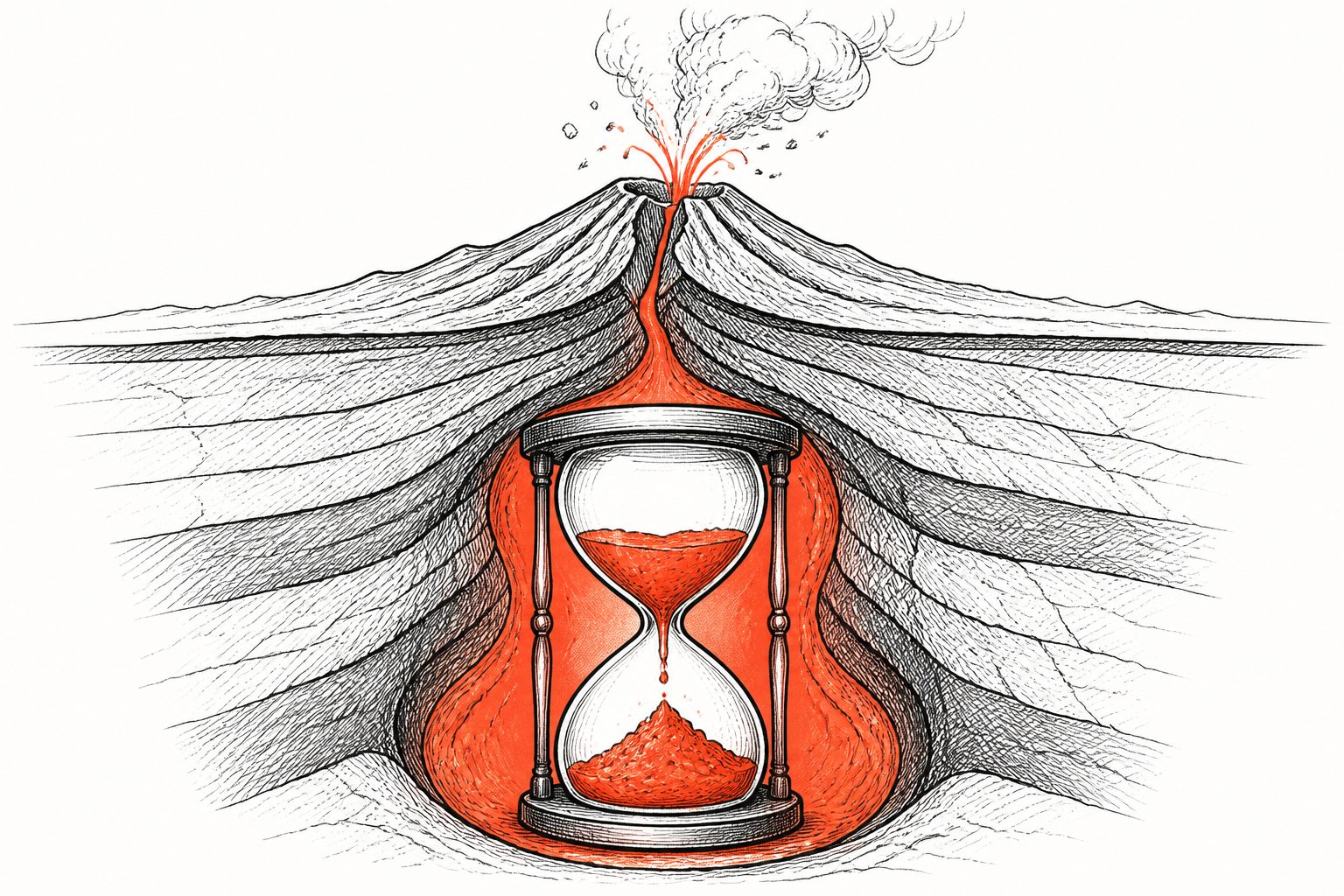
Models based on the spread of iron and magnesium in the crystals produced storage times from less than one year to 12.6 years, with a median of three years. Lithium maps from 32 zoned crystals showed several types of lithium patterns. Most were attributed to crystal growth rather than later chemical diffusion, and 17 profiles were linked to phosphorus in the crystals’ outer 100 micrometers, preventing their use for diffusion estimates.
Taken together, the olivine records showed no evidence of magma mixing shortly before the eruption. This differs from earlier findings for Kīlauea’s 1650 C.E. Keanakāko‘i Tephra Unit E eruption. The researchers hypothesize that pressure from gases being squeezed out as small and large crystals formed in the stored magma helped make the Unit 3 eruption explosive.
// Source
Contributions to Mineralogy and Petrology · 2026 · DOI: 10.1007/s00410-026-02353-6
Authors: Abigail R. Nalesnik, Kendra J. Lynn, T. R. Rose, J. M. Warren, Dawn Ruth, Kuan-Yu Lin, Donald A. Swanson
Institutions: University of Delaware, Smithsonian Institution, United States Geological Survey, National Museum of Natural History, Hawaiian Volcano Observatory, Cascades Volcano Observatory