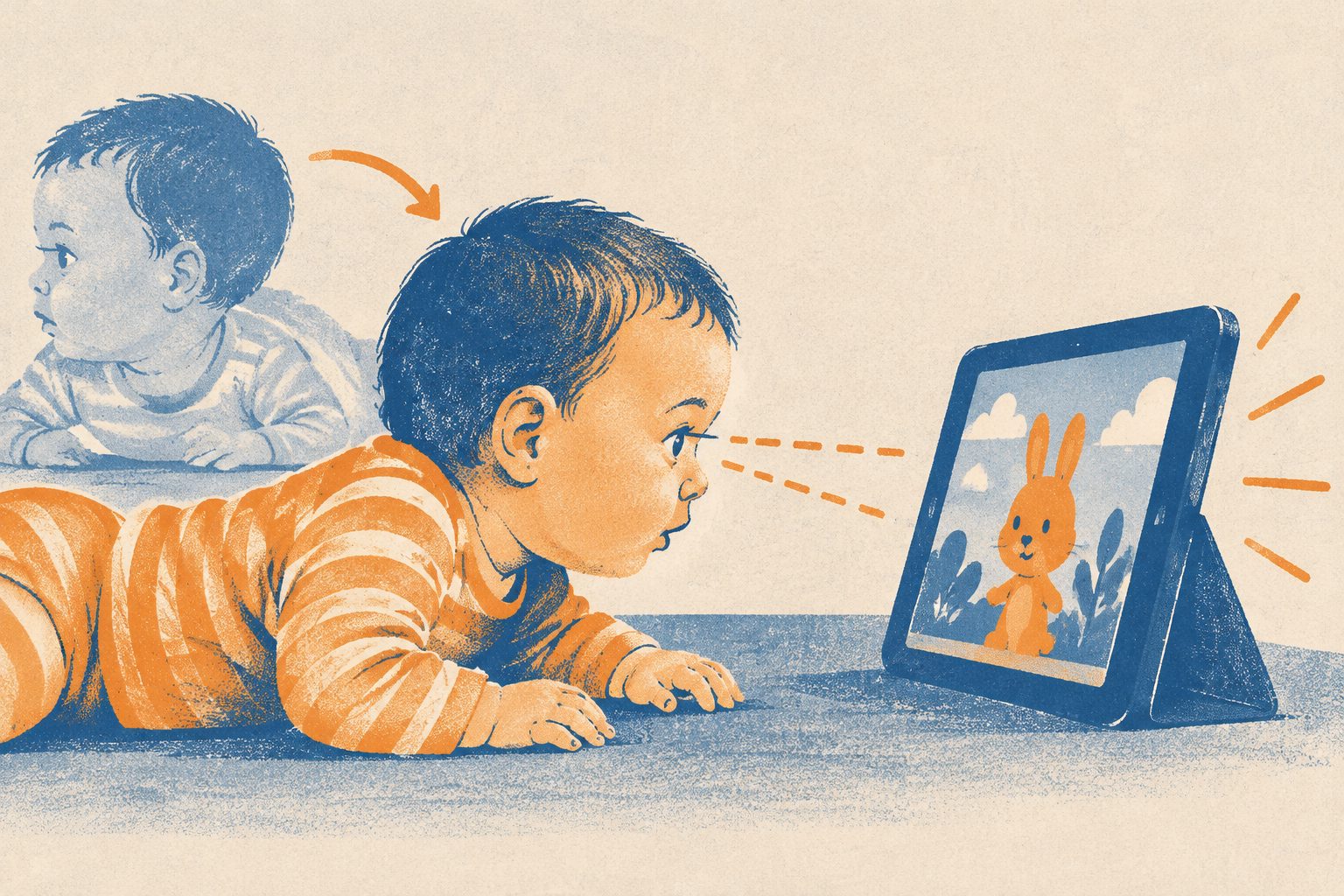
Researchers studied 110 typically developing infants aged 9–16 months using tasks designed to measure how they orient toward noticeable events and how well they control their attention. Mothers reported the infants’ daily screen time and exposure to television playing in the background at home.
Greater screen time and background television exposure were each associated with faster orienting and prolonged distraction. When the two types of exposure were considered together, background television remained associated with faster orienting, while total screen time remained associated with prolonged distraction.