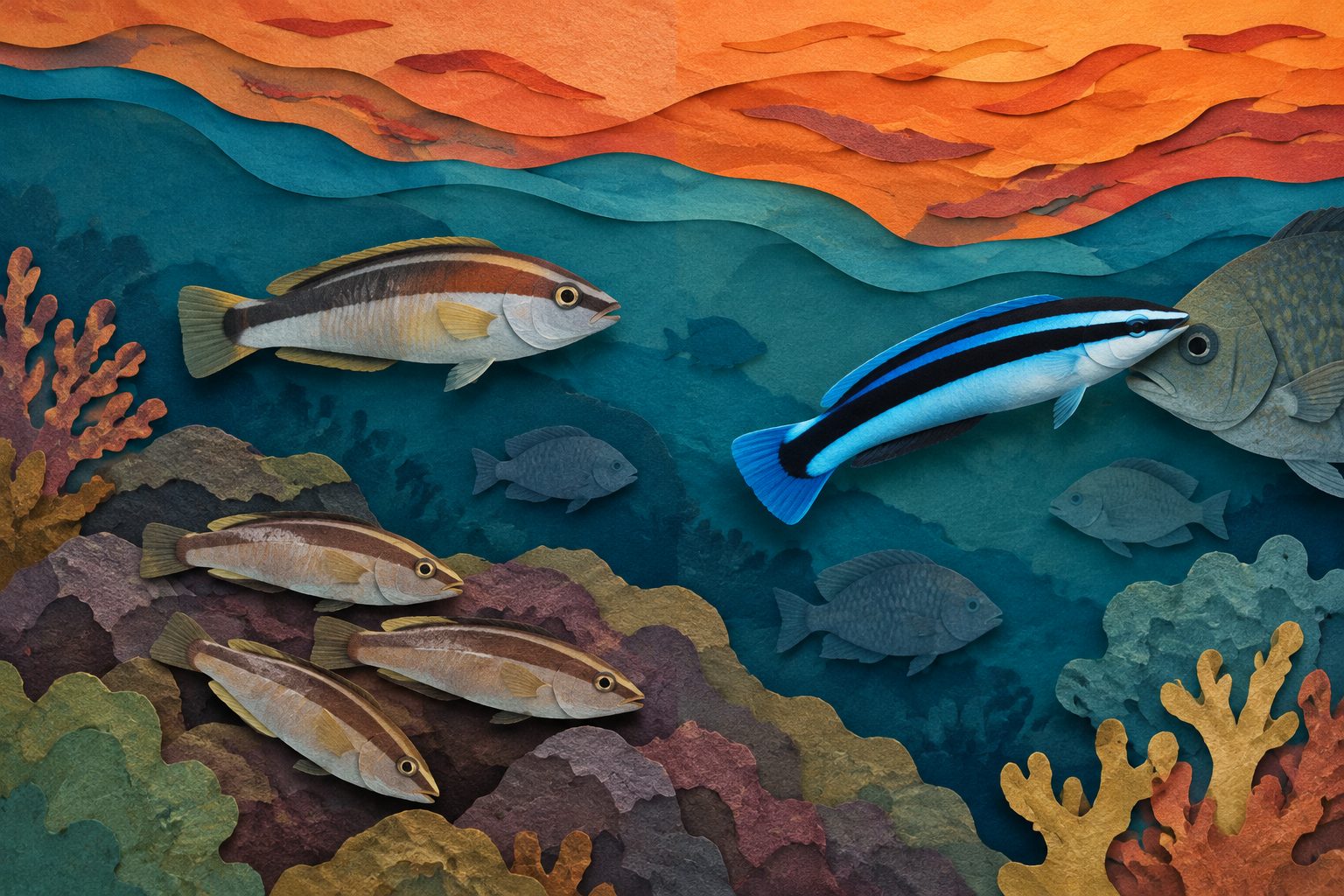
At Australia’s Lizard Island, female fish mortality more than doubled during the 2024 El Niño-related warming, while male mortality did not rise.
Researchers tracked 731 adult cleaner wrasse across eight reefs around Lizard Island on Australia’s Great Barrier Reef. The fish first function as females and some later change sex and become males, allowing the study to compare survival and growth across these life stages.
Males had higher survival than females during normal conditions and during the warming event. Female mortality more than doubled during the event, while male mortality did not change. Growth declined in both sexes, and the researchers suggest that females’ generally faster growth may partly help explain their higher overall mortality.
Evidence and limits
The study followed individually recognizable fish across eight reefs for two years, including the 2024 ENSO event, which brought a temporary 1-degree temperature increase, severe coral bleaching and coral mortality at Lizard Island. This is observational evidence from one fish species, one island region and one event, so it does not establish which mechanism caused the higher female mortality. The researchers discuss possible roles for direct heat effects, reduced food availability and females’ energy demands, but these explanations were not directly separated in the study.
// Source
Animal Behaviour · 2026 · DOI: 10.1016/j.anbehav.2026.123758
Authors: Letizia Pessina, Redouan Bshary
Institutions: University of Neuchâtel