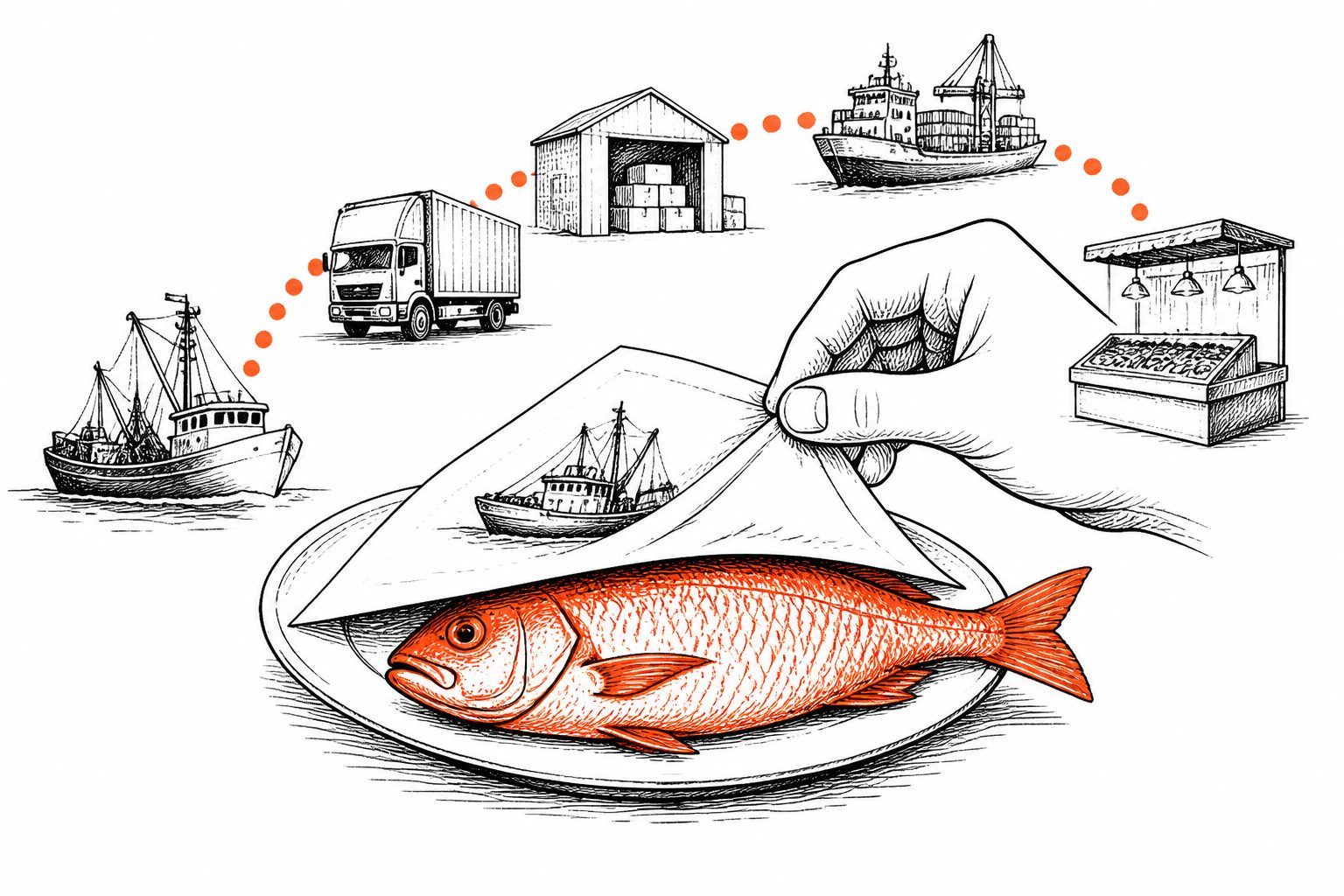
The article estimates that most illicit marine wild-fish seafood comes from industrial fleets and can be laundered through gaps in oversight.
Illegal fishing is a large but unevenly distributed global trade, with industrial fleets responsible for most of the estimated illicit marine wild-fish seafood by volume. The article estimates that the trade involves 8.4 to 15.4 million metric tons of seafood each year, worth $6.2 billion to $12.2 billion.
It also describes how illegal catch can be moved through ship-to-ship transfers, weakly regulated ports and false documents. Better detection using remote sensing and AI may help, but the article argues that enforcement will require transparency, international cooperation and policies that also address the needs of small-scale fishers.
Where illegal catch goes
The article estimates that global illicit trade in marine wild-fish seafood amounts to 8.4 to 15.4 million metric tons annually and is worth US$6.2 billion to $12.2 billion. Industrial-scale fleets account for about 82% to 93% of the trade by volume.
Illegal fishing is unevenly distributed. About two-thirds of the trade by value originates from fishing grounds in West Africa, which accounts for 27%, East Asia, 24%, and Southeast Asia, 16%.
The article identifies several ways illegal catch can be moved into seafood supply chains: transshipments between vessels at sea, poorly regulated ports and fraudulent documentation. Remote sensing and AI technologies are improving detection, but enforcement remains difficult because of its cost and the ease of disguising illegal catch within supply chains.