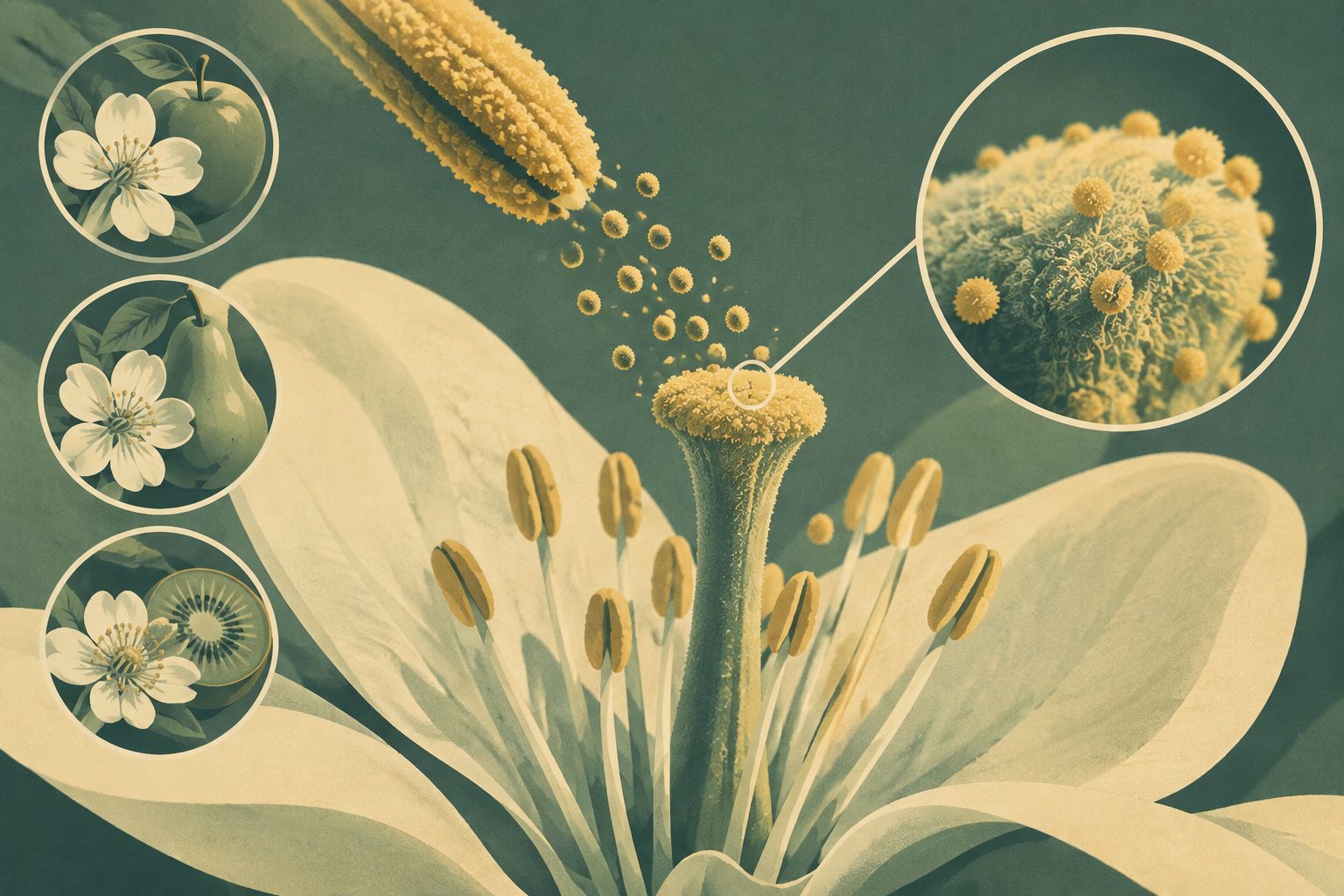
Microscopic surface features, moisture and electrical forces all help fruit-tree pollen adhere during pollination.
Researchers measured and modeled how pollen from apple, pear and kiwifruit adheres to the stigma, the flower surface that receives pollen. They examined pollen chemistry, moisture uptake, surface structure and electrical properties, and compared pollen with the tiny hair-like projections, called papillae, on stigmas.
The study found that van der Waals forces are the main contributor to adhesion between the two biological surfaces, while pollenkitt strengthens binding as humidity increases. The researchers also identified ridge-like structures on apple and pear pollen and dense small bumps on kiwifruit pollen, and found that capillary bridges, suction in surface cavities and electrostatic forces can further strengthen attachment.
How the pollen sticks
The researchers studied pollen from three fruit species: apple, pear and kiwifruit. They measured pollen–stigma adhesion with atomic force microscopy and other experiments, removed pollenkitt from some pollen samples for comparison, characterized pollen surfaces and tested models of pollen structures interacting with stigma papillae and artificial surfaces.
Their analysis indicates that van der Waals forces dominate adhesion between pollen and the stigma. Pollenkitt, the material coating many pollen grains, increases binding strength as relative humidity rises. The researchers report that adhesion changes after initial contact: capillary bridges can develop and produce forces much greater than the pollen’s own weight, while the lower viscous force of pollenkitt may allow pollen to adjust its position and angle.
Apple and pear pollen had similar ridge structures, while kiwifruit pollen had many small surface bumps. The models suggest that these features can work with stigma papillae to hold pollen, including when contact occurs over a small area. The researchers also found that cavities can add suction and that applying an electrical charge substantially increased pollen–stigma adhesion. They report that charged pollen had higher viability and a more even distribution with more pollen near the edges.
Why the adhesion matters
The findings describe how fruit-tree pollen can attach securely while still being able to adjust its position on the stigma. This adds physical detail to the early stages of pollination in apple, pear and kiwifruit and provides measurements and models that could inform agricultural technology.
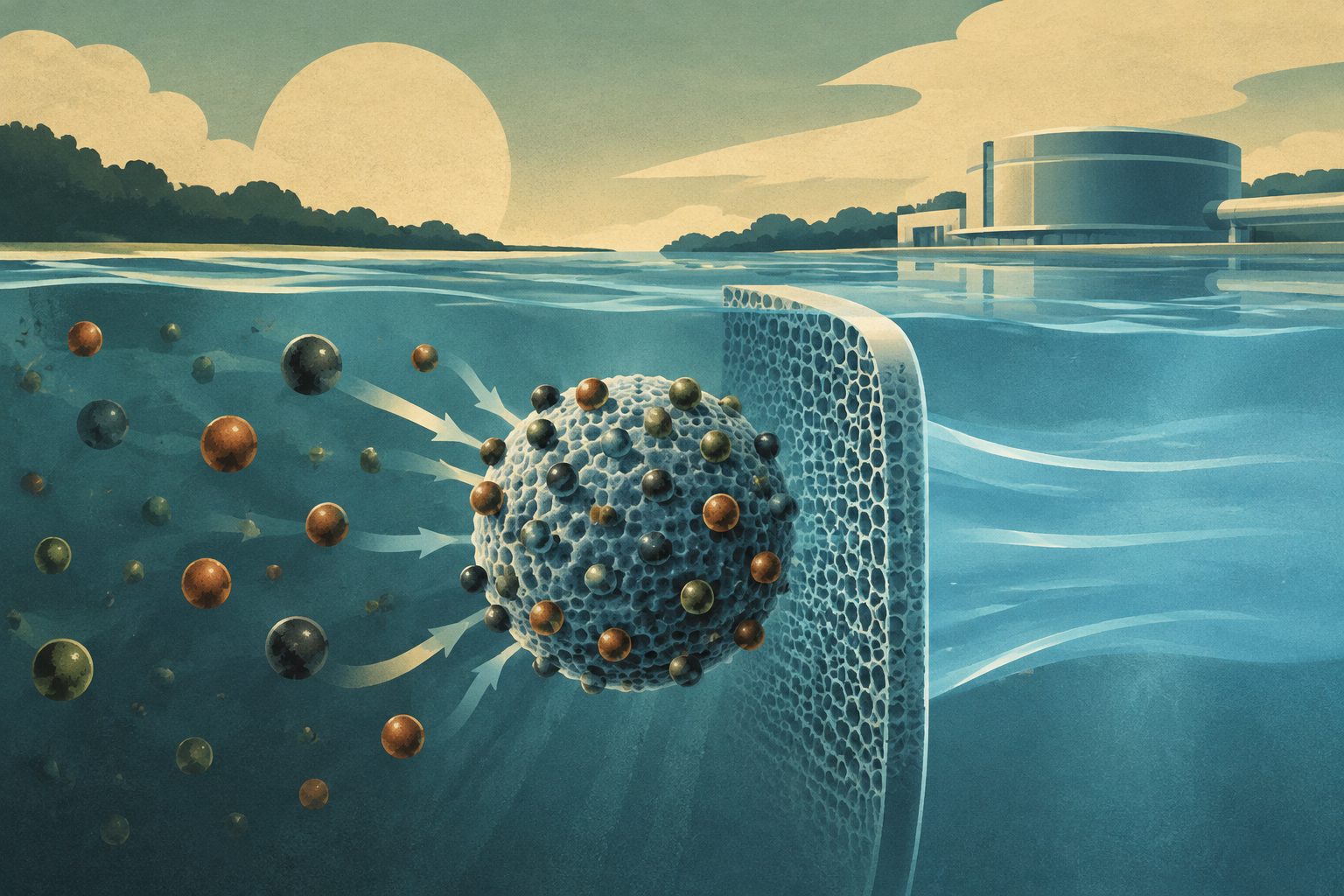
The authors also identify possible uses beyond pollination, including pollen collection or removal from air. The abstract presents these as application potential rather than demonstrated products or field outcomes.
Evidence and caveats
This is a laboratory study combining observations of naturally pollinated flowers, adhesion-force measurements, theoretical calculations, surface characterization and experiments with artificial substrates and electrostatic charge. The supplied material does not report the numerical adhesion forces, sample sizes or detailed statistical results, so the strength and variability of the effects cannot be assessed here.
The work examined three fruit species and particular cultivated varieties—Fuji apple, Niitaka pear and Hayward kiwifruit—so the results may not apply to all plants or pollination conditions. The proposed uses in agriculture, pollen removal, asthma prevention, biomedicine and environmental management were not tested as practical applications in the described experiments.