Floodplain chemistry helped preserve a rare dinosaur tail
A semi-articulated lambeosaur tail shows how rapid burial and iron-rich conditions protected delicate structures in southwestern Europe.
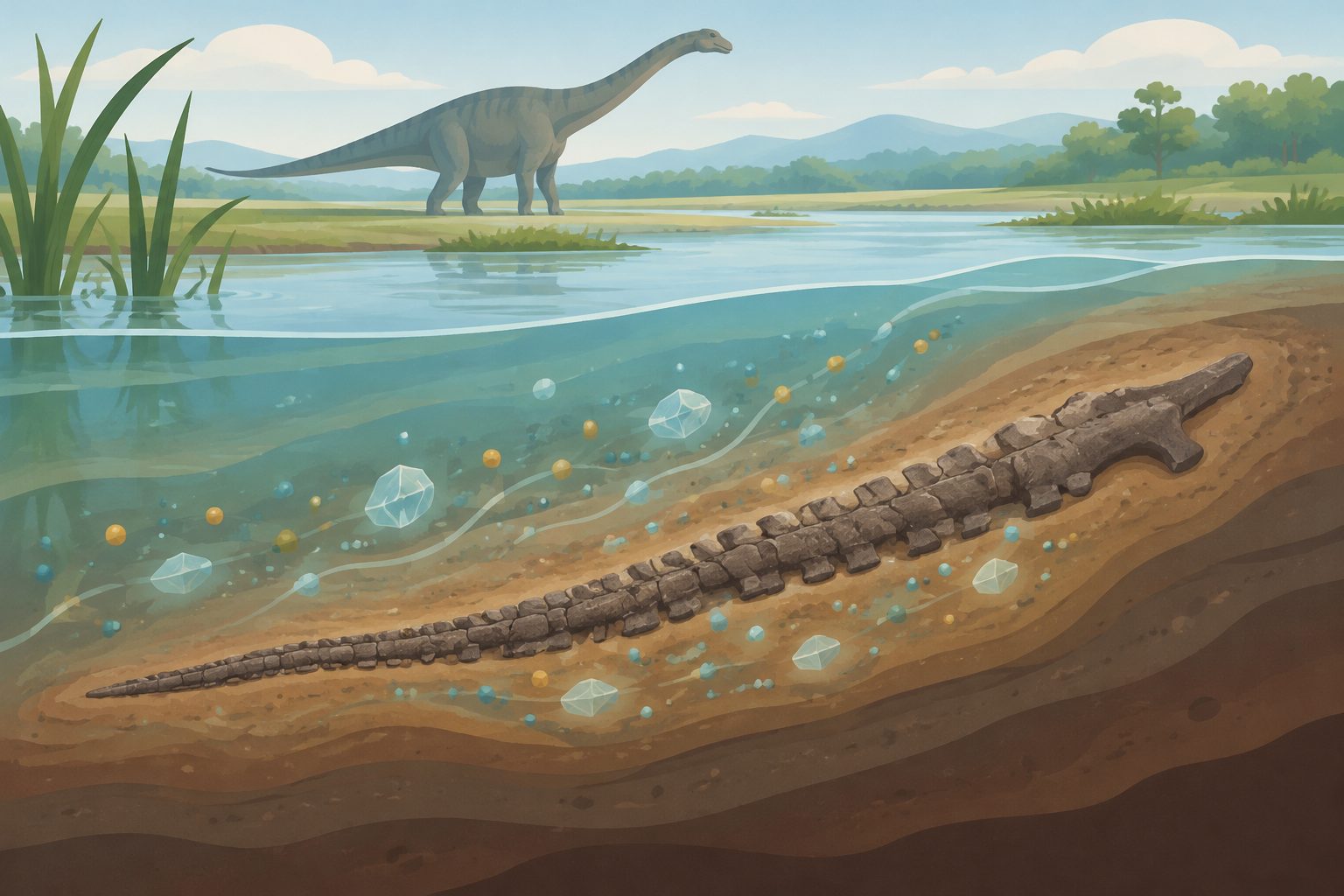
Editorial illustration — not from the study.
Researchers examined a semi-articulated middle section of a lambeosaurine hadrosaur tail preserved in a sandstone block from the Late Maastrichtian Planta del Mestre locality in the Tremp Basin. The specimen includes 11 middle tail vertebrae, associated neural spines and four haemal arches, which are structures below the vertebrae.
The bones show little abrasion or breakage, suggesting limited transport and relatively rapid burial in a low-energy floodplain setting. Some vertebrae weathered while the carcass was partly exposed, and the distal elements shifted as the remains settled. Iron-rich material entered the surrounding sediment under oxygen-rich conditions, helping stabilize it and seal pores in the bones. The researchers also identified grooves consistent with early scavenging or feeding by a ziphodont theropod, likely an abelisaurid.
How the tail was preserved
The close arrangement of the tail bones, mineralized tissue between the vertebrae, lack of abrasion and limited fracturing indicate that the remains spent little time being transported before burial. The researchers interpret the specimen as part of a larger tail, because both ends of the sandstone block cut through the sequence and additional bones were lost during erosion and block detachment.
Several vertebral centra show moderate weathering from exposure before final burial. The thinner spines appear to have remained embedded while more prominent parts were exposed, and the stepped position of the most distal elements is consistent with settling and some decay of connective tissues. Root-related alteration indicates that roots reached the sediment before it had fully consolidated.
Parallel, deep grooves on neural spines and a haemal arch have U- to V-shaped cross-sections and drag marks. Their form is consistent with tooth traces from a ziphodont archosaur, a group with blade-like, serrated teeth. The researchers interpret this as feeding or scavenging soon after death, probably by a medium-sized abelisaurid theropod, although the marks lack diagnostic tooth serrations.
Sedimentary evidence places the tail in a distal crevasse-splay deposit on a low-gradient floodplain, where episodic flooding alternated with brief periods of surface stability. Petrographic observations indicate that iron-rich material entered the sandstone early under oxidizing conditions. This may have stabilized the sediment and sealed bone pores, helping preserve delicate features such as mineralized tissue between the vertebrae. Planktonic foraminifera associated with the deposit suggest that marine influence reached the floodplain episodically.
Why this tail matters
Semi-articulated dinosaur remains are uncommon in Upper Cretaceous floodplain deposits, where transport, exposure and biological alteration often separate and damage bones. This specimen provides a detailed example of how several local conditions—rapid burial, limited movement, partial protection by sediment and early chemical changes—acted together to preserve a connected section of tail.
The findings also show that preservation in a floodplain cannot be explained only by whether the setting was high- or low-energy. Local sediment and chemical conditions helped shape the outcome, giving researchers a more detailed basis for interpreting how dinosaur remains were preserved in continental deposits.
Evidence and open questions
The study combines anatomical identification of the bones with observations of articulation, weathering, fractures, abrasion and tooth marks. It also uses sedimentary features, trace fossils, petrographic analysis of the sandstone and associated microfossils to reconstruct burial and early alteration.
The specimen is incomplete because the sandstone block was detached and eroded at both ends. The identity of the animal that made the grooves is inferred from their shape rather than established by diagnostic tooth marks; the researchers consider an abelisaurid likely. The study also says that the exact timing and mechanisms by which the intervertebral tissue mineralized remain uncertain and require targeted geochemical analyses. The proposed role of iron-rich impregnation in preserving the delicate structures is therefore supported by the observed sediment and mineral patterns but is not fully resolved.
Images from the European Space Agency’s JUICE mission show that small volcanic or subvolcanic features on a lunar highland are distributed in ways consistent with control by impact-generated and regional fractures. The same observations also reveal mafic, or iron- and magnesium-rich, material inside Langrenus crater, although its exact minerals remain uncertain.
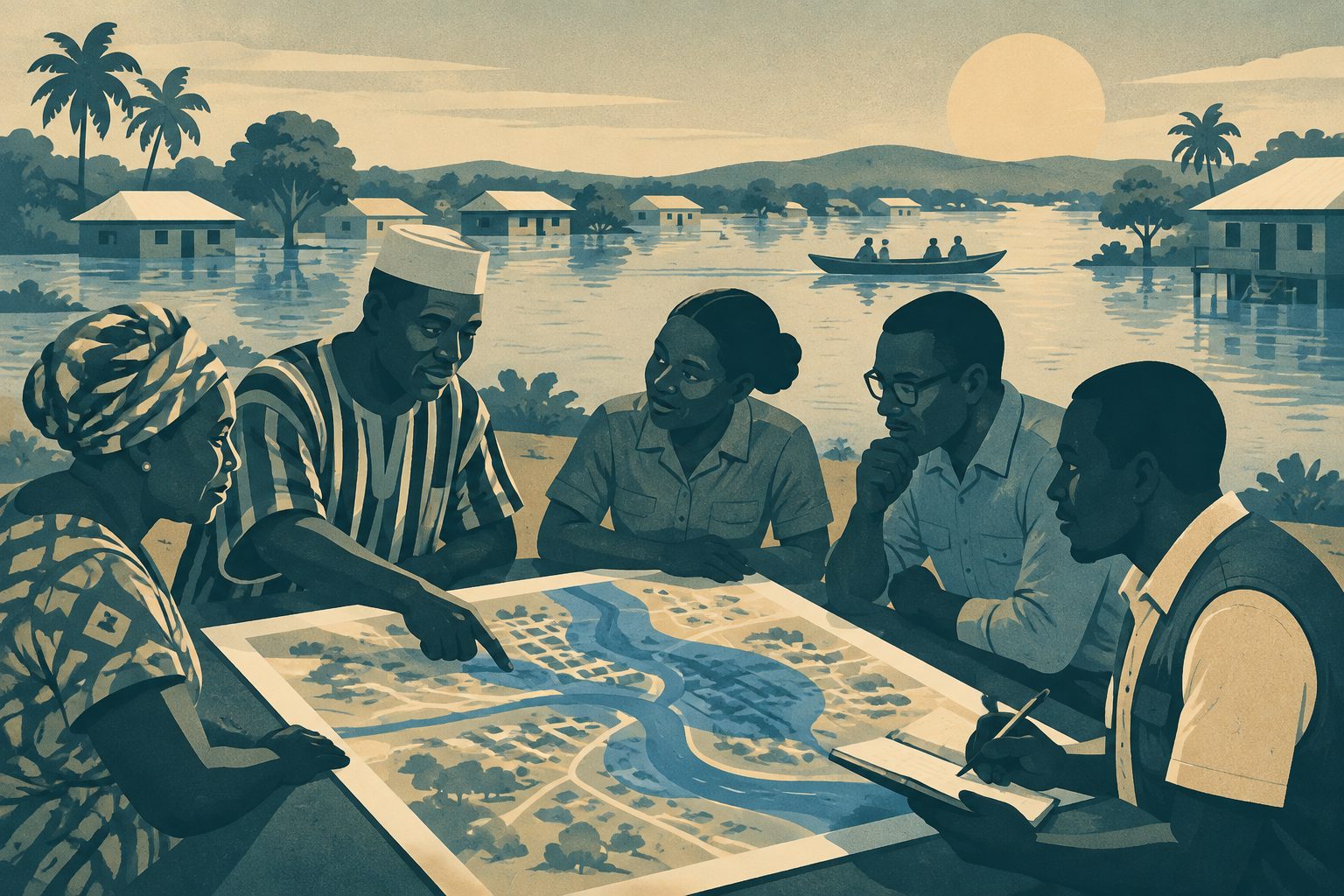
A study of the PARADeS flood-risk project in Ghana argues that effective flood planning needs more than technical analysis. It finds that working with communities and other stakeholders through shared research, trust-building and long-term institutional support can produce knowledge that is more socially grounded and actionable.
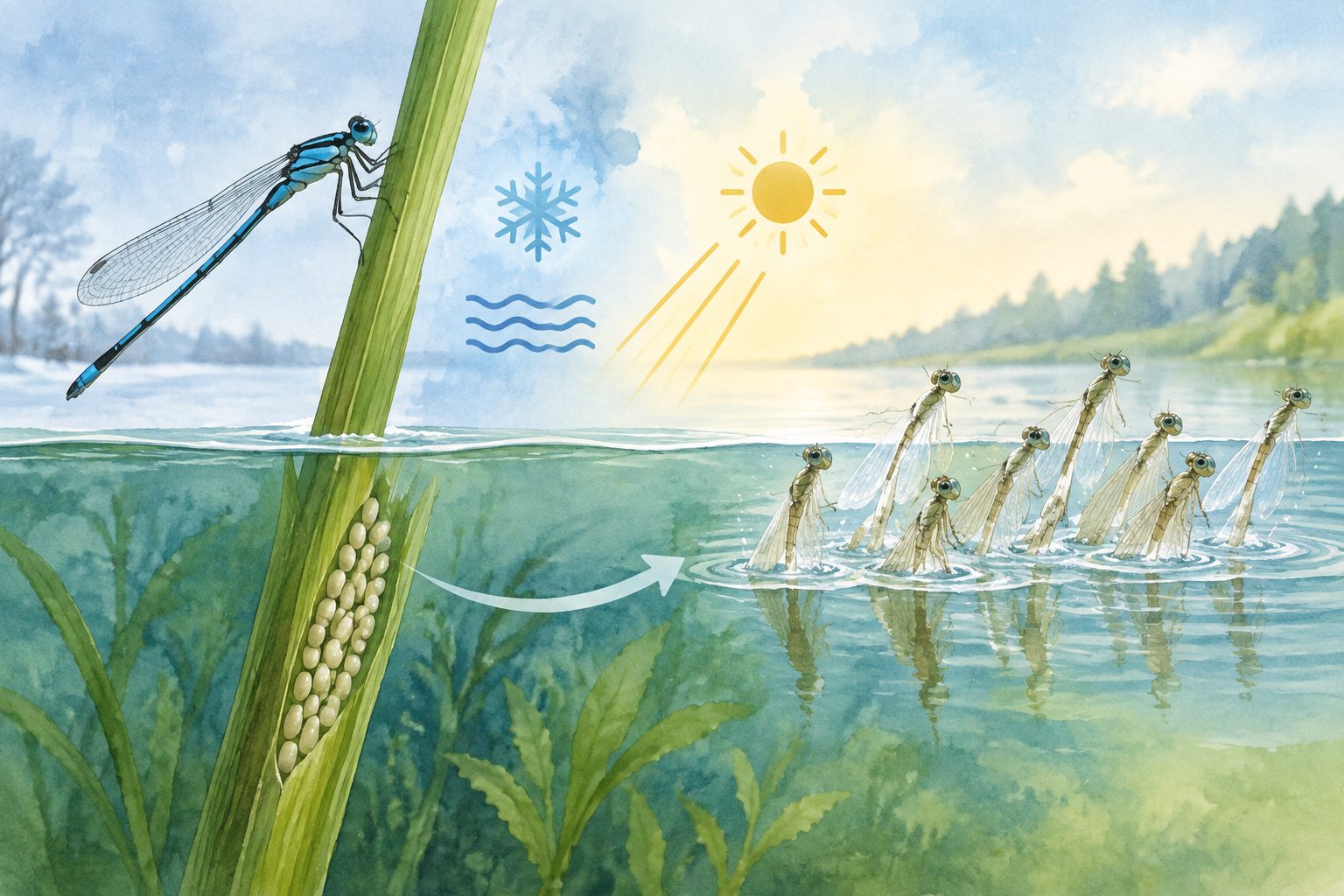
Damselfly eggs from different latitudes responded to winter cold and day length in ways that helped time hatching for spring. The eggs could hatch at 5 °C, and newly hatched larvae survived two weeks near 0 °C, suggesting that warmer winters could allow some hatching during winter.