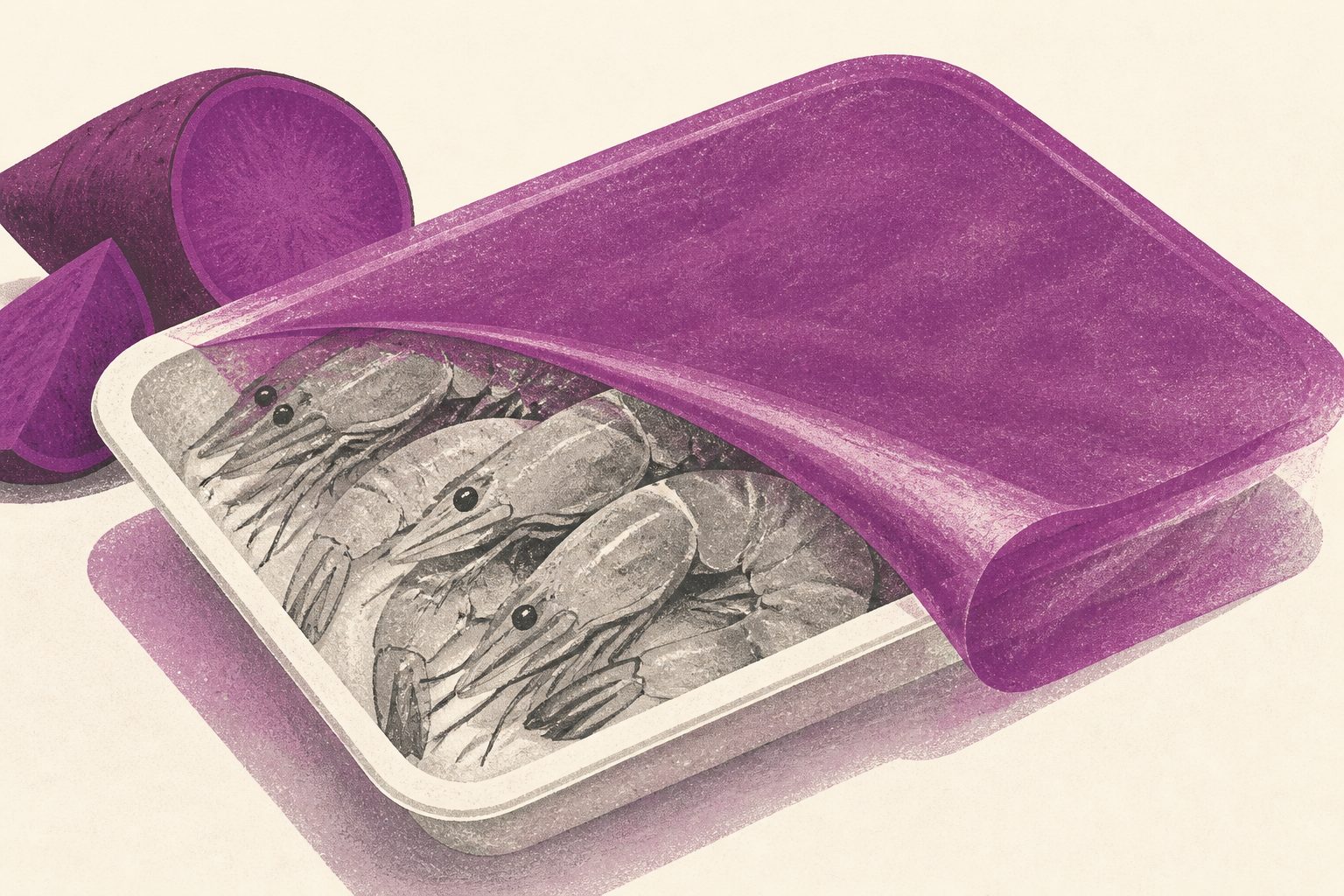
Biodegradable pectin films that change color with pH were tested as a visual indicator of shrimp freshness.
The study developed biodegradable pectin films using pectin extracted from orange peel waste, glycerol as a plasticizer, and anthocyanin-rich extract from purple sweet potato. The team measured the films’ physical, barrier, mechanical, antioxidant, and thermal properties, and checked how the purple color behaved as pH changed.
The purple sweet-potato extract produced a predictable, sensitive color response to pH variations, and the anthocyanin-containing films showed higher antioxidant levels than a control film without the extract. The work also reports that shifts in shrimp quality measures—particularly total volatile basic nitrogen (TVB-N) and pH—matched the film’s color changes, supporting the films’ use as pH-sensitive freshness indicators.
Color tracks pH changes
• Pectin extracted from orange peel residue had a high yield (45.44%), an equivalent weight of 1807.76 g, and a methoxyl content of 79.26%, indicating the obtained biopolymer’s quality.
• Films with purple sweet-potato anthocyanins showed a predictable and sensitive color response to pH changes, supporting their use as visual freshness indicators.
• Adding the anthocyanin extract significantly changed film properties (p < 0.05), improving strength and flexibility.
• Compared with the control film, the anthocyanin film had higher total phenolic content (1400.65 mg GAE/100 g) and anthocyanin content (375.28 mg/100 g), along with significantly greater antioxidant capacity.
• The film’s color response was linked to changes in shrimp TVB-N and pH fluctuations.
• Anthocyanin extract did not substantially change the film surface or cause major structural changes in the pectin matrix, and the highest melting temperature reported was 253.64 °C.
• Overall migration of film constituents was higher in water than in acetic acid and ethanol.
• The study concludes the pH-sensitive film can be used to monitor shrimp freshness.
Lab tests, limited details
This is laboratory evidence based on testing film properties (physical, barrier, mechanical, antioxidant, morphological, structural, and thermal) and on the reported use of the film as a pH indicator tied to shrimp freshness measures (TVB-N and pH). The abstract does not describe the number of shrimp samples, how long the monitoring lasted, packaging conditions (for example, temperature, storage time, or real packaging environment), or how the film performed against other freshness measurements, which limits how confidently the results can be generalized to all real-world settings.