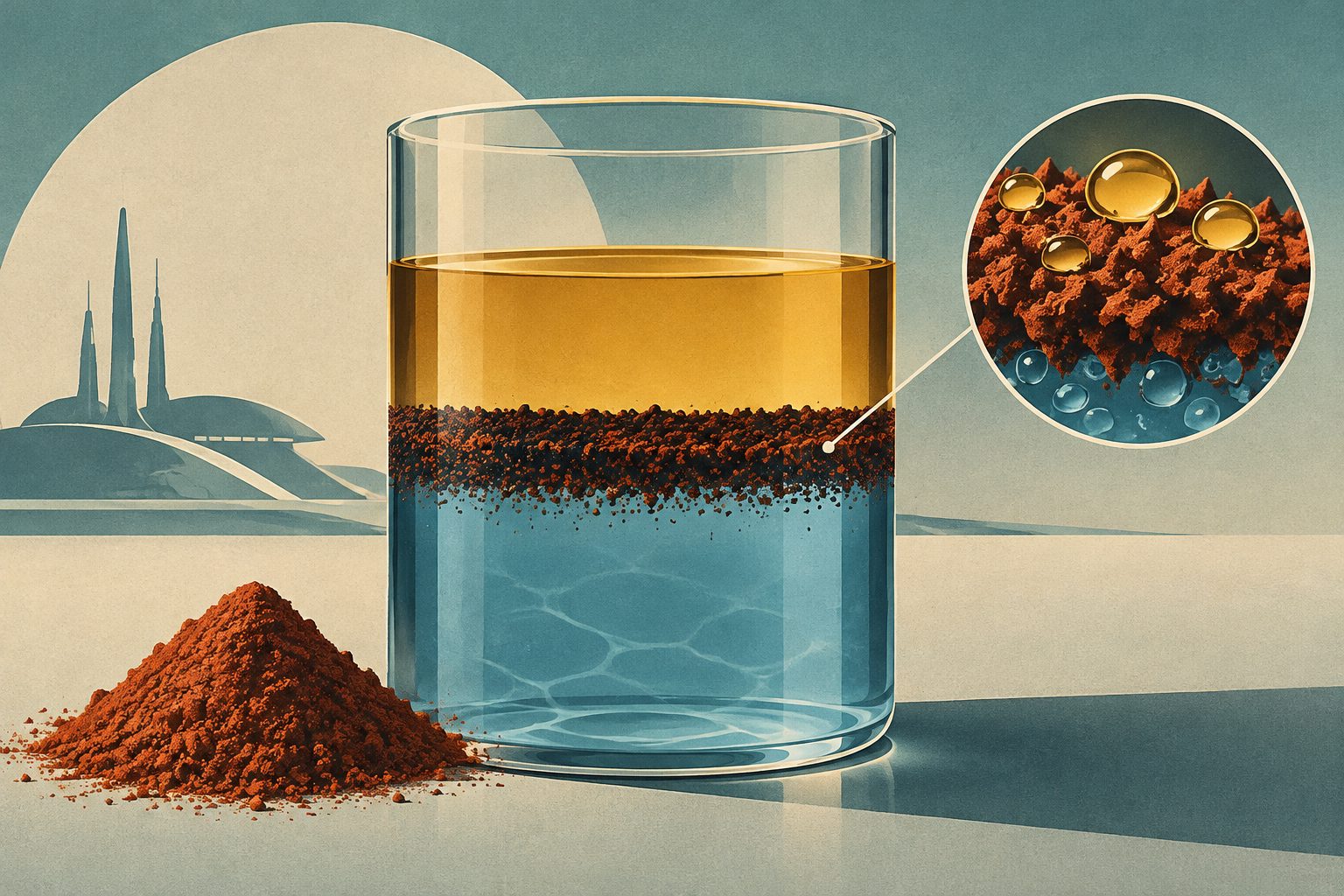
A one-step copper oxide material separated a chloroform–water mixture with about 98% efficiency and could also adsorb oil from emulsions.
The team produced urchin-shaped copper oxide particles by heating copper nitrate and ammonia, then grew similar copper oxide structures directly on stainless-steel mesh. The material’s rough micro- and nanoscale structure gave the mesh a water contact angle of about 161 degrees and an oil contact angle of 0 degrees, indicating strong water repellence and oil attraction.
The powder’s oil adsorption selectivity was greater than 19. In filtration tests, the coated mesh separated an immiscible chloroform–water mixture with approximately 98% efficiency and a chloroform flow rate of about 7,300 liters per square meter per hour. The researchers also tested the powder with a surfactant-free hexane-in-water emulsion and described possible use in oil-absorbing booms or pillows.
Evidence and caveats
This is a laboratory materials study. The researchers measured wetting behavior, oil and water adsorption, emulsion adsorption, and filtration of a chloroform–water mixture. The abstract also reports that the coated mesh remained UV-stable for more than 1,000 hours and retained good mechanical durability after 20 abrasion cycles; the provided conclusion excerpt is incomplete when describing its chemical stability. The reported separation result applies to the tested chloroform–water mixture, and the excerpts do not establish performance in outdoor oil spills, long-term field use, or a broad range of oils and emulsions.
// Source
Scientific Reports · 2026 · DOI: 10.1038/s41598-026-75307-4
Authors: Elmira Velayi
Institutions: Azarbaijan Shahid Madani University