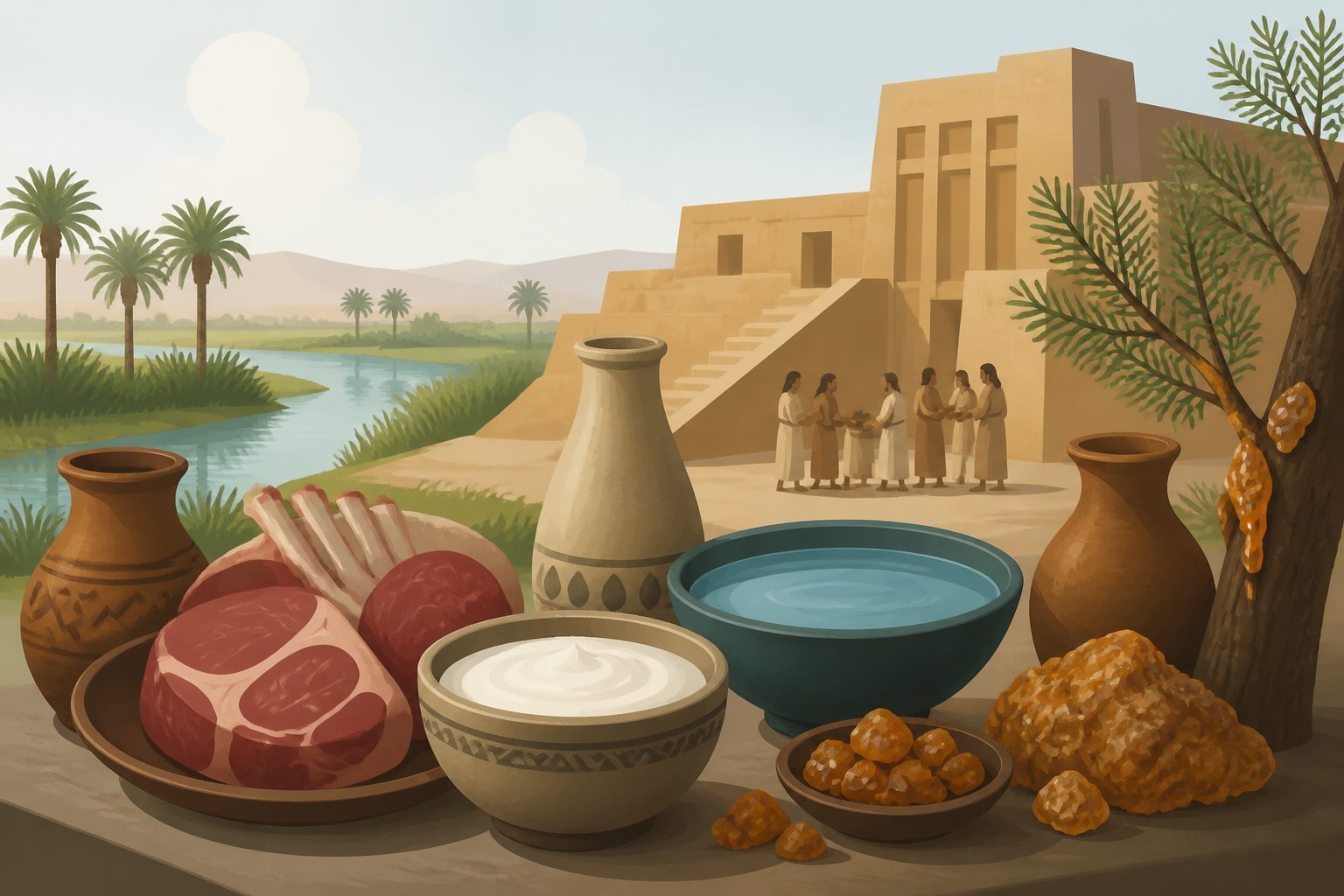
Evidence from 37 vessels suggests institutional meals at Shakhi Kora drew on domestic and wild animals, plants, dairy and resin flavoring.
Researchers examined vessels from Late Chalcolithic institutional contexts at Shakhi Kora in the Kurdistan Region of Iraq, combining residue analysis with isotope evidence, plant remains, animal remains and archaeological context. The vessels preserve evidence of food use over several centuries.
The findings point to a varied food supply that included domestic and wild animal resources, freshwater foods, plants and dairy products. The researchers say this suggests animal protein was available to a broader range of people, and was eaten more often, than some reconstructions based mainly on early written records have proposed.
Evidence and limits
The study combines organic-residue analysis, compound-specific isotope measurements, plant and animal remains, and archaeological context from 37 vessels. Together, these lines of evidence identify broad food categories and likely resin use, but they do not provide complete recipes or establish how every meal was prepared or distributed. The evidence comes from institutional contexts at one site, Shakhi Kora, so its applicability to all early Mesopotamian institutions remains uncertain.
// Source
Journal of Archaeological Science Reports · 2026 · DOI: 10.1016/j.jasrep.2026.106022
Authors: Cavazzin Bianca, Erskine Neil, Heimvik Synnøve, Bendrey Robin, Hald Mette Marie, Asouti Eleni, Sameen Salah Mohammed, Glatz Claudia
Institutions: University of Liverpool, University of Glasgow, University of Edinburgh, Kurdistan Regional Government, Canterbury Christ Church University, National Museum of Denmark