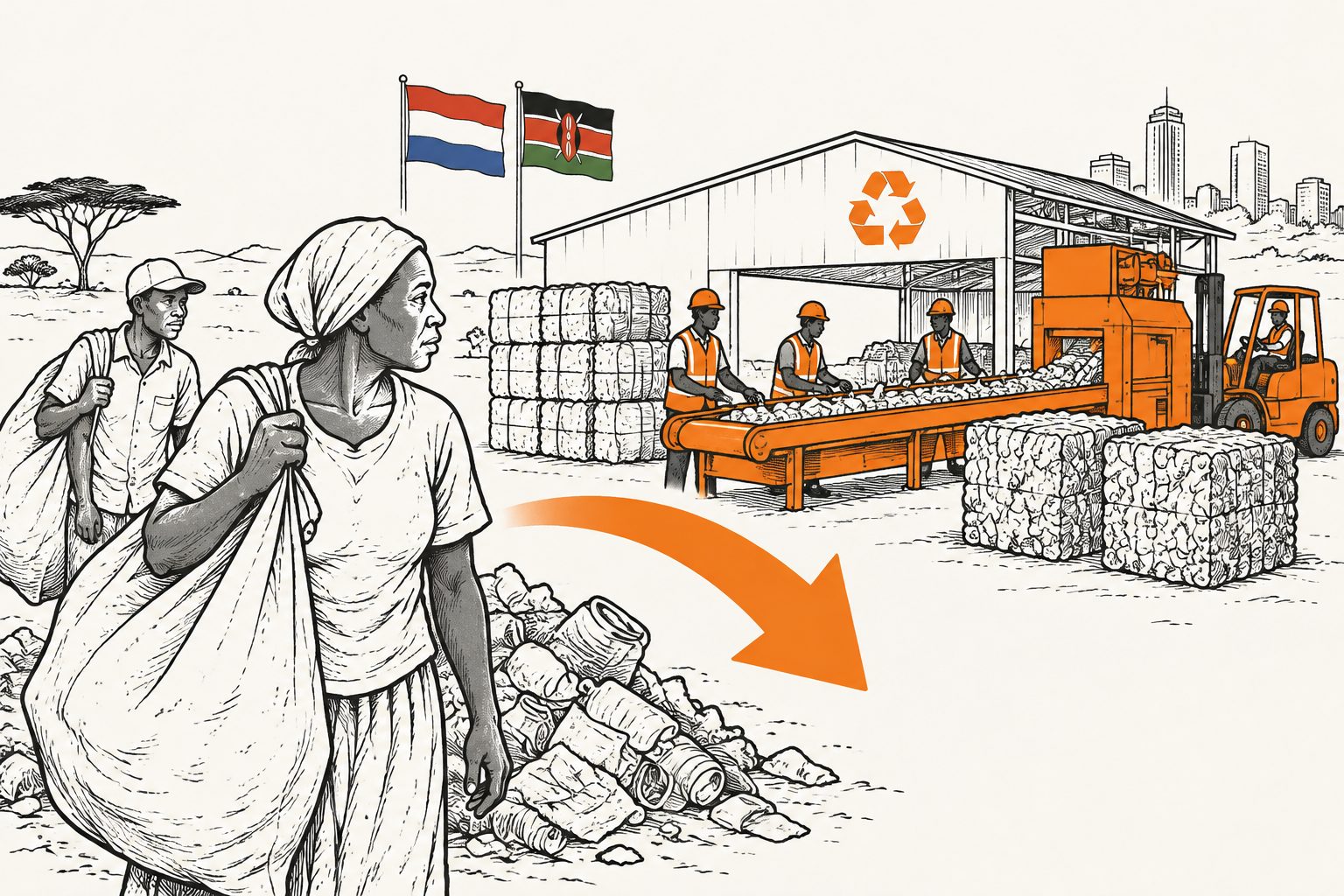
A qualitative study finds that funding, expertise and infrastructure can combine to give formal actors more control over waste systems.
The study examined waste relations between the Netherlands and Kenya through fieldwork in Nairobi, Mombasa and the Lamu Archipelago, as well as research in the Netherlands. It identifies three linked forces: market-focused ideas about waste, funding directed toward formal infrastructure, and facilities that concentrate waste processing in Kenya.
Together, these forces can create a self-reinforcing system. The standards used to define good circular-economy practice influence who qualifies for funding; funding builds infrastructure controlled by formal and internationally connected actors; and that infrastructure then reinforces the original standards. The researchers argue that this outcome reflects both Dutch donor priorities and Kenya's regulatory constraints and economic interests, rather than Dutch influence alone.
How waste control shifted
The researchers found that circular-economy initiatives can turn existing waste markets into more formal, market-oriented systems while sidelining informal and community-based actors. Knowledge systems promoted through policy advice, agenda-setting and other forms of expertise can make private-sector-led formalization appear to be the accepted model, while treating community-based waste practices as less legitimate.
Funding eligibility also shaped who could participate in policy discussions. Resources were directed mainly toward formally registered actors and capital-intensive infrastructure, meaning that the people excluded from investment were often also excluded from defining what counted as good practice. The resulting facilities concentrated waste processing and environmental burdens in Kenya and created dependencies on imported waste, according to the article.
The three processes were interdependent: ideas about expertise guided funding decisions, funding built physical infrastructure, and that infrastructure reinforced the ideas behind the funding. Informal workers were therefore not excluded at only one stage, the researchers argue, but from a cycle that progressively concentrated control among formal, internationally connected and well-resourced actors.
Why participation matters
The study shows why a circular-economy project can have unequal effects even when it is intended to improve resource recovery. In the Dutch–Kenyan case, formal infrastructure and international funding did not simply enter an empty regulatory space: they reorganized existing waste systems and affected who was recognized as a legitimate participant.
The findings put participation alongside the movement of materials and money as a central environmental-justice issue. They also suggest that efforts to make donor standards more inclusive may be insufficient if state regulatory capacity remains dependent on partnerships that favor formal organizations. The article instead points to directly resourcing regulatory capacity while accounting for the role informal workers already play in waste collection, sorting and environmental stewardship.
Evidence and caveats
This was a multi-sited qualitative case study. The researcher conducted 29 semi-structured interviews during the first fieldwork phase with government officials, international-organization representatives and experts connected to Dutch-funded projects, followed by fieldwork in the Netherlands and in Nairobi, Mombasa and the Lamu Archipelago in June 2022, November 2023 and February–April 2024. The analysis also drew on policy documents, participation in circular-economy events and iterative thematic coding of interview material.
The evidence provides an in-depth account of how Dutch and Kenyan actors, funding and infrastructure interact, but it does not measure how widespread these effects are across other countries or circular-economy projects. The researcher also notes a positionality limitation: as a non-European researcher based at a Dutch institution, they were institutionally connected to the Dutch side while belonging to neither the donor community nor the Kenyan communities studied.
// Source
Environmental Science & Policy · 2026 · DOI: 10.1016/j.envsci.2026.104513
Authors: Ilaha Abasli
Institutions: Erasmus University Rotterdam, International Institute of Social Studies