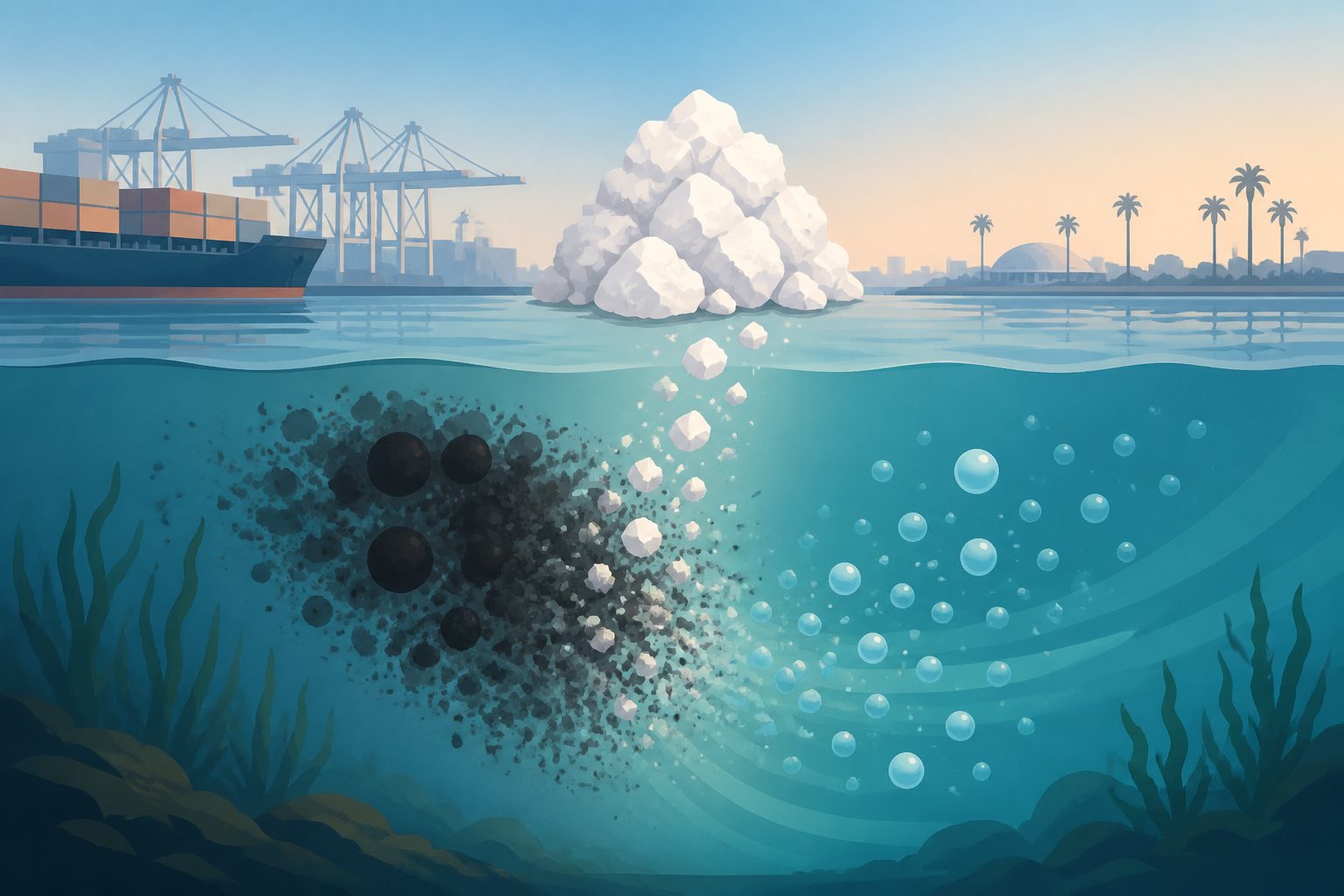
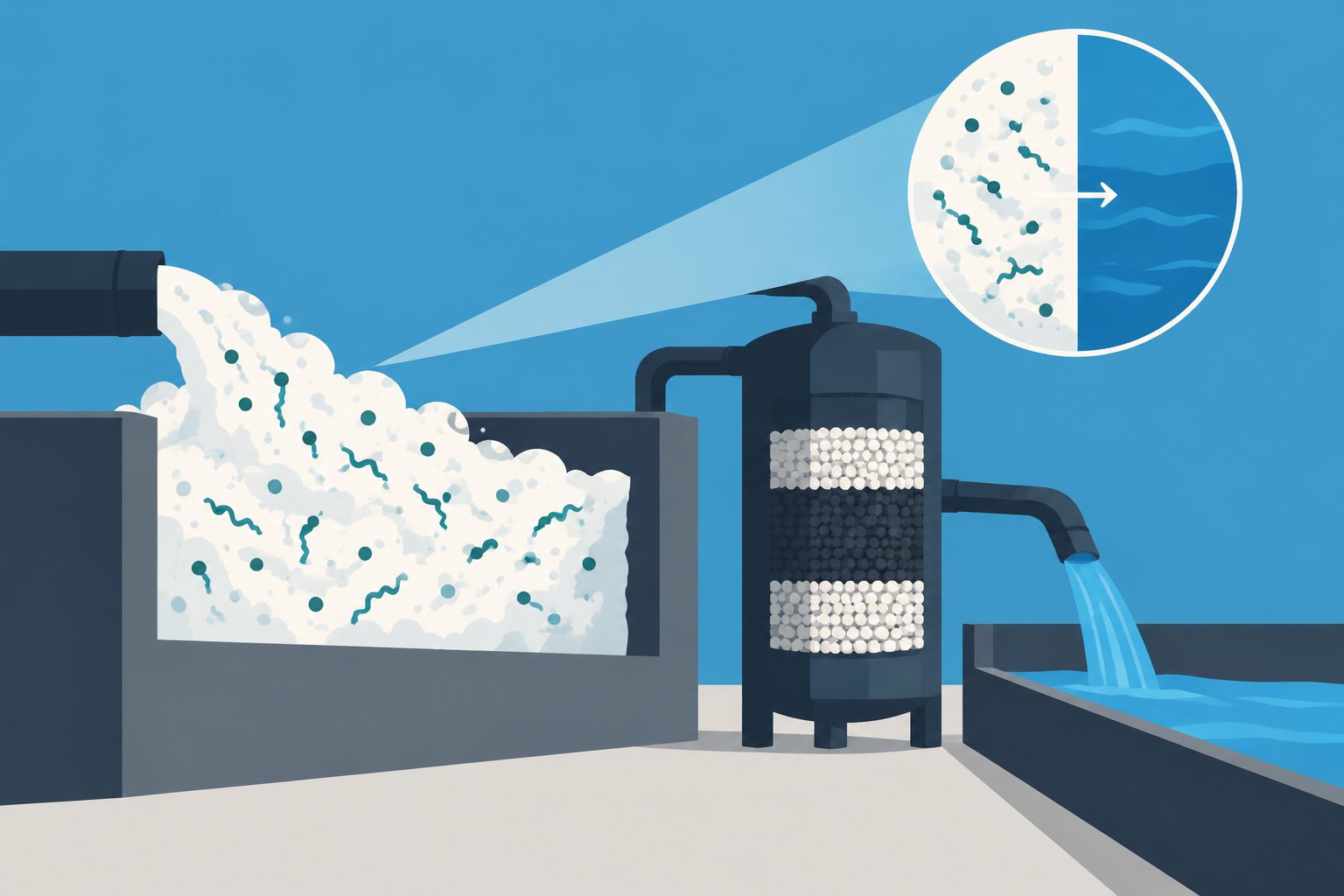
A field experiment found that a large alkalinity increase from calcium oxide lowered particulate organic carbon and dissolved oxygen.
Researchers tested three ways of increasing alkalinity in coastal seawater: sodium hydroxide, calcium oxide, and a calcium chloride–sodium bicarbonate mixture intended to simulate accelerated limestone weathering. The experiments used alkalinity increases of about 500 and 1,000 micromoles per kilogram and were incubated in the harbor for up to four days.
At the lower increase, none of the additions caused a statistically significant change in calcium carbonate precipitation or the distribution of organic carbon. At the higher increase, calcium oxide was associated with a statistically significant decrease in particulate organic carbon and dissolved oxygen compared with untreated water.
What changed in the water
The researchers found no statistically significant calcium carbonate precipitation or change in organic carbon partitioning after an alkalinity increase of about 500 micromoles per kilogram using sodium hydroxide, calcium oxide, or calcium chloride plus sodium bicarbonate. When calcium oxide raised alkalinity by about 1,000 micromoles per kilogram, particulate organic carbon and dissolved oxygen decreased significantly relative to the control. The experiments ran for 0–4 days, and carbon-13 tracers were used to follow carbon through the system.