
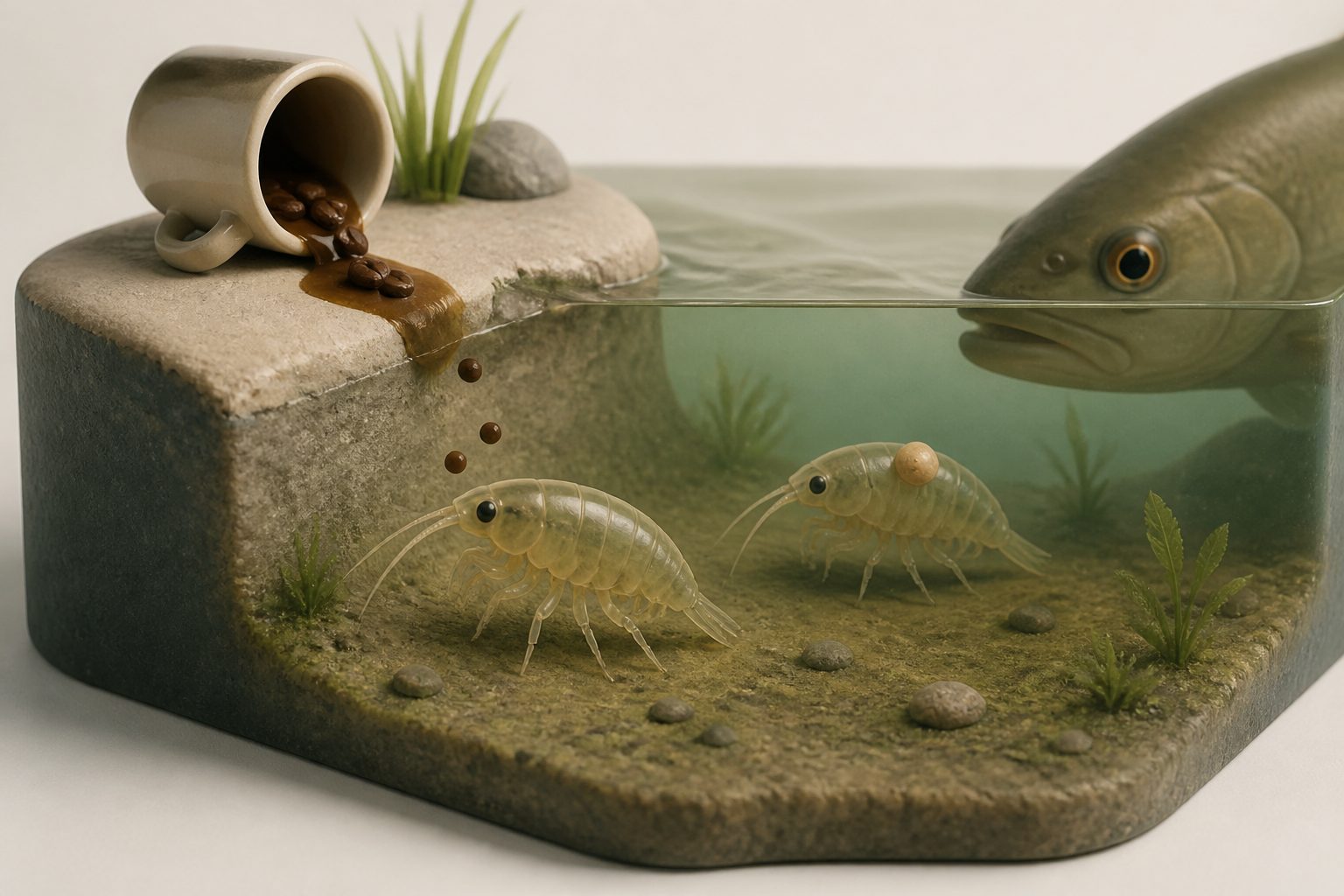
Researchers tested how environmentally relevant caffeine concentrations affected Gammarus pulex, a freshwater amphipod involved in decomposition and commonly eaten by aquatic predators. They compared infected and uninfected animals after 20 hours of exposure to high or low caffeine concentrations.
Higher caffeine concentrations increased the amphipods’ activity and reduced their avoidance of light. The change was comparable to the reduced photophobia caused by the parasite Polymorphus minutus, which alters its host’s behaviour in ways that can help the parasite reach water birds, its final host.


