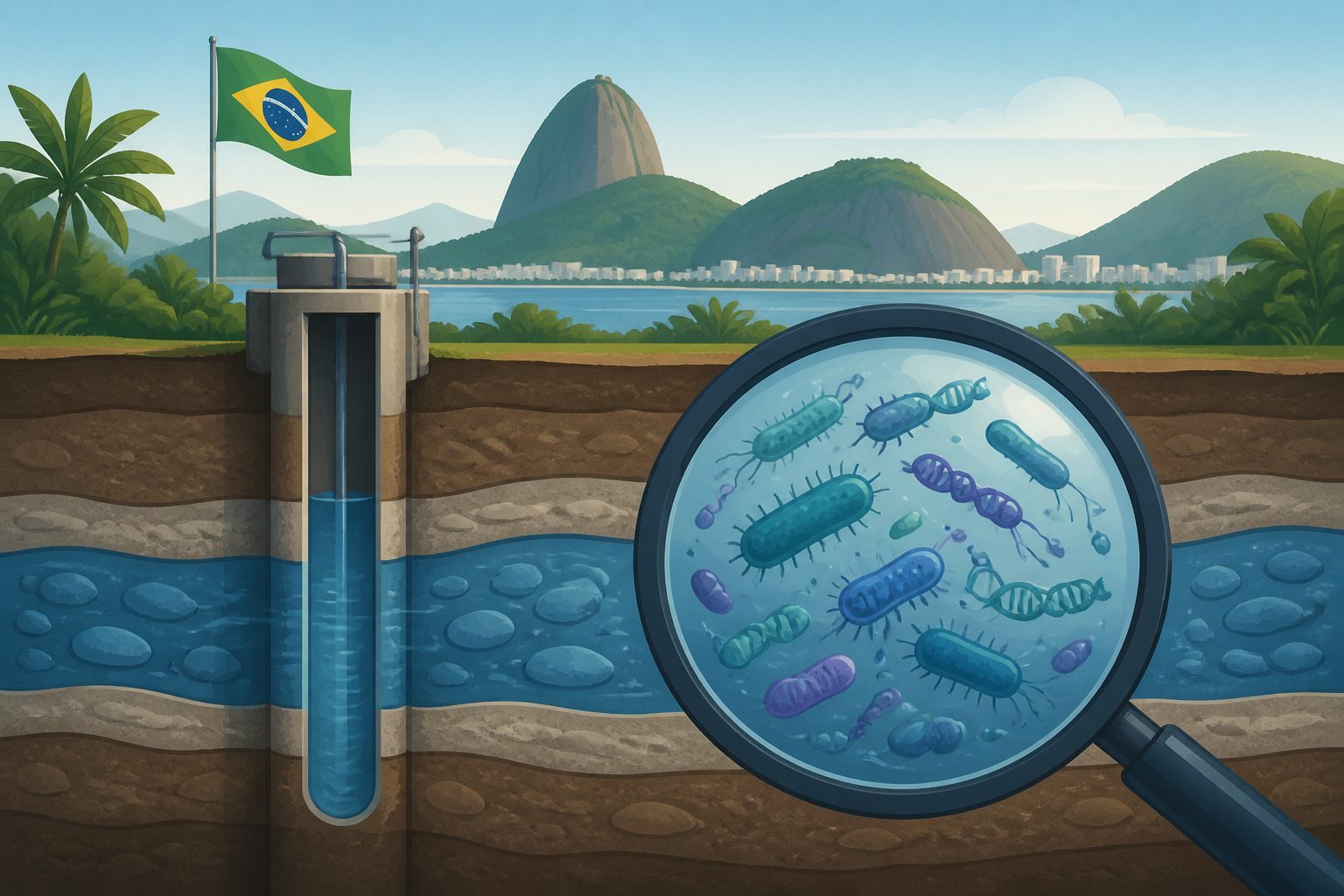
Researchers found opportunistic bacteria in groundwater samples carrying genes linked to drug resistance, metal tolerance and disease-related traits.
Researchers tested 101 groundwater samples and examined bacteria recovered from samples with elevated levels of metals, dissolved solids, fluoride, total coliforms or E. coli. The 66 isolates included species such as Pseudomonas aeruginosa, Acinetobacter baumannii and Klebsiella pneumoniae species complex, which can cause infections in people with weakened defenses.
The isolates showed varied antibiotic-resistance patterns and tolerance mainly to silver, arsenic and mercury. The researchers also detected genes linked to antibiotic resistance, metal tolerance and traits such as biofilm formation, immune evasion and invasion, including two previously unreported sequence types in P. aeruginosa and A. baumannii.
What the samples contained
The study covered 101 groundwater samples from 58 cities in São Paulo State. Some samples exceeded recommended limits for metals, dissolved solids, fluoride, total coliforms or E. coli. From these samples, researchers recovered 66 Gram-negative bacterial isolates, including Pseudomonas aeruginosa, Acinetobacter baumannii, Stenotrophomonas maltophilia, Burkholderia cepacia complex, Klebsiella pneumoniae species complex and Enterobacter hormaechei.
Five isolates were classified as multidrug-resistant. The researchers detected the antibiotic-resistance genes qnrS, blaTEM, aac(6')-Ib, aadA and tetB. The bacteria tolerated metals mainly silver, arsenic and mercury, and several tolerated more than one metal. Detected metal-tolerance genes included silA, pcoA, merA, znuA and rcnA. Virulence genes linked to biofilm formation, immune evasion and invasion were found in clinically relevant species. Molecular typing identified two novel sequence types: Pseudomonas aeruginosa ST6404 and Acinetobacter baumannii ST3355. It also found clinically associated lineages including A. baumannii ST744 and K. pneumoniae ST1536.
Evidence and caveats
This was a laboratory study of 101 groundwater samples and 66 bacterial isolates recovered from samples with specified water-quality exceedances. It measured antibiotic susceptibility, metal tolerance, and the presence of resistance, metal-tolerance and virulence genes, and used molecular typing to identify bacterial lineages.
The study shows that these bacteria and genes were present in the sampled groundwater, but it does not establish that the groundwater caused human infections or that the genes were transferred to people or other bacteria. The results also come from samples collected in 58 cities in one Brazilian state and may not represent all groundwater or other regions.