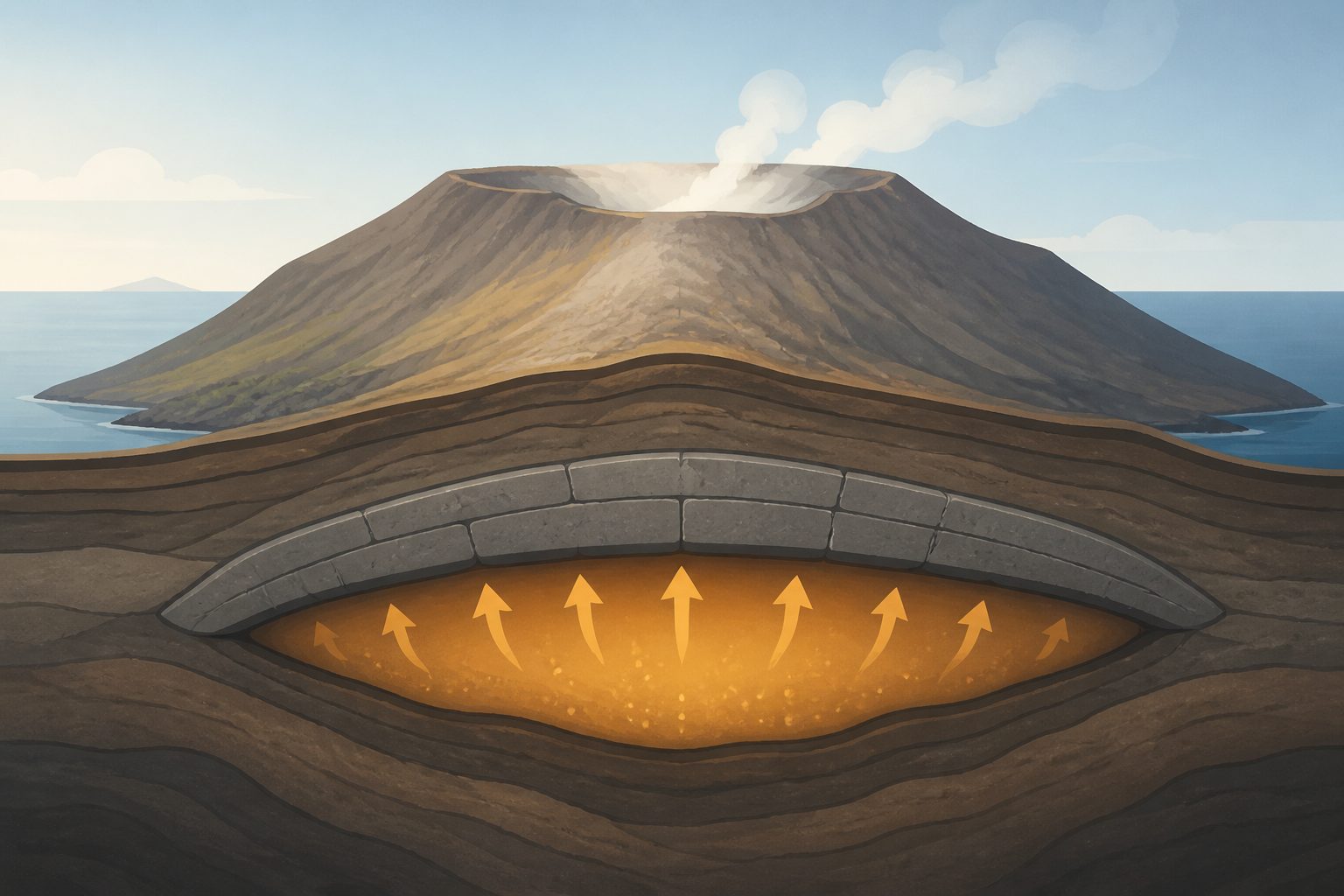
A porous rock layer could store hydrothermal fluids while stronger lava above and below helps contain pressure during the island’s ongoing unrest.
The study combined field observations and borehole data with X-ray imaging, measurements of rock properties and transport, and mechanical tests performed inside the imaging system. The researchers examined rock types thought to represent the hydrothermal reservoir and its surrounding layers.
They found that a porous scoriaceous layer could support fluid storage, while mechanically strong, low-porosity lava units could limit fluid movement and help pressure accumulate. The resulting pressure may approach the tensile strength of the overlying rocks, creating conditions for fractures and bursts of gas during the 2021–ongoing unrest episode.
How the rocks store pressure
The researchers identified a porous scoriaceous horizon at roughly 615–655 metres depth, consistent with the inferred hydrothermal reservoir. Its pore structure appears favourable for storing fluids. The surrounding low-porosity lava units are mechanically stronger and may form both a physical barrier to fluid flow and a seal that allows pressure to increase.
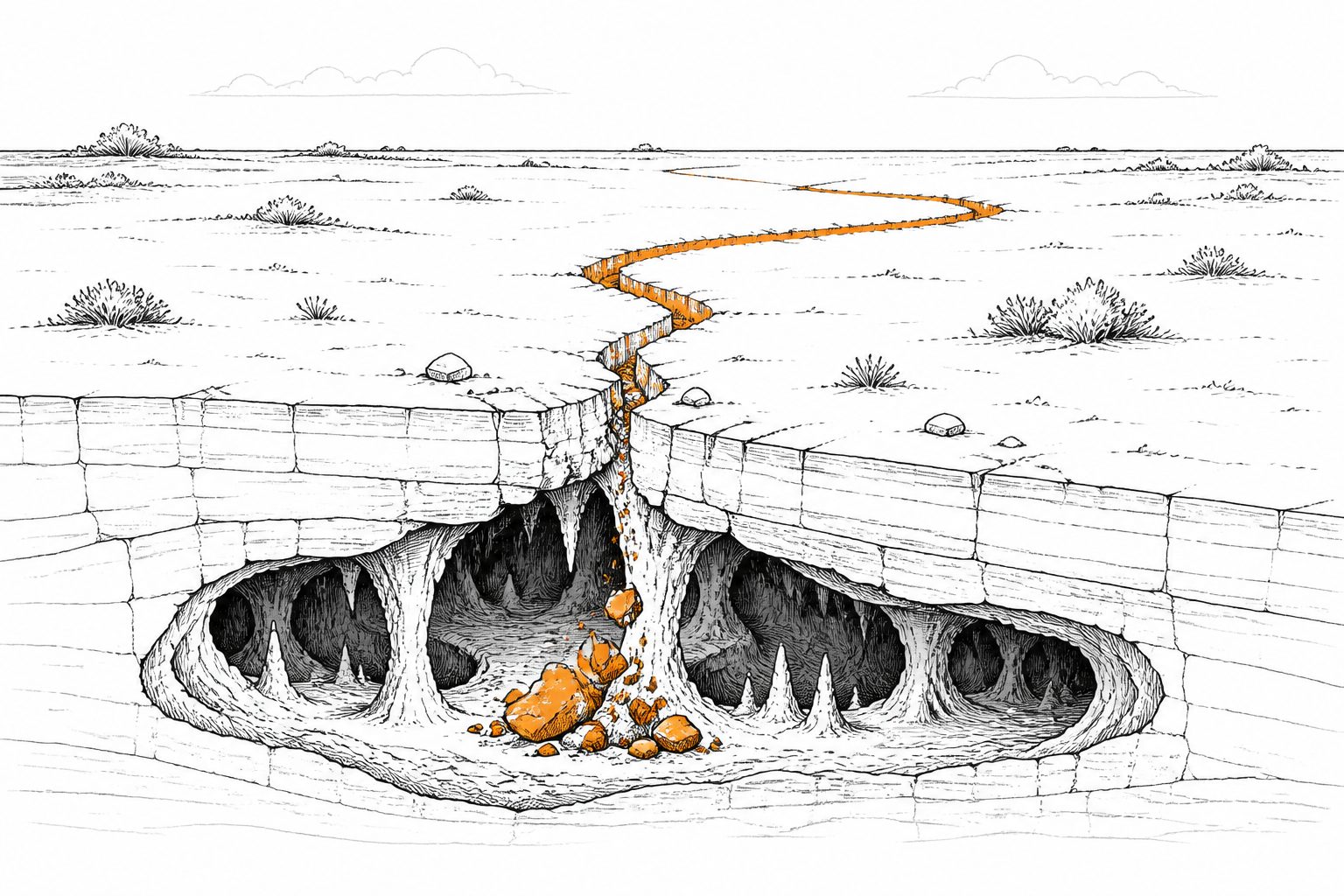
Pressure could build to values comparable to the tensile strength of fresh samples from the overlying rocks. Under those conditions, fractures could propagate and gas could be released in episodes without requiring shallow magma intrusion. The study links these rock properties with a possible explanation for the hydrothermal unrest at La Fossa Caldera.
Why the rock layers matter
The findings show how hydrothermal unrest can create hazardous conditions through the interaction of fluids and the rocks that contain them, even when there is no evidence in the abstract of shallow magma intrusion. At Vulcano, the combination of a fluid-storage layer and surrounding sealing rocks offers a physical explanation for pressure buildup, fracture formation and episodic gas release.
This framework could help researchers interpret monitoring and geological data during hydrothermal unrest at other active volcanic systems. It also emphasizes that the strength, porosity and fluid-flow properties of volcanic rocks are important for assessing how pressure may be stored and released.
Evidence and caveats
The study is based on field observations, borehole stratigraphy, high-resolution X-ray microtomography, petrophysical measurements and laboratory mechanical tests on representative lithologies. The researchers use these results to build a physically based interpretation of the 2021–ongoing unrest.
The abstract describes conditions that may allow pressure buildup, fracture propagation and episodic gas release; it does not report a direct observation of a future steam-driven explosion or slope failure. The tests also included fresh rock samples, so the measured strength may not capture every condition underground. The proposed framework therefore connects measured rock properties with the unrest, rather than establishing that one specific hazardous event will occur.