Using city sales and charging data from 2018–2019, researchers find charging facilities and subsidies increasingly shape EV purchases after incentive phase-out.
Financial incentives helped kick-start China’s EV market, but the country’s challenge is what to do as those subsidies decline. This study analyzed new energy vehicle pilot cities before and after subsidy phase-out, combining sales data, charging infrastructure data, and policy information.
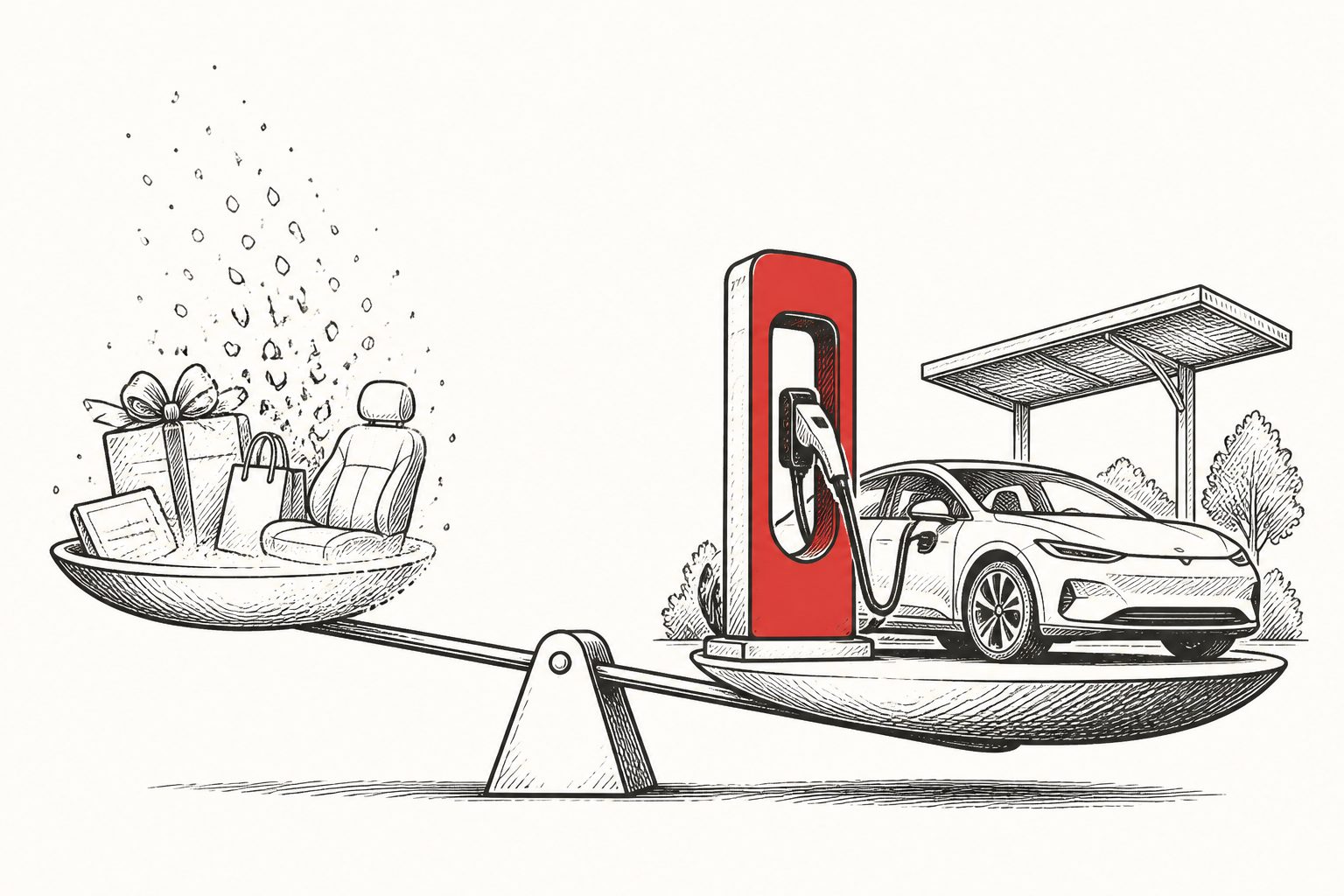
The results suggest that as vehicle purchase subsidies drop, charging facilities—and charging subsidies—become more important to consumers than convenience measures like free license plates. The authors also simulated EV diffusion under different charging and promotion scenarios and compared two subsidy approaches depending on how developed local charging infrastructure was.
What the study found
1) After vehicle purchase subsidies declined, consumers’ EV choices were more influenced by the availability of charging facilities and charging subsidies than by convenience policies such as free license plates.
2) In cities with underdeveloped charging infrastructure, increasing the number of charging facilities improved EV market share more effectively, and this effect was stronger after subsidies were reduced.
3) In simulation analysis, when the number of charging infrastructures per 10,000 households increased by 4 units, EV market share rose from 6.02% to 9.39%, a 56% increase.
4) Comparing two subsidy schemes, vehicle purchase subsidies were more effective in cities with underdeveloped charging infrastructure, while charging infrastructure construction subsidies performed better in cities with well-developed infrastructure.
Evidence and limitations
This work uses sales data, charging infrastructure data, and policy information from EV pilot cities before and after subsidy phase-out policies during 2018–2019, applying a random coefficient discrete choice model to study heterogeneous consumer purchase decisions. It also includes simulation analysis of EV diffusion under different charging facility and promotion policy scenarios.
Limitations are not detailed in the abstract: the analysis depends on the selected pilot cities and the period studied (2018–2019), and simulation results reflect the authors’ scenario assumptions rather than direct observation of every policy combination over time.
// Source
Management System Engineering · 2026 · DOI: 10.1007/s44176-026-00071-8
Authors: Zijian Guo, Xusheng Yao, Feng Gao, Zhiqi Shao, Yuqin Chen
Institutions: The University of Sydney, Tianjin University, Northeastern University