Researchers found microplastics in foragers of two native stingless bee species from both urban and rural environments in the eastern Amazon. The particles were more often found on the bees’ outer surfaces than inside their bodies.
Climate & Environment2 months ago
Amazon stingless bees carried microplastics on their bodies
Fibers, mainly polyester and polyethylene terephthalate, were found on and inside the bees in urban and rural settings.
What the bees carried
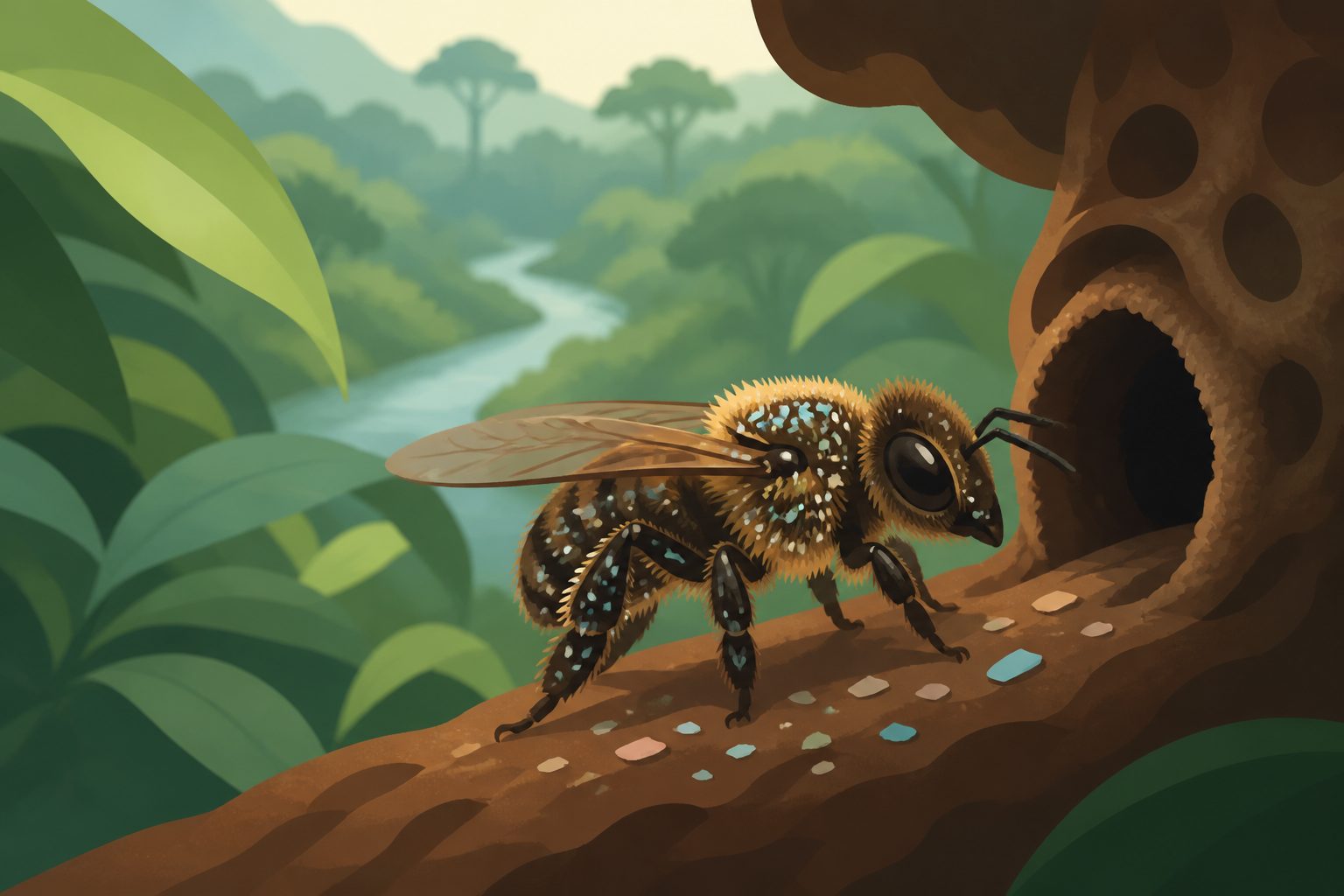
The study examined foragers of Melipona flavolineata and Scaptotrigona aff. postica. Microplastics were present in both species and in both urban and rural environments, with a higher incidence on the external body surface than internally. Fibers were the most common particle shape and were mainly blue, black or red. Blue fragments occurred in lower numbers and were restricted to the urban environment. Chemical analysis found mostly polyester, followed by polyethylene terephthalate.
Why it matters
Native stingless bees pollinate wild and cultivated plants and are important components of Amazonian ecosystems. Because microplastics were found on foragers in both types of environment, the researchers suggest that these bees could serve as biological indicators of plastic pollution. The findings also raise a conservation concern: if bees carry particles into natural areas, microplastics could add to risks facing Amazonian biodiversity. The study supports including pollution monitoring in conservation strategies, but it does not measure those risks directly.
Evidence and limits
This journal article reports an assessment of microplastics in foragers from two native stingless bee species in urban and rural Amazonian environments. The abstract does not provide the number of bees sampled, the amount of microplastic found, or details on how the sites were selected, so the findings show contamination was present but do not establish its extent across the wider Amazon. The study also does not demonstrate health effects in these bees or confirm that the insects transport microplastics into undisturbed forest.
// Source
Water Air & Soil Pollution · 2026 · DOI: 10.1007/s11270-026-09801-w
Authors: Bárbara dos Santos Conceição Lopes, María Auxiliadora Pantoja Ferreira, Jéssica Dipold, Niklaus Ursus Wetter, Anderson Zanardi de Freitas, Kamila Leão Leão, Felipe Andrés León Contrera
Institutions: Universidade Federal do Pará, Instituto de Pesquisas Energéticas e Nucleares