
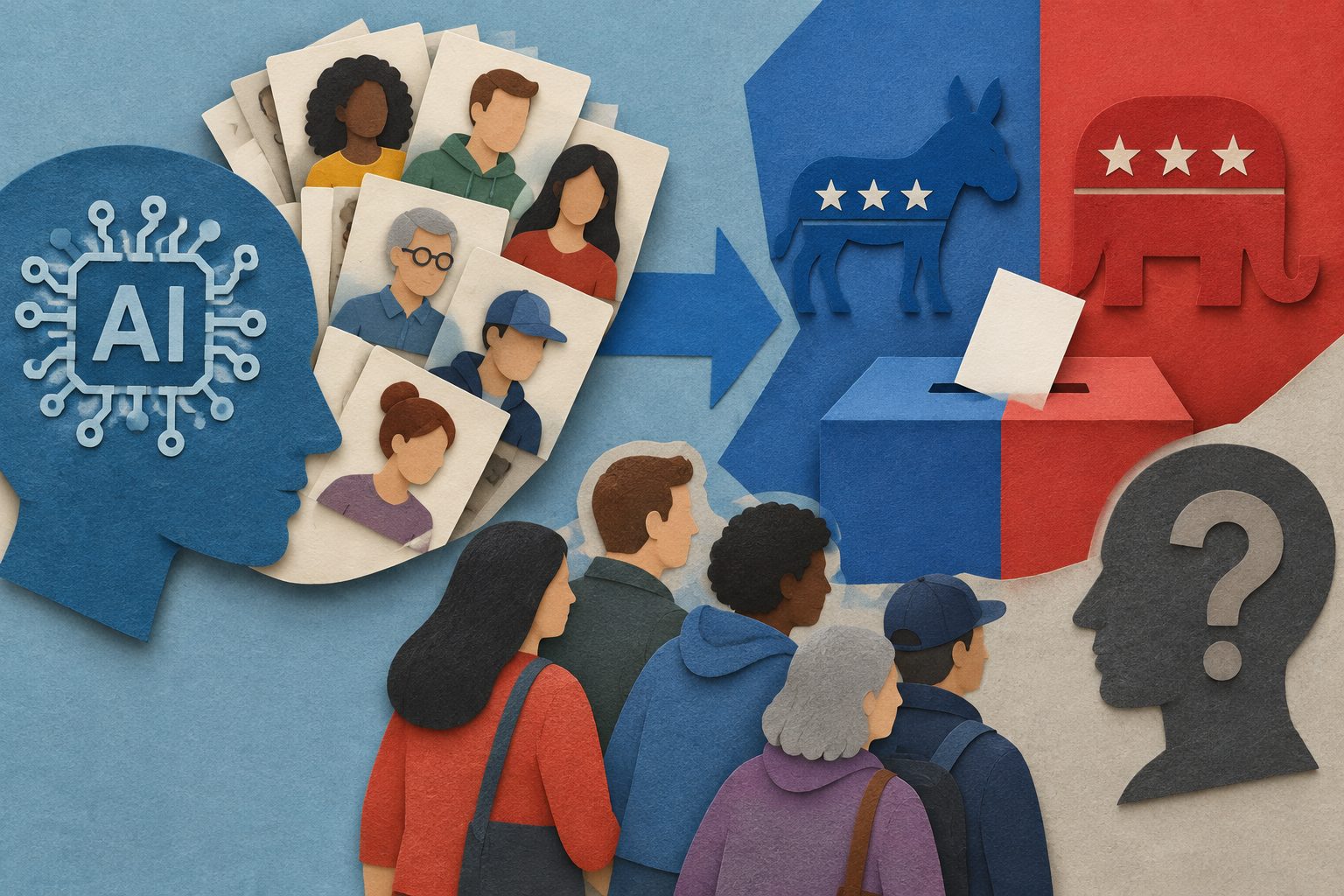
The study presents a framework for simulating pre-election survey answers with large language models. It gives each artificial respondent a biography, memories of important events and a pattern of news exposure, then models how that respondent would answer questions about turnout and candidate choice.
Applied to one weekly wave of the 2026 US House elections, the framework produced national and district estimates. Compared with profiles based only on demographics, the richer profiles shifted results toward Democrats, matching the direction of contemporary polling. Profiles that constructed judgments from assigned news produced a larger Democratic margin than profiles that did not receive news, although the estimates had substantial uncertainty.


