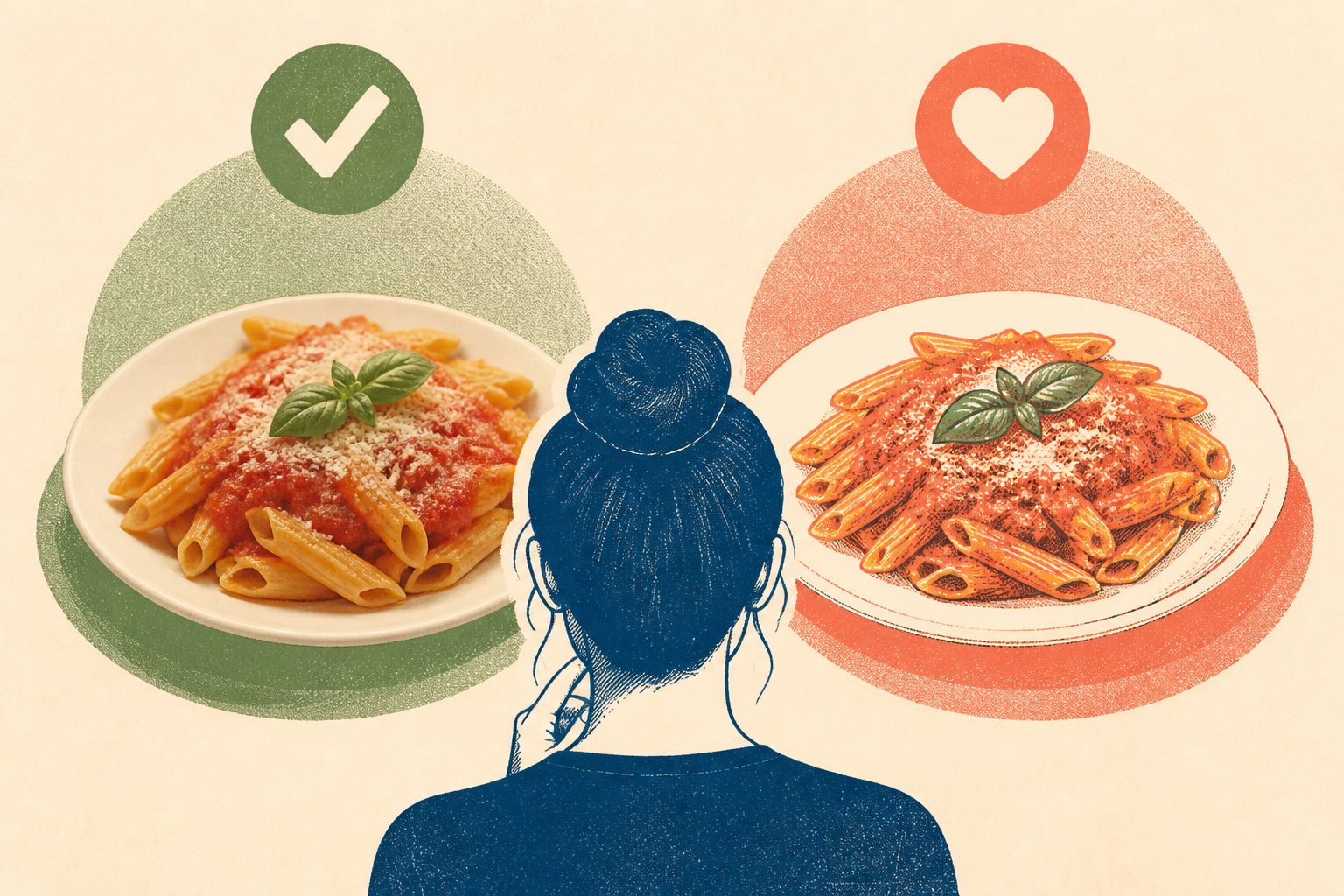
An online study found that AI-generated food pictures matched real ones on perceived healthiness and calories, while scoring lower for realism and willingness to eat.
People judged AI-generated food images and real food images similarly for healthiness and calorie content, according to an online experiment in Scientific Reports. But the AI images were seen as less realistic and prompted less willingness to eat.
The findings suggest AI images could help researchers create more controlled food stimuli, while still differing from photographs or other images of real food in ways that may affect responses. Within the AI images, those perceived as more realistic relative to their real counterparts also received more favorable healthiness and willingness-to-eat ratings.
How the images were judged
In a within-subject online experiment, 87 participants rated 60 pairs of AI-generated and pre-validated real food images. The images were balanced for calorie content and flavor. Participants used four 100-millisecond visual scales to rate realism, willingness to eat, perceived calorie content and healthiness.
AI-generated images received significantly lower ratings for realism and willingness to eat than their real counterparts. Ratings for healthiness and calorie content did not differ between the two types of images.
The researchers also found that the relative perceived realism of the AI images predicted relative ratings of healthiness and willingness to eat. In other words, AI images that were perceived as more realistic compared with their paired real images were also associated with higher ratings on those food-related judgments.