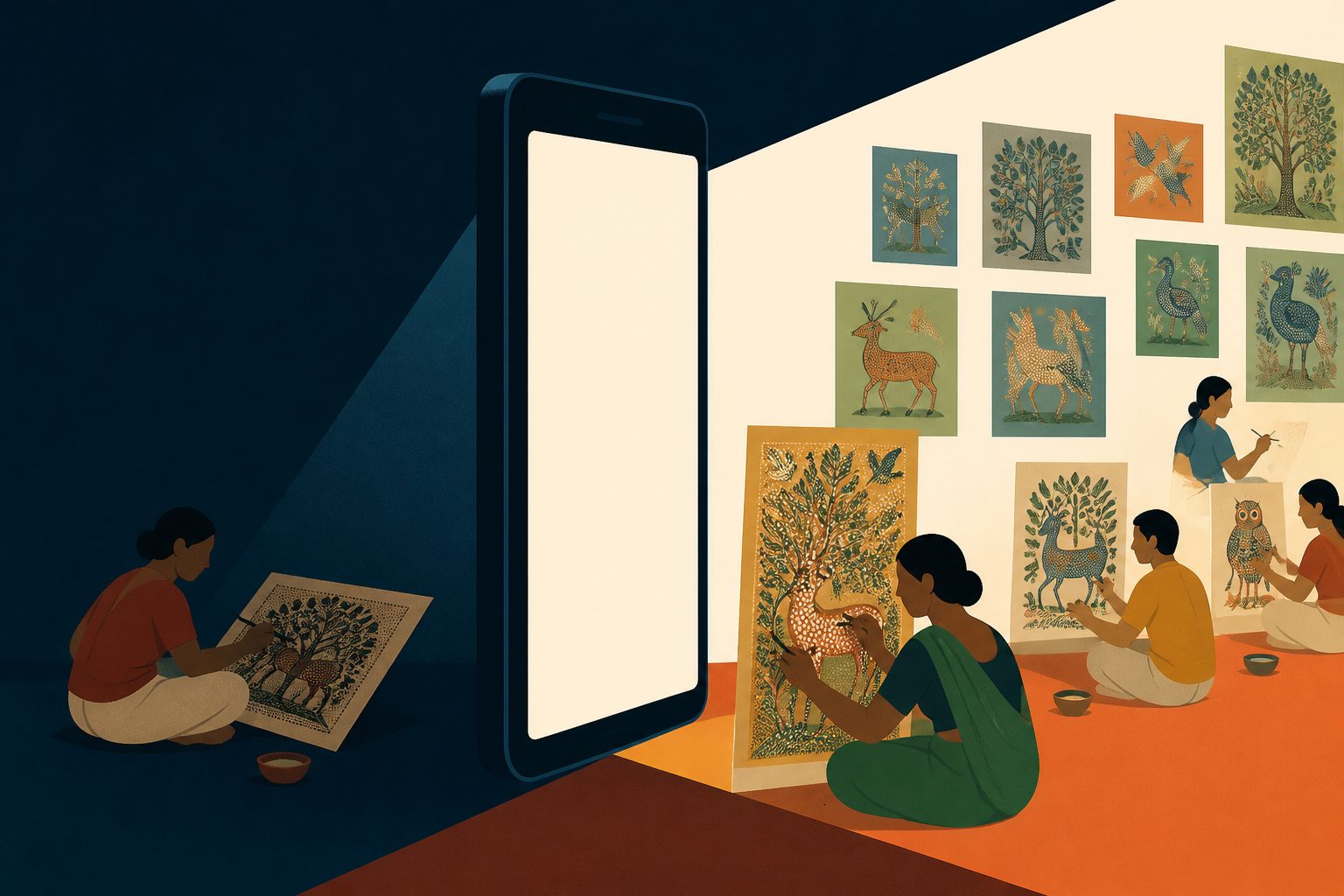
A study of Gond artists in Central India finds that online platforms create new opportunities while leaving women and less-literate artists at a disadvantage.
The study examines how technology is changing the work, income and identities of Gond artists in Patangarh Mal village and Bhopal. Researchers report that new markets, collaborations and design changes have expanded livelihood opportunities and helped Gond painting gain recognition in national and global cultural spaces.
At the same time, access to digital tools and resources is uneven. The study finds that these inequalities particularly affect women and artists with less literacy, showing that wider circulation does not automatically produce equal participation or benefits.
How technology changed Gond art
The researchers identified three linked changes in Gond painting. First, technology has opened new livelihood opportunities through digital and other markets, collaborations and design innovations. Second, wider circulation has strengthened artists’ identity and the symbolic value of Gond painting in national and global cultural spaces. Third, unequal access to digital resources continues to reproduce inequalities, disproportionately affecting women and less-literate artists. The study therefore presents technology as both a way to circulate art and a force that changes power, inclusion and cultural value within the community.
// Source
International Journal of Anthropology and Ethnology · 2026 · DOI: 10.1186/s41257-026-00161-1
Authors: Usha Rana
Institutions: Indira Gandhi National Open University