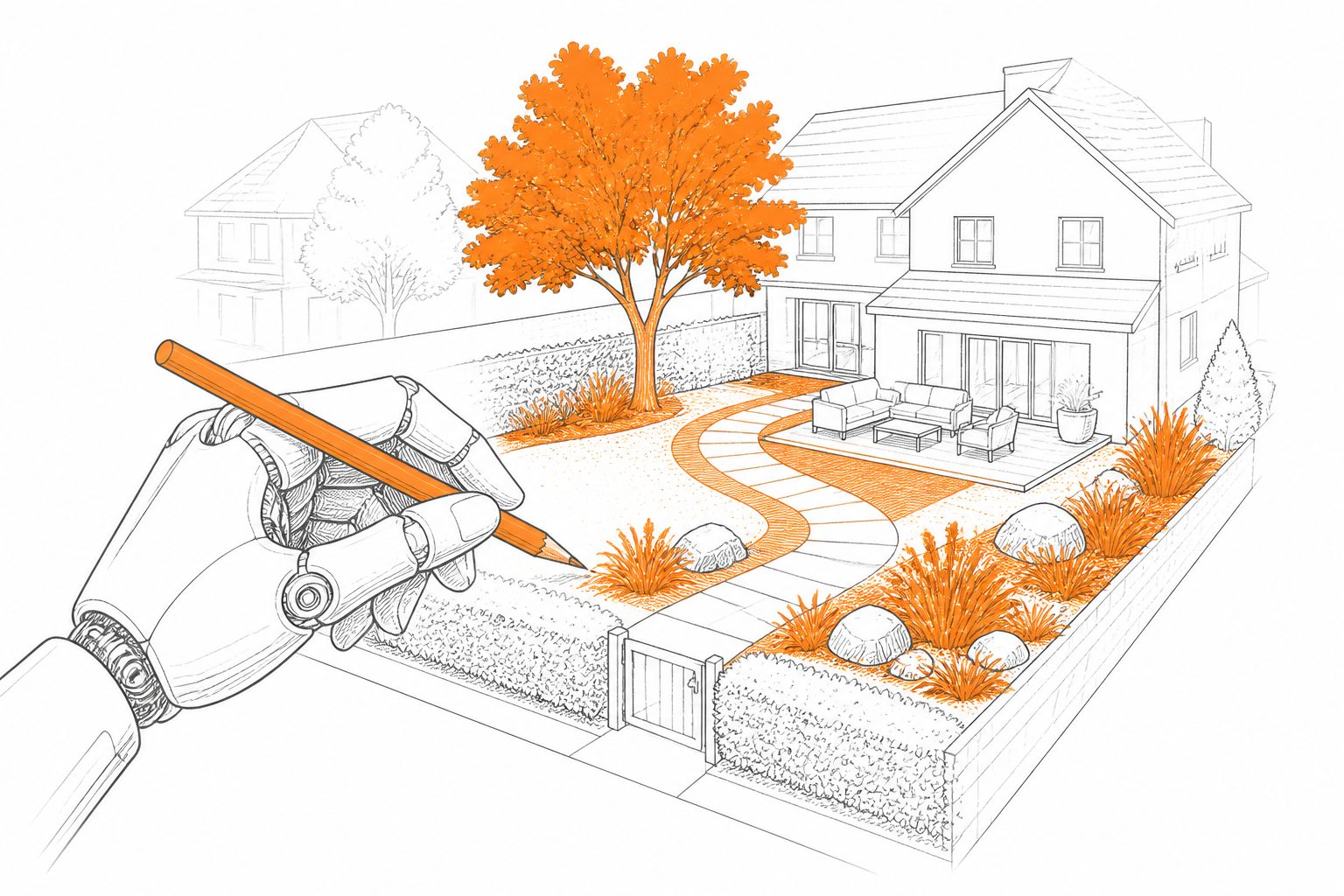
Researchers say designing residential landscapes involves balancing competing goals—such as microclimate comfort, visual quality, functional accessibility, and ecological service provision—and that most early-stage workflows do not handle these trade-offs systematically. The team built a hybrid generative AI approach that creates a range of structurally coherent yard and site layouts based on site boundaries, building layouts, and density constraints.
Each generated option was evaluated using a four-part performance pipeline—microclimate modeling, an image-based aesthetic scoring system, graph-based accessibility measures, and ecological service estimators. Using a multi-objective optimization method, the study searched for Pareto-optimal configurations in the AI’s latent space and then used decision support to pick balanced recommendations.