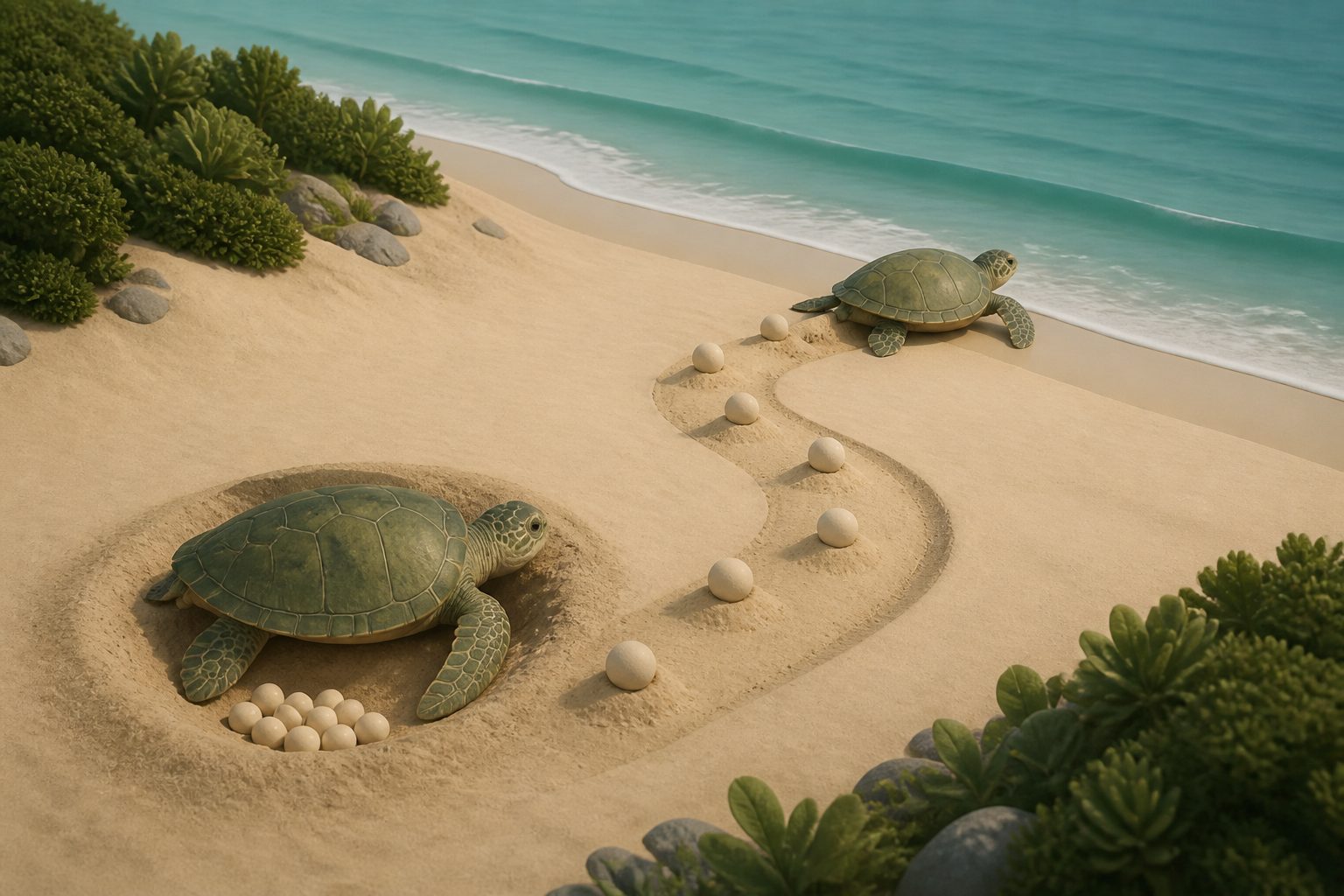
At Indo-Pacific sites, the share of turtles returning to nest after four years rose relative to those returning after three years.
Researchers examined 1,399 breeding-interval measurements from marked green turtles collected over three decades. The proportion of individuals with a four-year interval between nesting seasons rose from 28% in 1997–2012 to 37% in 2013–2024.
The increase was associated with annual nest numbers. The researchers suggest that higher population density may restrict access to food, leaving turtles needing more time to build body condition before returning to breed, although the study does not establish that explanation as the cause.
Longer gaps between nesting
Green turtles generally do not breed every year. At the study sites, the relative share of turtles returning after four years, rather than three years, increased from 28% during 1997–2012 to 37% during 2013–2024. The share of four-year versus three-year intervals was also linked to annual nest numbers, with a reported R² of 0.23 and p = 0.01. During the same broad period, nesting numbers at sites in the Indo-Pacific increased fourfold.