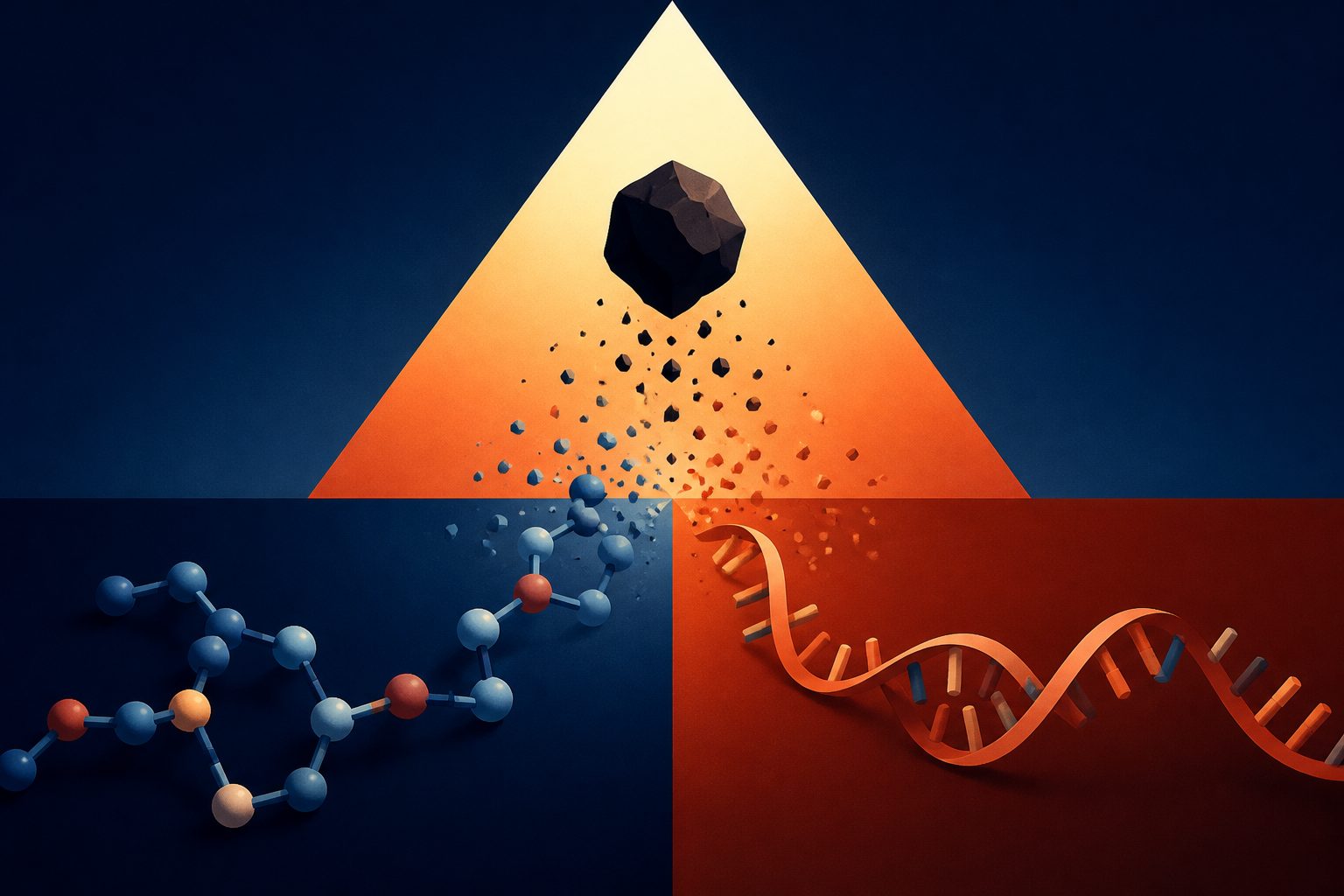
In laboratory mixtures designed to resemble prebiotic conditions, amino acids and nucleotide building blocks enhanced the formation of each other’s molecular chains.
Researchers mixed glycine with ATP or cAMP under conditions intended to resemble those on the early Earth. The reactions produced peptides and oligonucleotides, which are short chains of amino acids and nucleotides, respectively.
Mass spectrometry showed that some mixtures contained more of these chains than reactions focused on only one type of building block. The researchers linked this enhancement to the formation of aminoacyl-AMP, a reactive compound made from an amino acid and AMP, and also tested amino acids with different side chains to examine which could form it under the reaction conditions.
What the reactions produced
When intrinsically phosphorylated ATP or cAMP was mixed with glycine in a one-pot reaction under prebiotically relevant conditions, the mixture produced peptides and oligonucleotides. Mass spectrometry indicated the formation of oligomers, with their relative abundance increasing in some reaction scenarios compared with reactions involving only nucleotide or only amino-acid oligomerization.
The researchers identified aminoacyl-AMP as the reactive intermediate associated with this enhancement. Tests with amino acids carrying different side chains examined the properties needed to form aminoacyl-AMP under the chosen conditions. The nonenzymatic formation of this intermediate also resulted in longer oligomers.
Why linked chemistry matters
The findings suggest that amino acids and nucleotide building blocks may have influenced each other’s chain formation in a prebiotic chemical environment, rather than acting only in separate reactions. That provides a possible chemical route toward early aminoacylation—the linking of an amino acid to a nucleotide—and toward an early, simpler form of translation-related chemistry.
The work does not establish that this process occurred on the early Earth, but it identifies a way in which peptide and nucleotide chemistry could have become connected before enzymes and modern cellular systems existed.
Evidence and open questions
The evidence comes from controlled laboratory reactions under conditions described as prebiotically pertinent, with products assessed mainly by mass spectrometry. The study used specific starting materials, including ATP, cAMP, glycine and other tested amino acids, and found increases in oligomer abundance only in certain reaction scenarios.
These experiments show chemical plausibility rather than a reconstruction of the full prebiotic environment. The abstract does not establish how often the reactions would occur in nature, whether the products could perform biological functions, or whether they could lead to a working translation system.
// Source
Communications Chemistry · 2026 · DOI: 10.1038/s42004-026-02212-2
Authors: Raya Roy, Anupam A. Sawant, Sudha Rajamani
Institutions: Indian Institute of Science Education and Research Pune