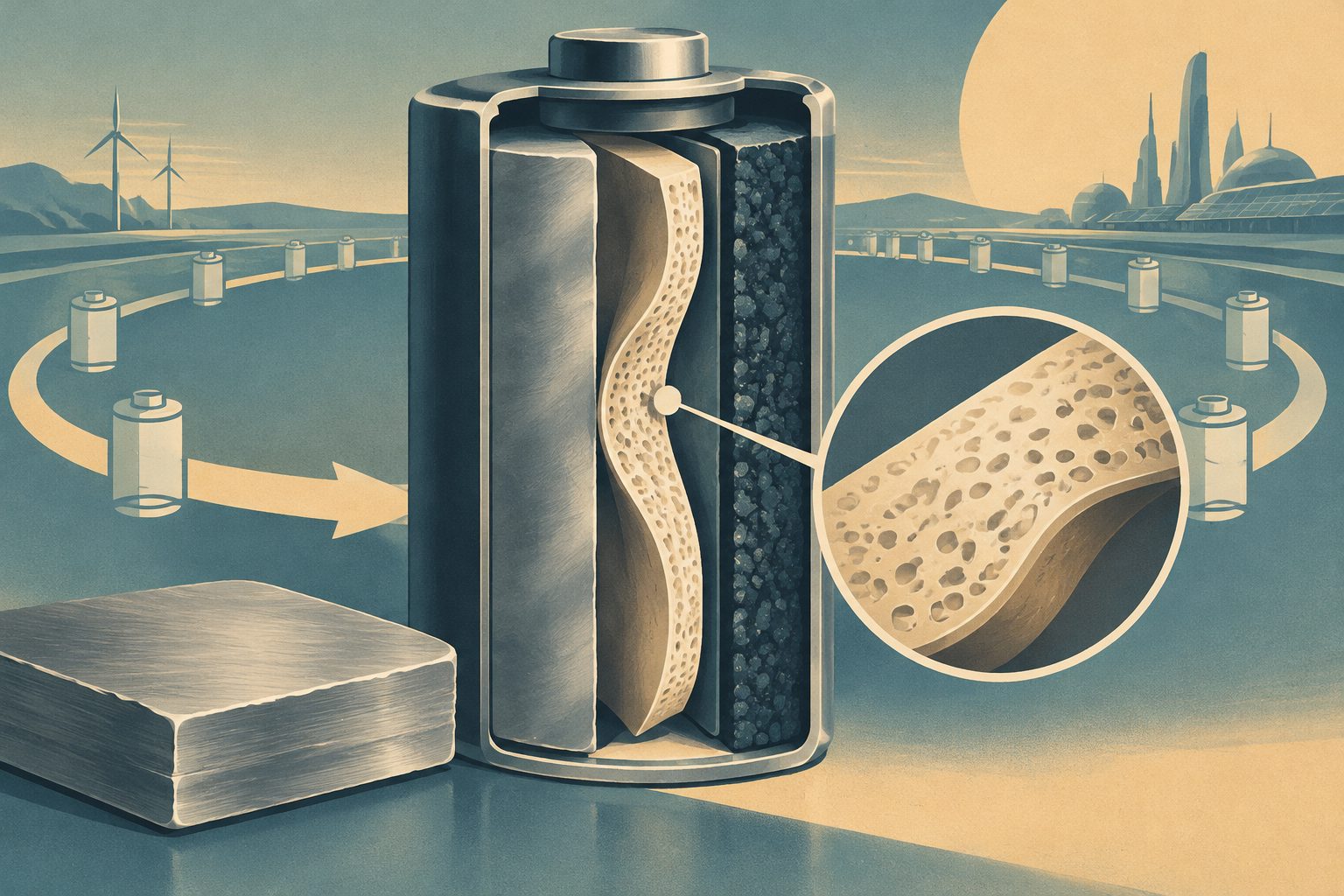
A clay layer that slowly releases lithium nitrate helped form a more stable protective layer on sodium metal.
The separator uses montmorillonite clay, whose layered structure confines lithium nitrate and releases nitrate-containing species near the sodium-metal surface over time. The researchers say this sustained supply changes the local chemical environment and promotes a dense protective interphase containing lithium- and sodium-based inorganic compounds.
Cells using the modified separator showed reversible sodium–sodium cycling for more than 4,000 hours at the reported test conditions. In full cells, sodium–vanadium phosphate cells retained 83.7% of their capacity after 2,300 cycles at 5 C, while high-loading sodium–nickel manganese iron oxide cells retained 91.5%.
What the separator does
The researchers integrated lithium-nitrate-loaded montmorillonite into a glass-fiber separator. Structural and chemical measurements indicated that lithium and nitrate-containing species were retained in the clay’s interlayer spaces, while the modified separator also showed greater electrolyte retention and improved wetting than the untreated separator.
Electrochemical tests found lower polarization and faster sodium-involved reaction kinetics with the modified separator. The sustained release of nitrate was associated with a dense hybrid protective layer, known as a solid electrolyte interphase, containing lithium fluoride, lithium nitride, lithium carbonate and sodium-based inorganic compounds. Calculations indicated that representative lithium-containing phases offer lower barriers to sodium-ion diffusion than corresponding sodium-based phases, which the researchers linked to more even sodium deposition.
The modified separator enabled sodium–sodium cells to cycle for more than 4,000 hours at 0.25 mA cm−2 and 0.25 mAh cm−2. In full cells, capacity retention reached 83.7% after 2,300 cycles at 5 C, and high-loading cells retained 91.5% of their capacity.
Why the design matters
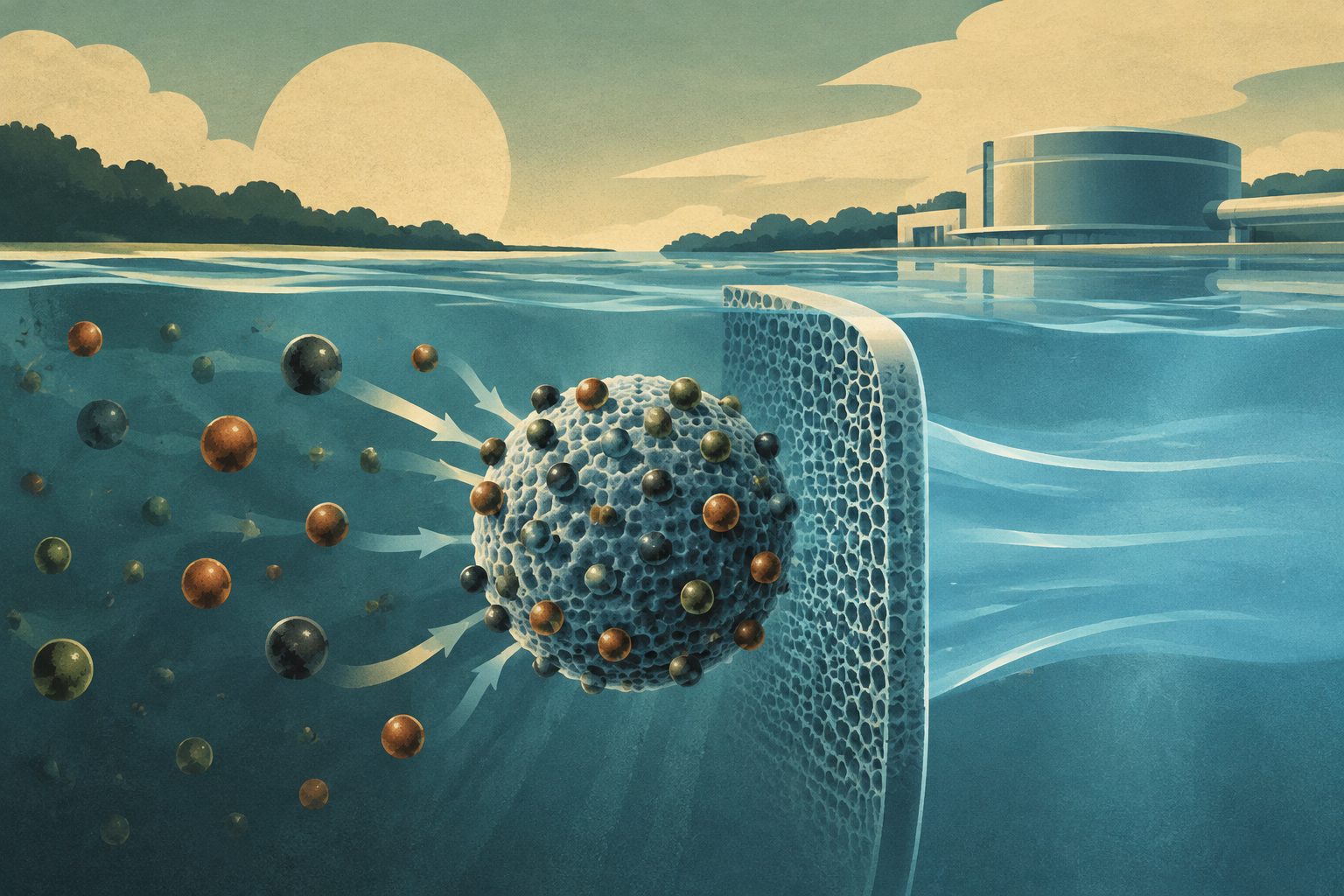
Sodium-metal batteries can lose performance when reactions at the sodium surface create an unstable protective layer and uneven metal deposition. This separator provides a way to keep nitrate chemistry active near that surface instead of relying only on a one-time supply in the bulk electrolyte.
The reported results show that the approach supported long-duration sodium–sodium cycling and sustained capacity in full cells, including cells with high active-material loading. The findings therefore identify separator design as a route for maintaining the interfacial chemistry needed for more reversible sodium-metal operation under the tested conditions.
Evidence and open questions
The study combines separator characterization, electrochemical measurements, full-cell cycling and density functional theory calculations. The calculations support the proposed explanation for faster sodium-ion transport, while the cycling results directly test the separator in sodium–sodium and full-cell configurations.
The structural data do not establish one unique atomic arrangement for lithium nitrate inside the clay. The researchers also note that some physical trapping at defects or particle edges cannot be ruled out, and they did not establish a specific covalent bond between lithium nitrate and the clay framework. The reported performance applies to the tested cell chemistries, loading levels and cycling conditions; the abstract does not establish how the separator would perform in other battery designs.