A theoretical analysis argues that random impurities, rather than electron interactions, explain the low-density solid seen in recent experiments.
The work examines low-density two-dimensional electron systems in samples containing randomly placed, fixed impurities. It compares the experimental solid–liquid transition with the density at which strong disorder should localize electrons, using measured impurity densities, carrier densities and mobility to calculate conductivity.
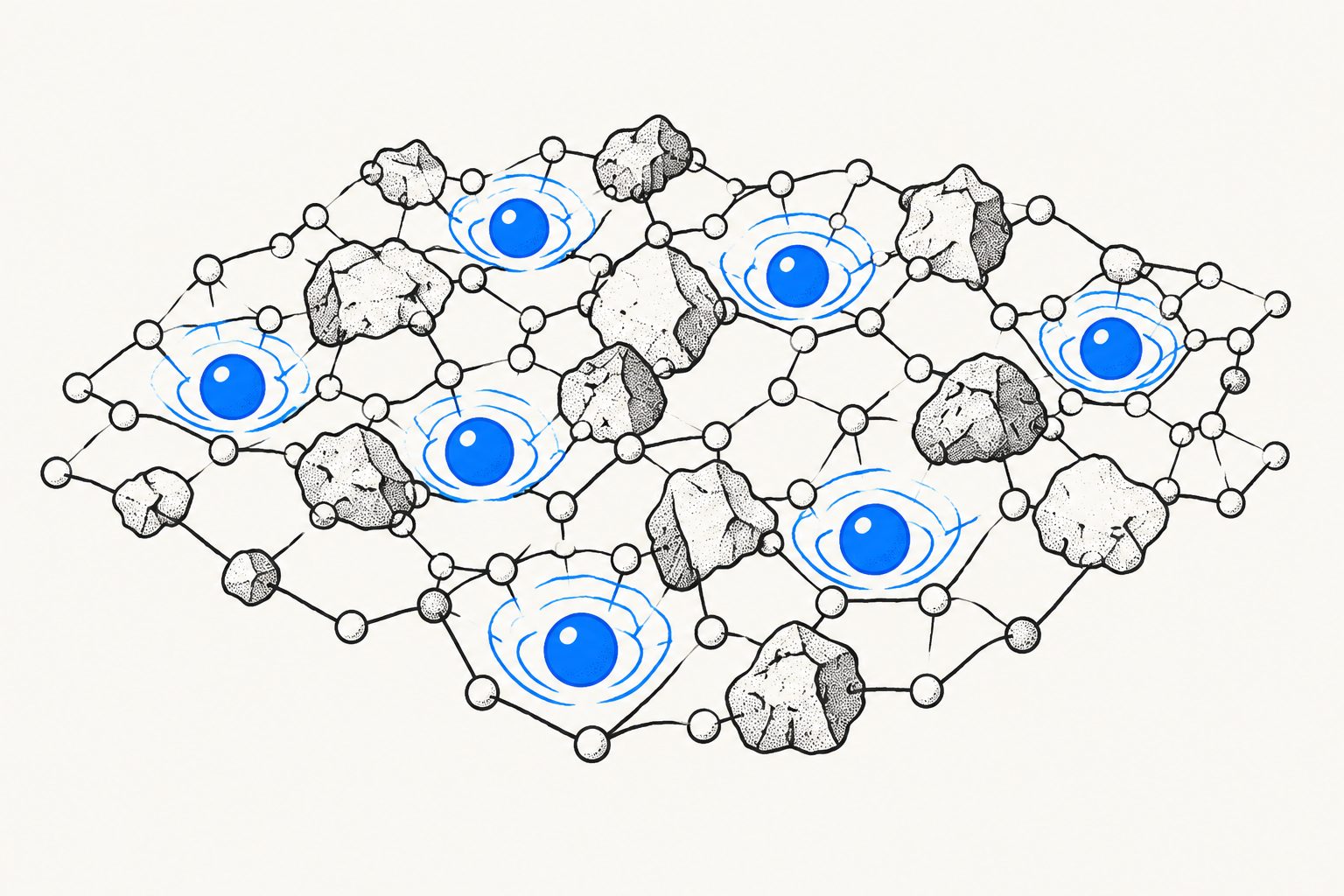
For the lower-disorder sample, the calculated localization threshold coincides with the observed transition and occurs well above the density expected for interaction-driven crystallization. In the higher-disorder sample, the researchers say the full density range studied is already in the localized regime. They therefore identify both cases with an amorphous “Anderson solid,” rather than a periodic Wigner crystal.
What the electrons are doing
The researchers argue that the low-density phase reported in the recent experiments is produced mainly by random impurities, which localize the electrons at unrelated positions. In their analysis, this makes the phase amorphous and connected to the strong-disorder limit of localization, rather than to the ordered, zero-disorder limit of a Wigner crystal.
Their calculated transport results support this interpretation. In the lower-disorder regime, the measured solid–liquid transition occurs at the calculated strong-localization threshold and far above the predicted Wigner-crystal density. In the higher-disorder regime, the strong-localization condition covers the entire electron-density range examined by scanning tunneling microscopy. The paper also reports that the relevant solid phase in these experiments can persist to an interaction-strength parameter of about 15, whereas the cited theoretical estimate for Wigner crystallization is about 38.
Why the distinction matters
The distinction changes what the experiments can establish about two-dimensional electron solids. A Wigner crystal requires electrons to form a regular pattern through their mutual interactions, while the analysis says the observed insulating and spatially disordered phase is more naturally explained by impurities pinning electrons in random locations.
The study therefore cautions that a transport transition from a metal to an insulator, or a disordered low-density pattern in an experiment, is not by itself evidence of a Wigner crystal. It argues that the strong role of disorder must be separated from interaction-driven crystal formation when interpreting these measurements.
Evidence and caveats
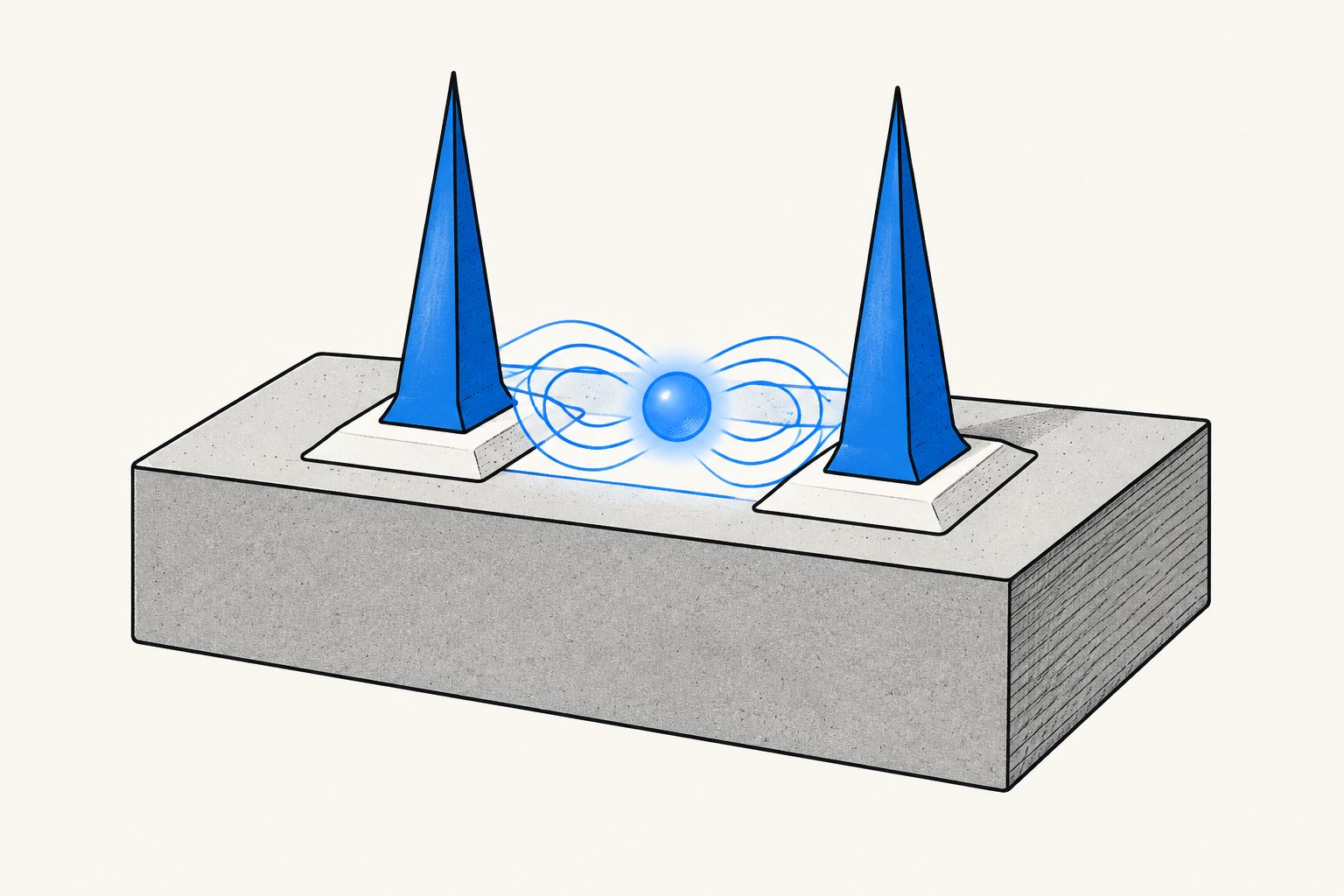
This is a theoretical and computational analysis of recent scanning-tunneling microscopy and transport experiments, not a new experimental measurement. The researchers use reported impurity densities, carrier densities and a measured mobility of about 2,000 square centimetres per volt-second to estimate disorder and calculate conductivity. They compare the results with the strong-localization condition and with the predicted density for Wigner crystallization.
The conclusions are tied to the specific two-dimensional electron and hole samples and to the disorder model used in the calculations. The work focuses on two zero-field scanning-tunneling measurements and related transport data. Its analysis supports a disorder-driven interpretation of those experiments; it does not by itself provide a direct observation of electron crystallization or rule out every possible interaction-driven solid in cleaner systems.
// Source
Physical review. B./Physical review. B · 2026 · DOI: 10.1103/wwq3-37r5
Authors: Aryaman Babbar, S. Das Sarma