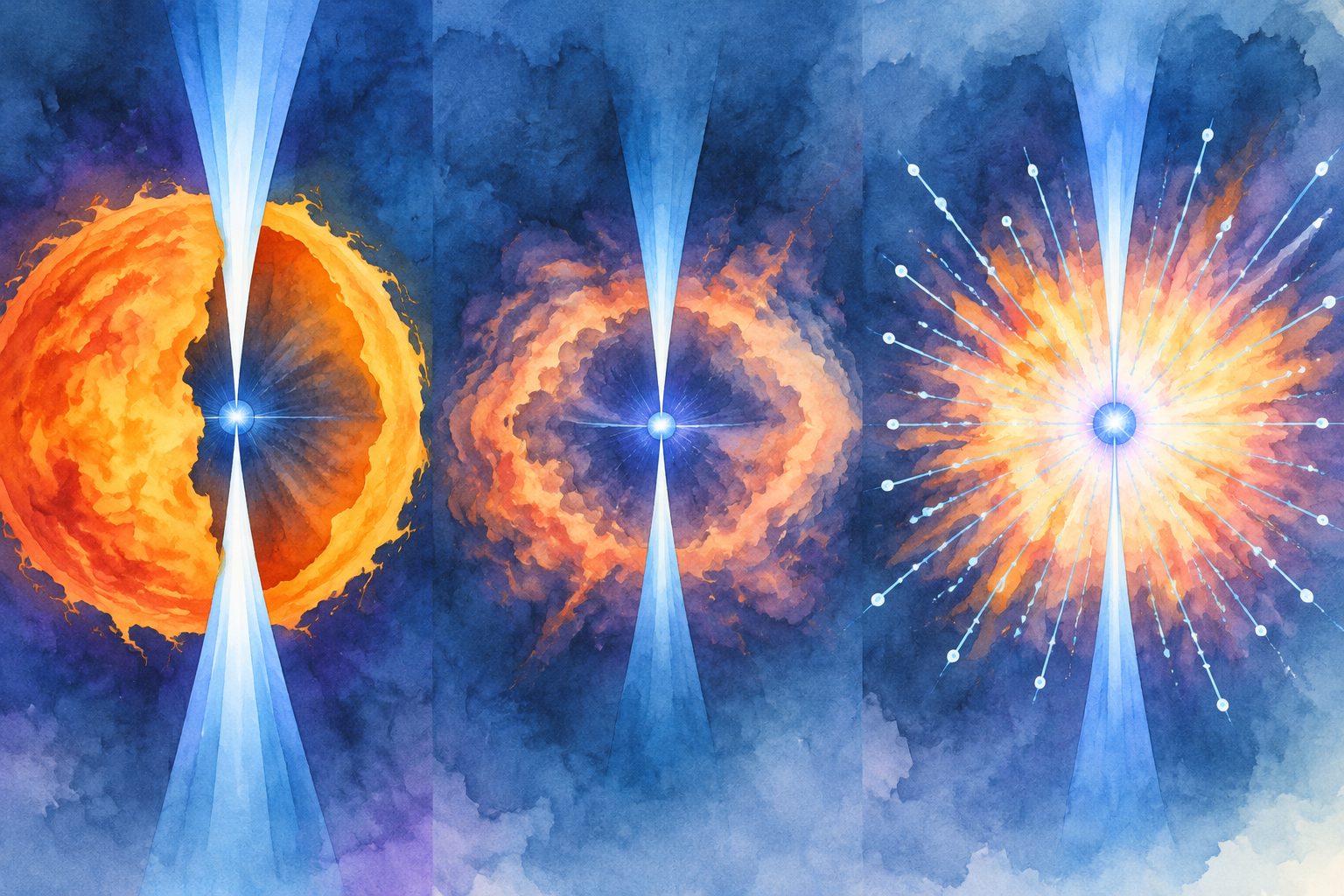
The experiment found two crossings in the relaxation paths of states starting at different distances from equilibrium.
The quantum Mpemba effect occurs when a system that starts farther from its steady state reaches it faster than a system that starts closer. In a trapped-ion experiment, the researchers tracked how quickly the system relaxed at different times rather than comparing only its final approach to equilibrium.
They found that the fastest-decaying mode sets the initial relaxation speed, while the slowest-decaying mode determines which state is closer to equilibrium at long times. This time-dependent picture predicted, and the experiment observed, a multi-Mpemba effect with two crossings between the states’ distance curves.
How the ion relaxed
The researchers developed a framework that breaks the instantaneous relaxation speed into contributions from different decay modes. It shows that the fastest decay mode controls the early pace of relaxation, while the slowest decay mode controls the eventual order of the states.
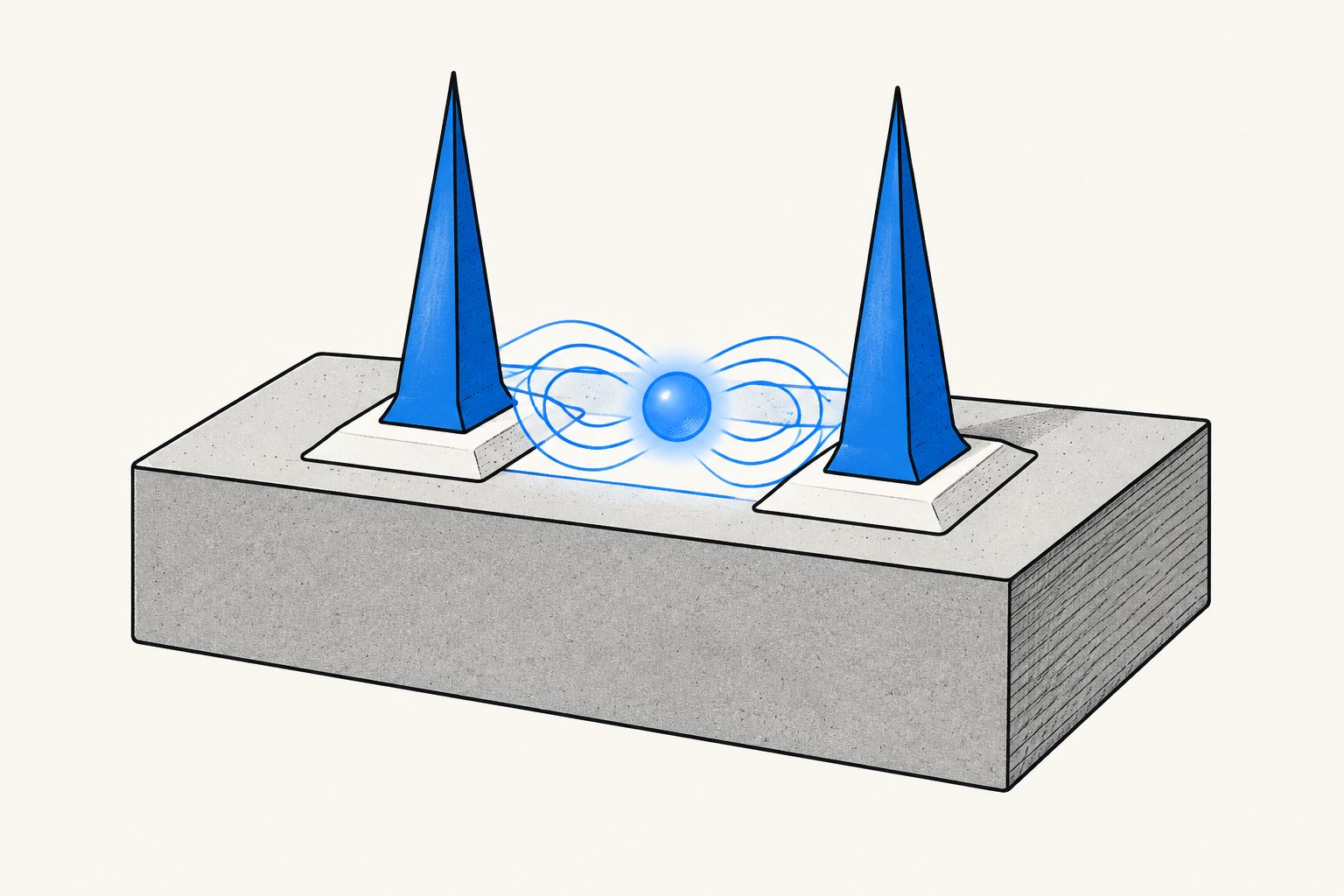
The framework predicts a multi-Mpemba effect when the state that starts farther from equilibrium has both a larger contribution from the slowest mode and a larger contribution from the fastest mode. In that case, the relaxation-distance curves can cross twice. The researchers observed this behavior in a single trapped ion, along with mode-specific periods of faster and slower relaxation.
Why transient behavior matters
The results extend the usual explanation of the quantum Mpemba effect. Instead of using only the slowest mode to predict the final relaxation order, the framework describes how different modes shape the system’s behavior throughout the relaxation process.
That distinction matters because two states can change their relative distance from equilibrium more than once before settling into their final order. The trapped-ion observation provides an experimental example of this more detailed picture of quantum relaxation.
// Source
Physical Review Research · 2026 · DOI: 10.1103/x26z-fd3j
Authors: Gang Xia, Yu-Jie Zheng, Jing Huang, Chun-Wang Wu, Yi Xie, Ting Chen, Wei Biao Wu, Weibin Li, Hui Jing, Jie Zhang, Yan-Li Zhou, Ping-Xing Chen