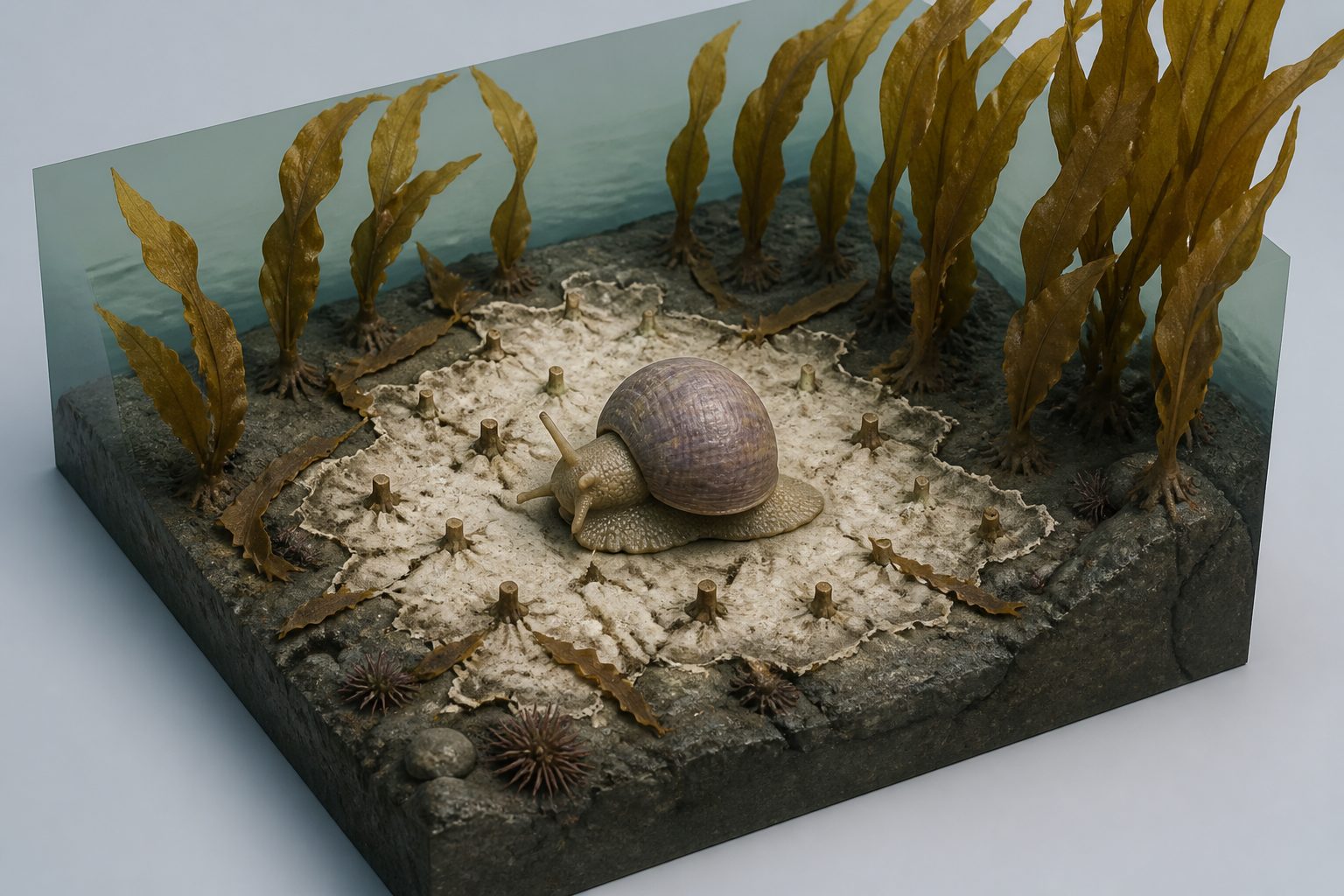
The study examined apparent barren patches in kelp beds in eastern Tasmania associated with high numbers of the turbinid periwinkle Lunella undulata. In a 117-day caging experiment, plots that excluded the periwinkles developed substantially more fleshy algae than plots where the snails remained.
Legal-sized periwinkles were commercially harvested during the study, after which algae recovered across most treatments. Overgrazing continued in cages containing the periwinkles, while kelp recovery followed as periwinkle biomass declined over roughly 16 months.