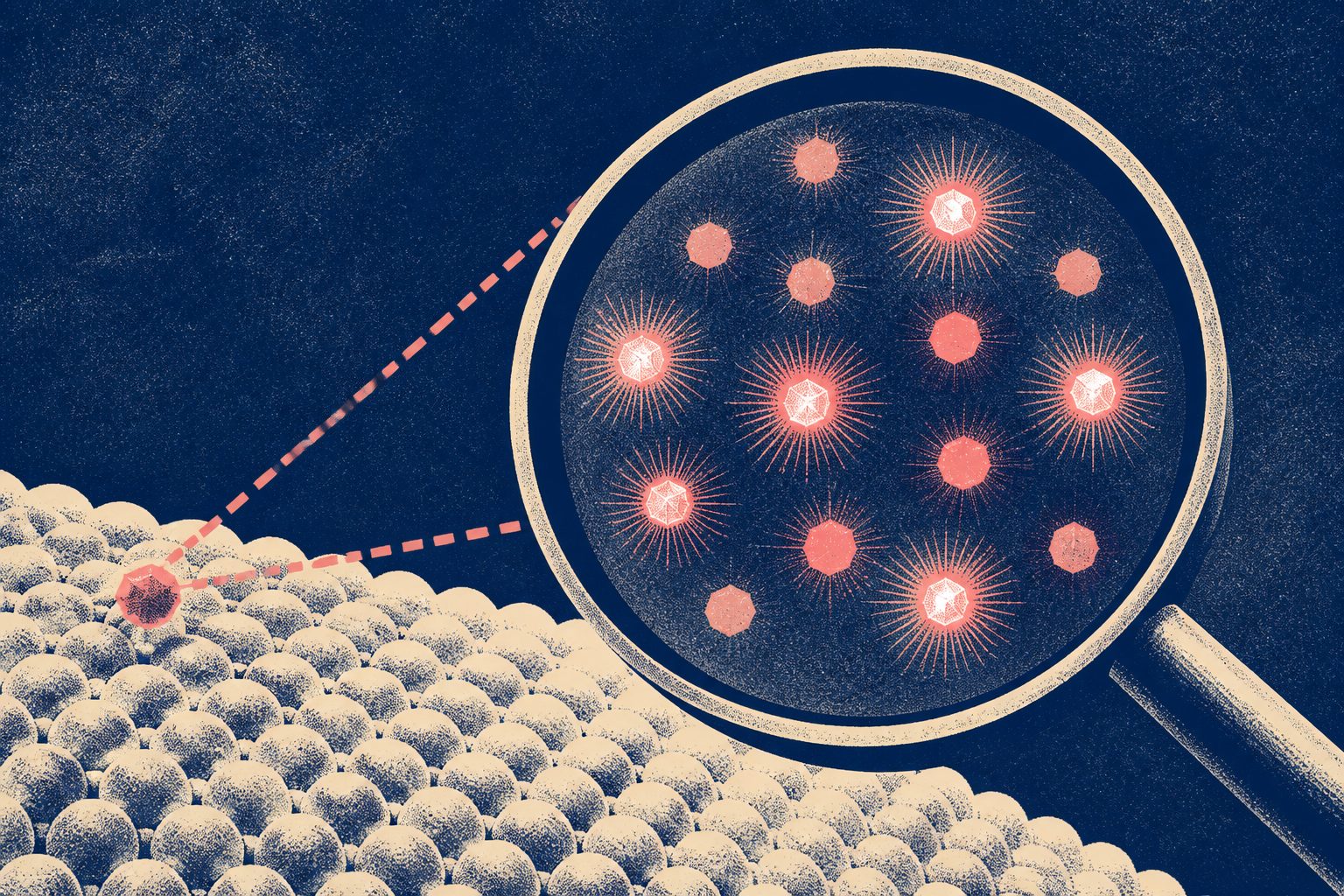
The Digital Hydrogen Platform combines data from over 4,000 experimental sources to help compare solid materials for storing hydrogen.
The Digital Hydrogen Platform, or DigHyd, was built using AI-assisted literature mining followed by human checking. It records how much hydrogen materials can store, as well as enthalpy and entropy changes linked to hydrogen absorption reactions. These properties can be used to estimate the pressure at which hydrogen storage materials reach equilibrium at a given temperature.
The researchers also used a selected set of mostly single-phase materials to test composition-based symbolic regression, a form of modeling that produces relatively simple mathematical relationships. The models performed comparably to more complex black-box models while identifying factors associated with storage capacity and room-temperature equilibrium pressure.
What the database contains
DigHyd contains more than 4,000 experimental literature sources and more than 30,000 data entries on hydrogen-storage materials. Alongside gravimetric hydrogen storage density, the database includes enthalpy and entropy changes derived by manually analyzing pressure-composition-temperature measurements at multiple temperatures using van’t Hoff analysis.
Statistical analysis found different patterns in these thermodynamic properties across material classes, along with wide variation in composition within representative hydride systems. In a demonstration application, symbolic-regression models produced compact relationships for storage density, room-temperature equilibrium pressure, enthalpy and entropy. The descriptor analysis pointed to recurring roles for host atomic mass, lattice geometry, elastic stiffness, metal filling factor and electronegativity-based correlations in the trade-off between storage density and equilibrium pressure.
// Source
Applied Physics A · 2026 · DOI: 10.1007/s00339-026-09903-6
Authors: Seong‐Hoon Jang, Di ZHANG, Xue Jia, Hung Ba Tran, Linda Zhang, Ryuhei Sato, Yusuke Hashimoto, Toyoto Sato, K. Konno, Shin-ichi Orimo, Hao Li
Institutions: The University of Tokyo, Tohoku University, Advanced Institute of Materials Science